Get A Free Estimate
Is all Professional cleaning the same?
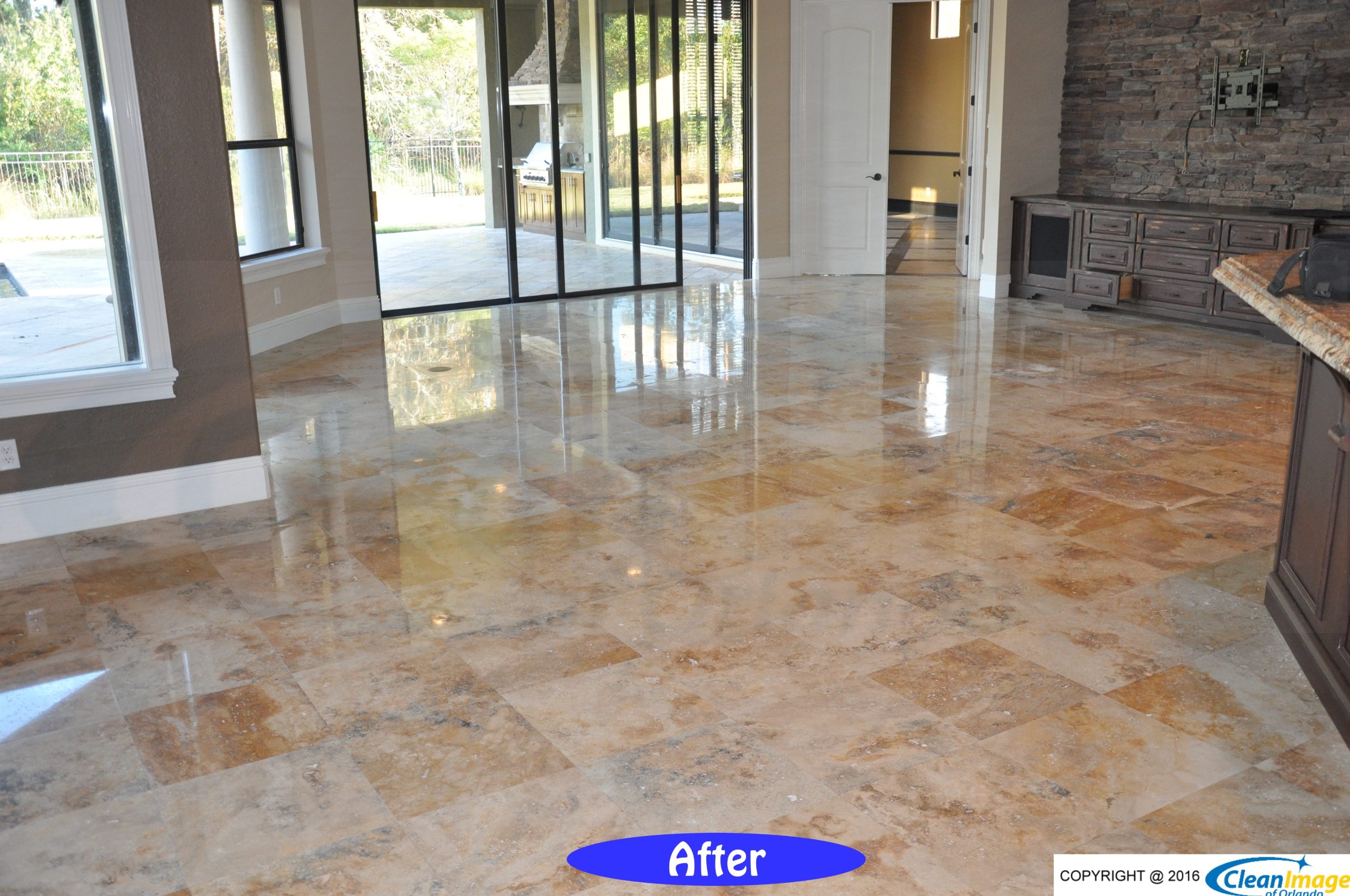
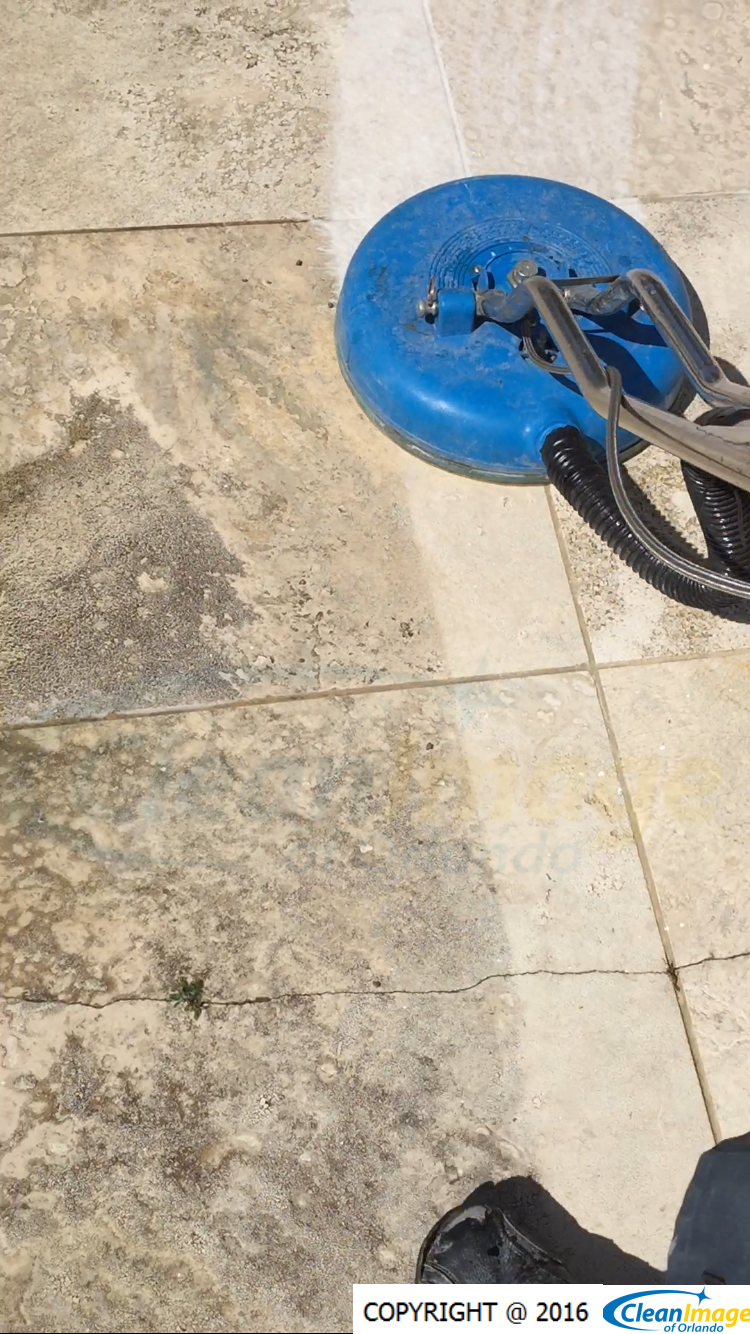
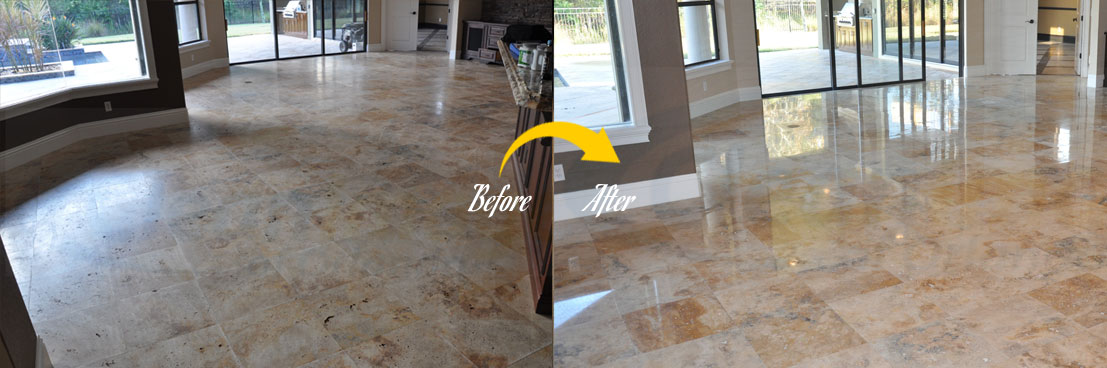
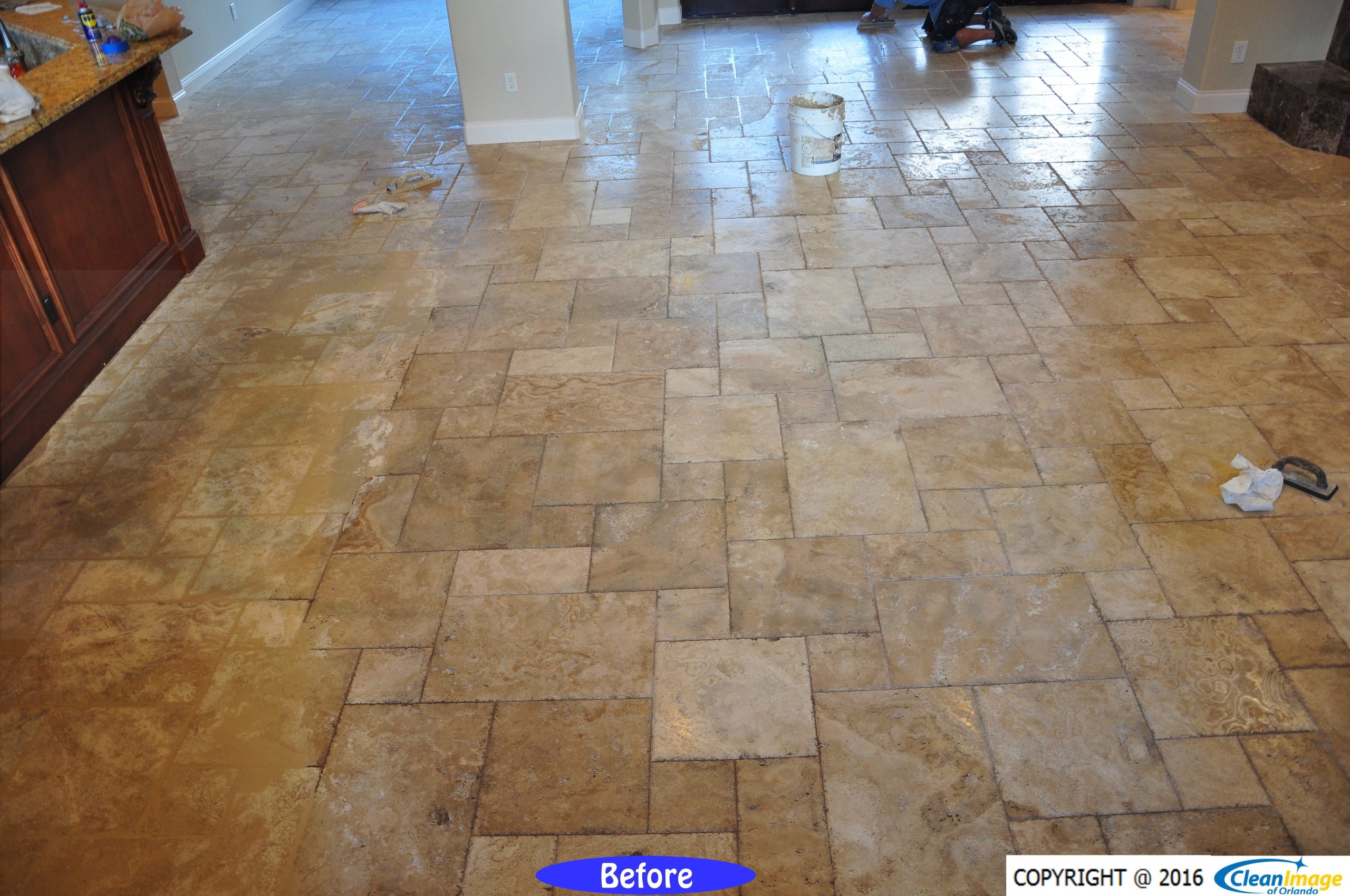
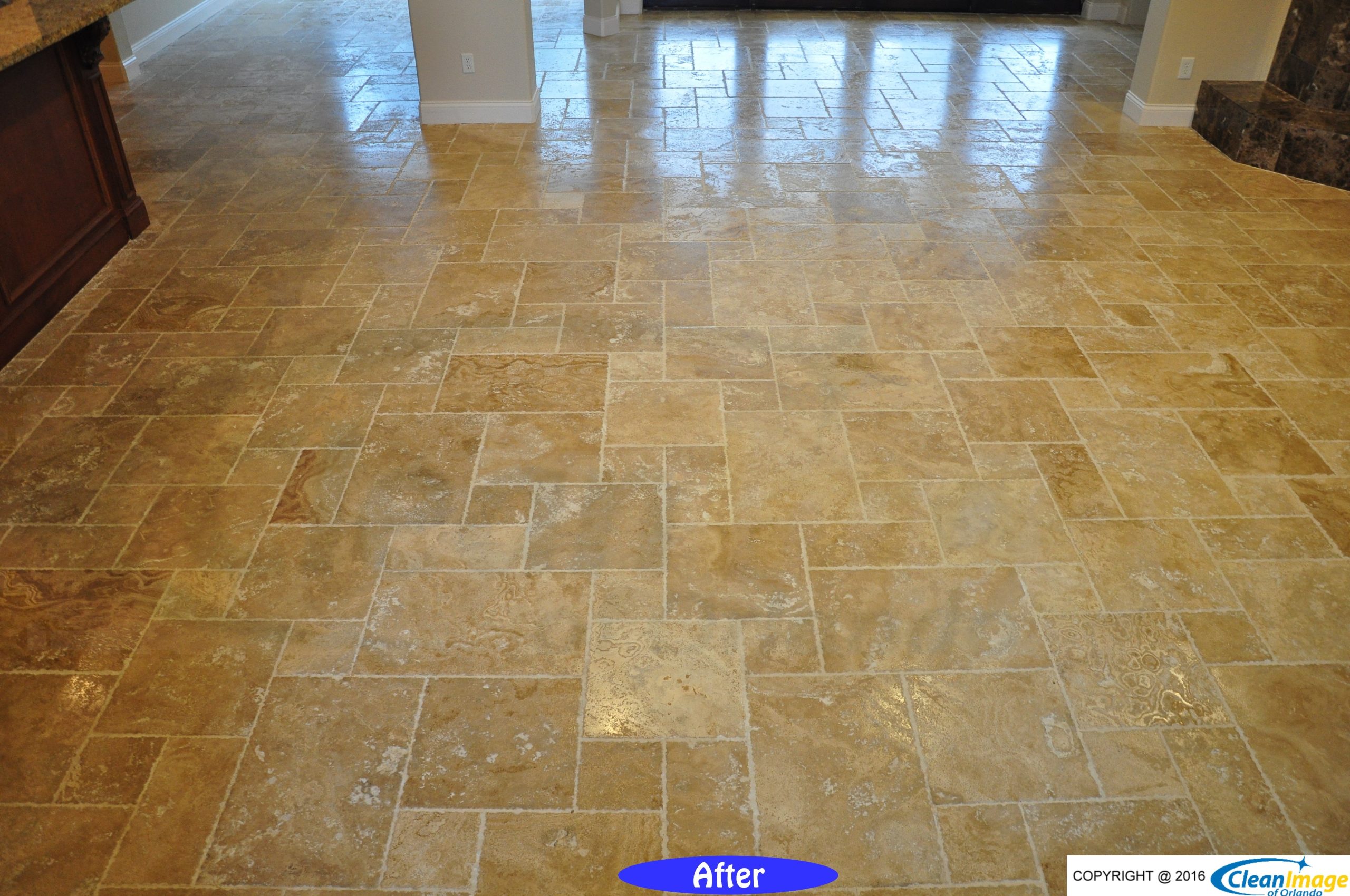
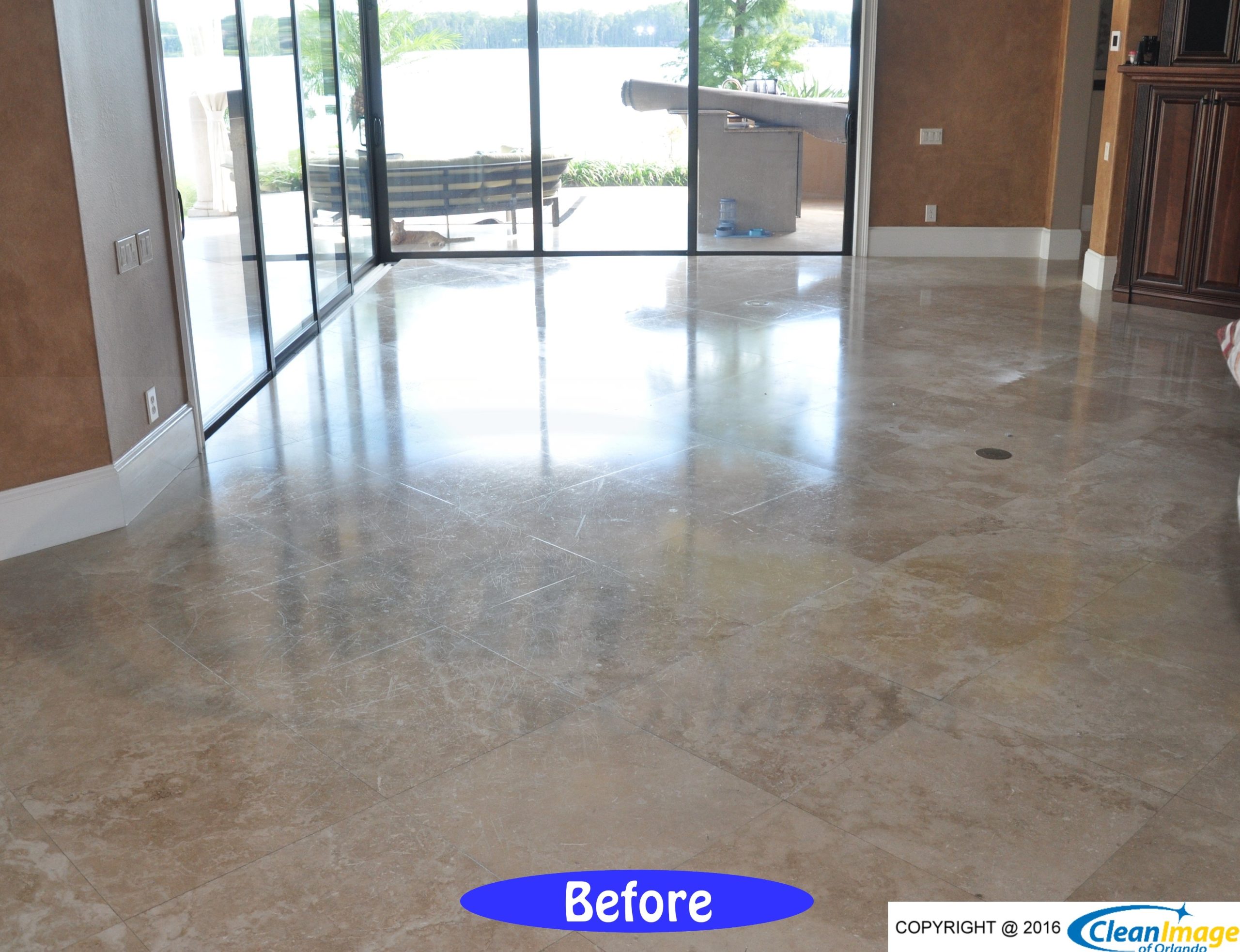
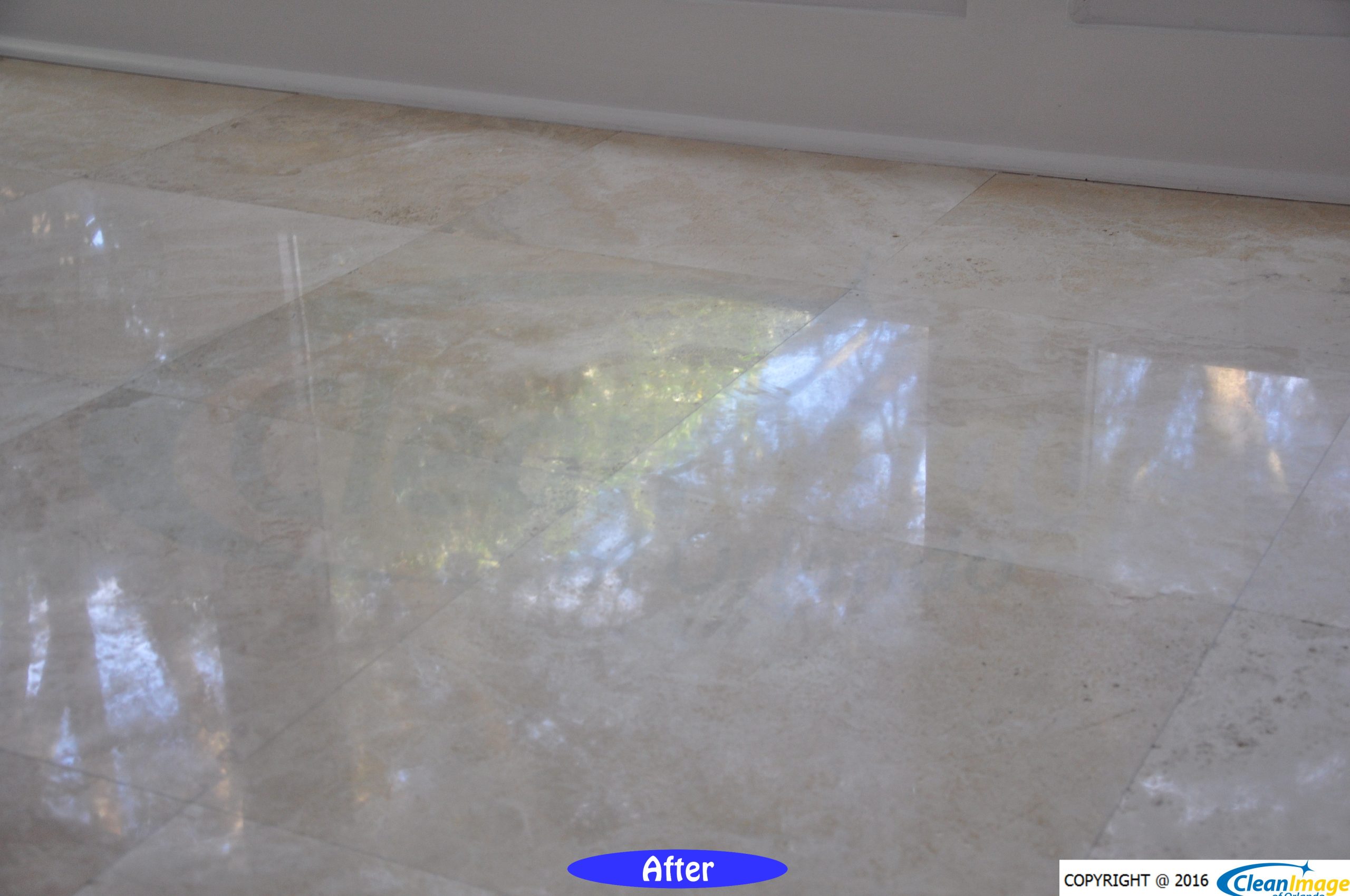
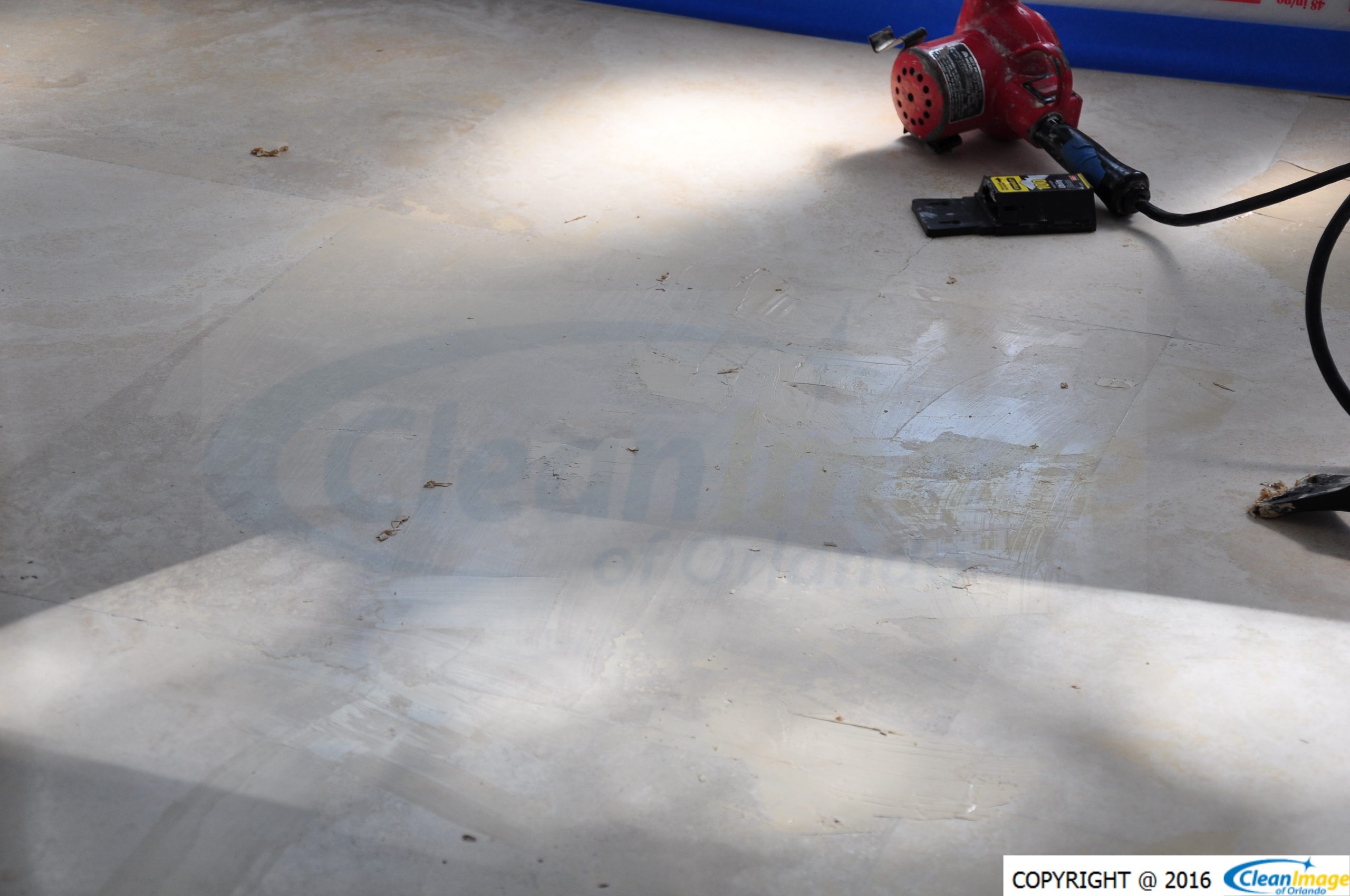
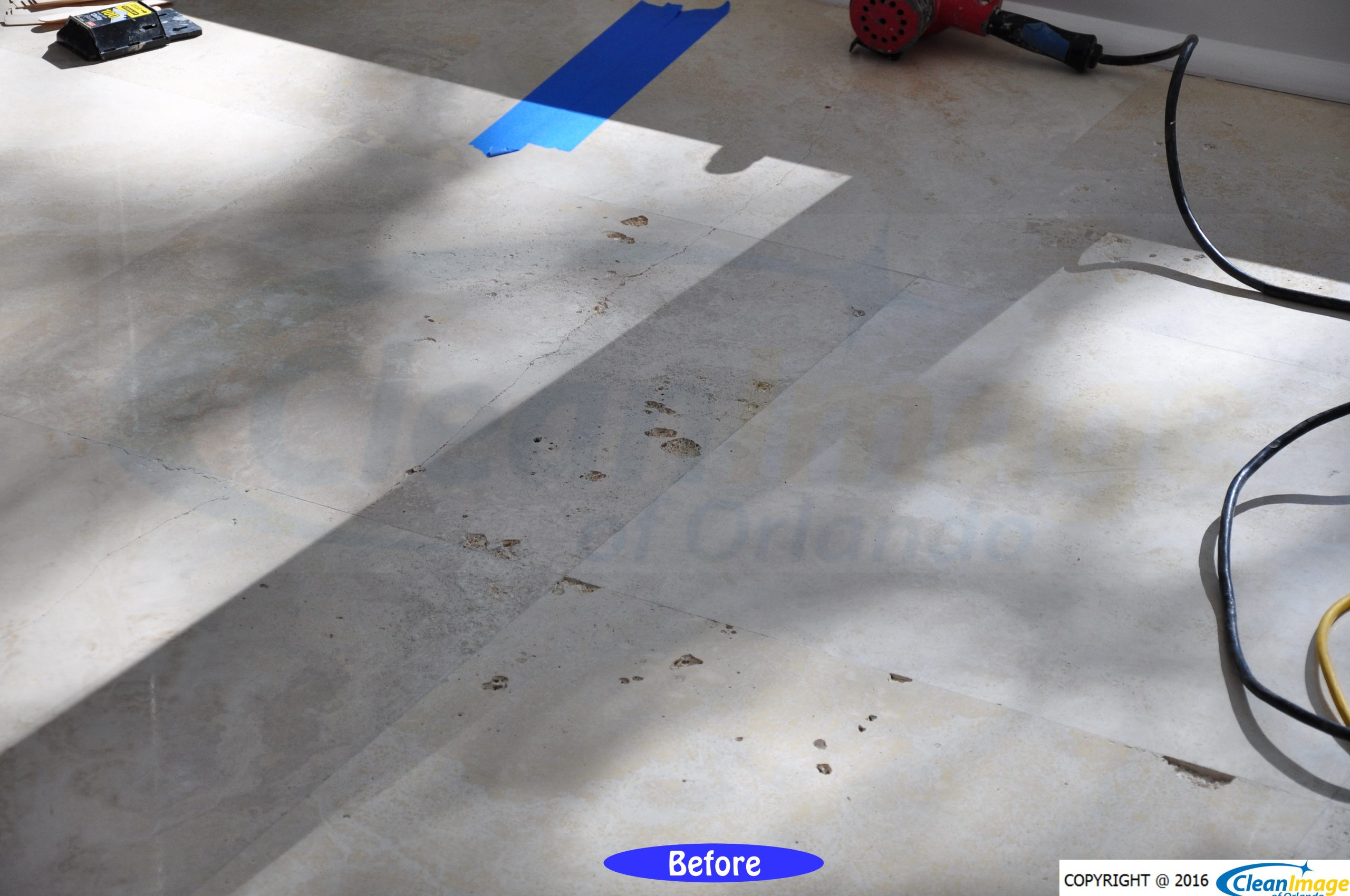
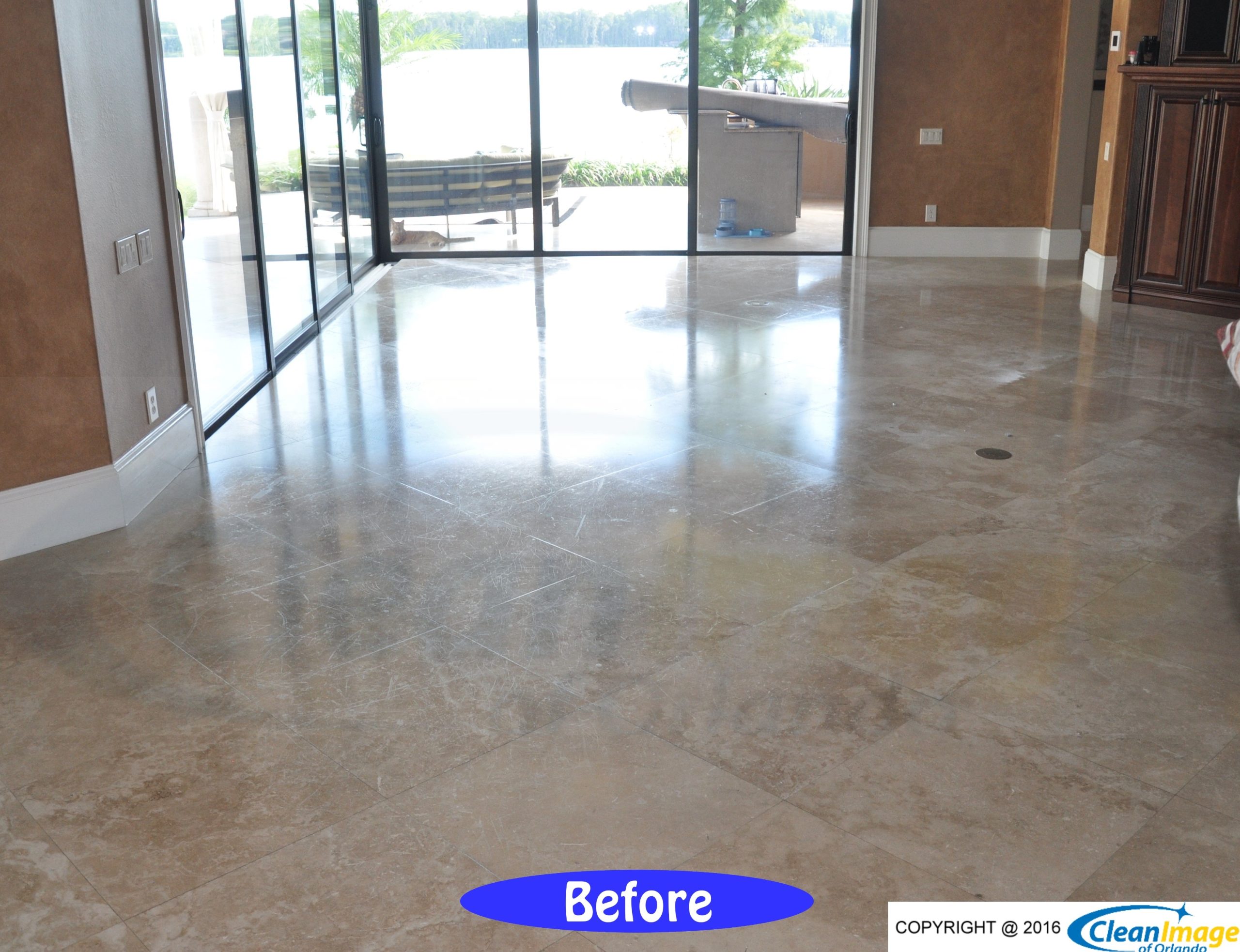
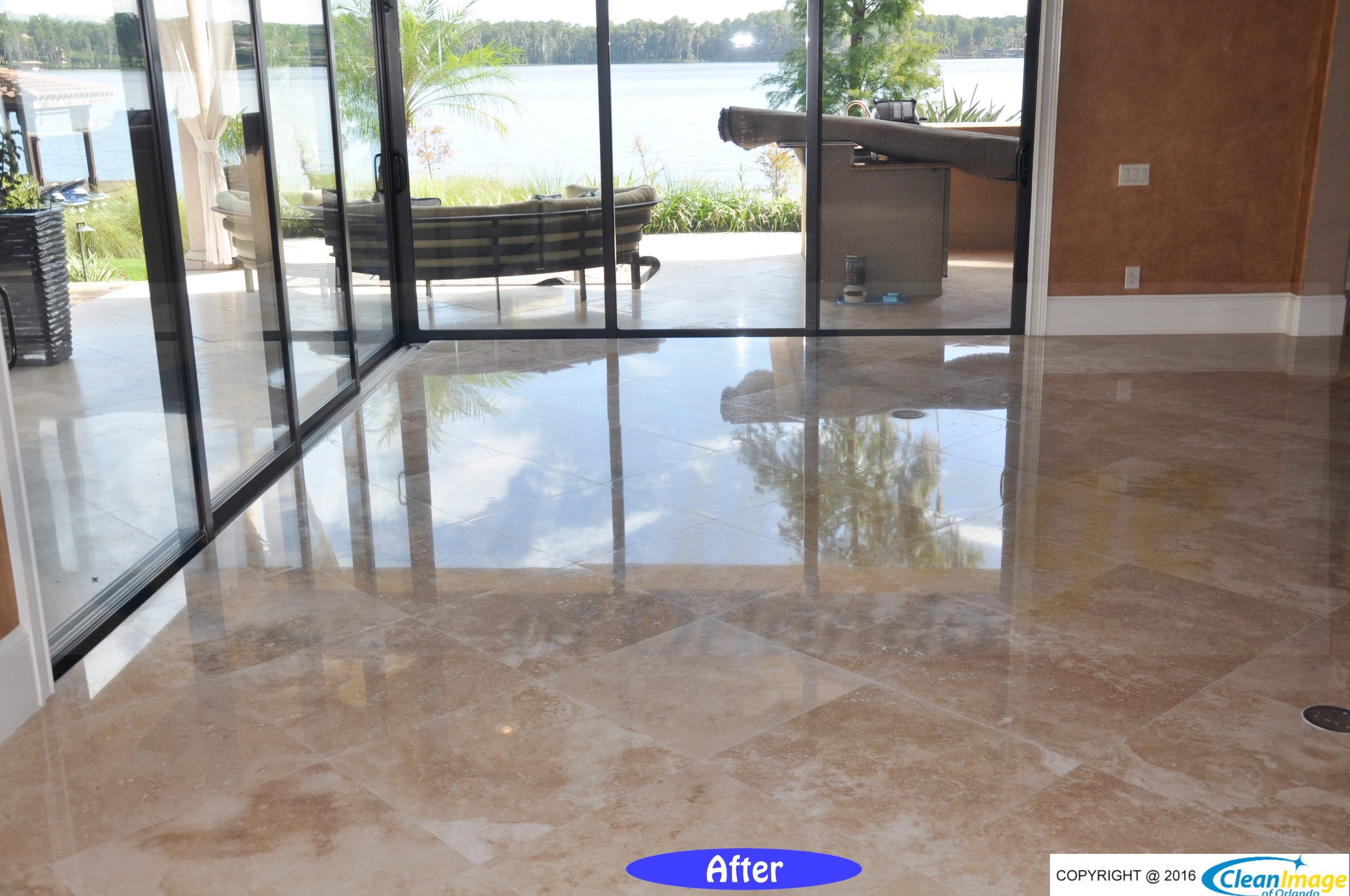
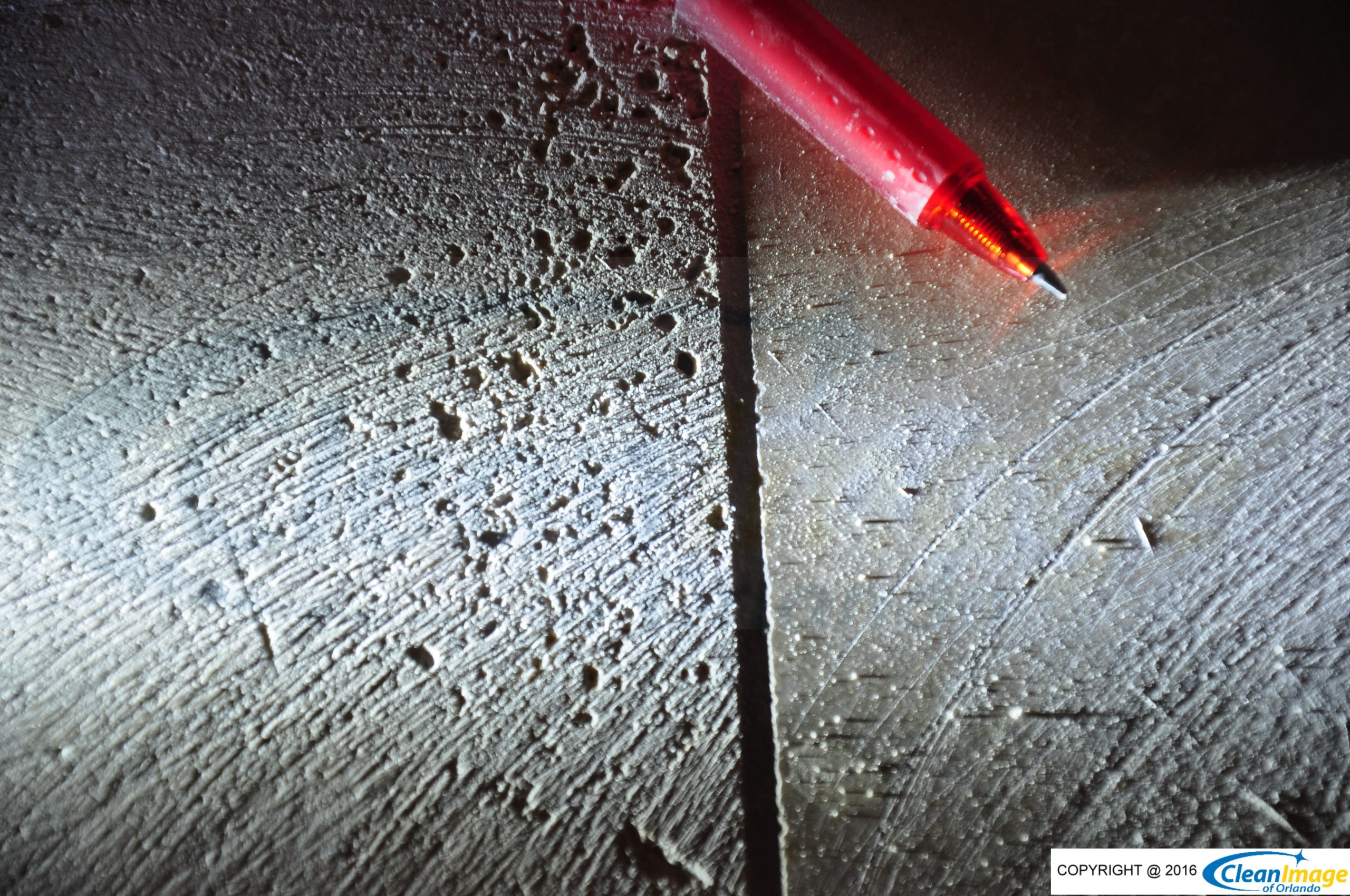
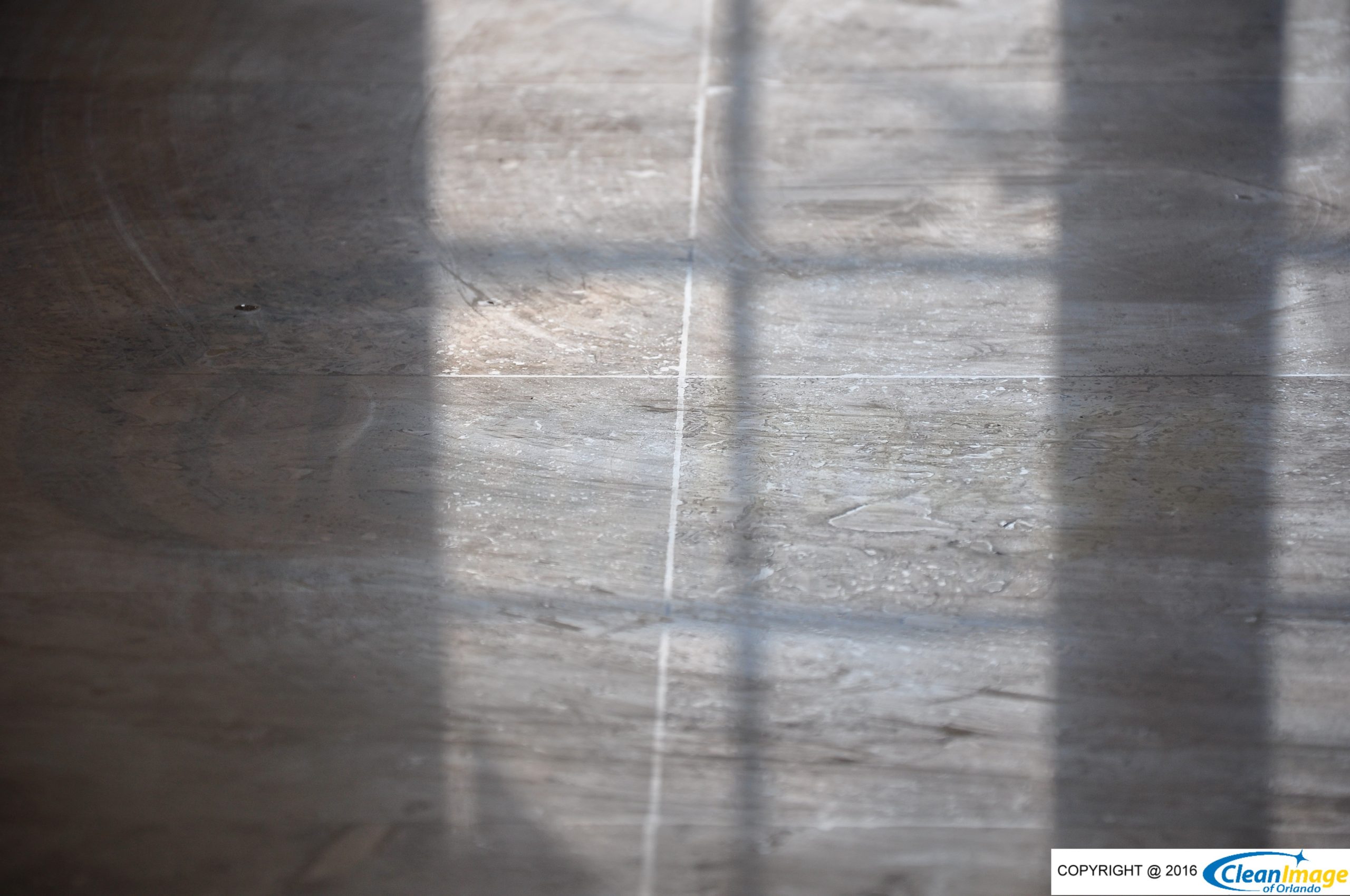
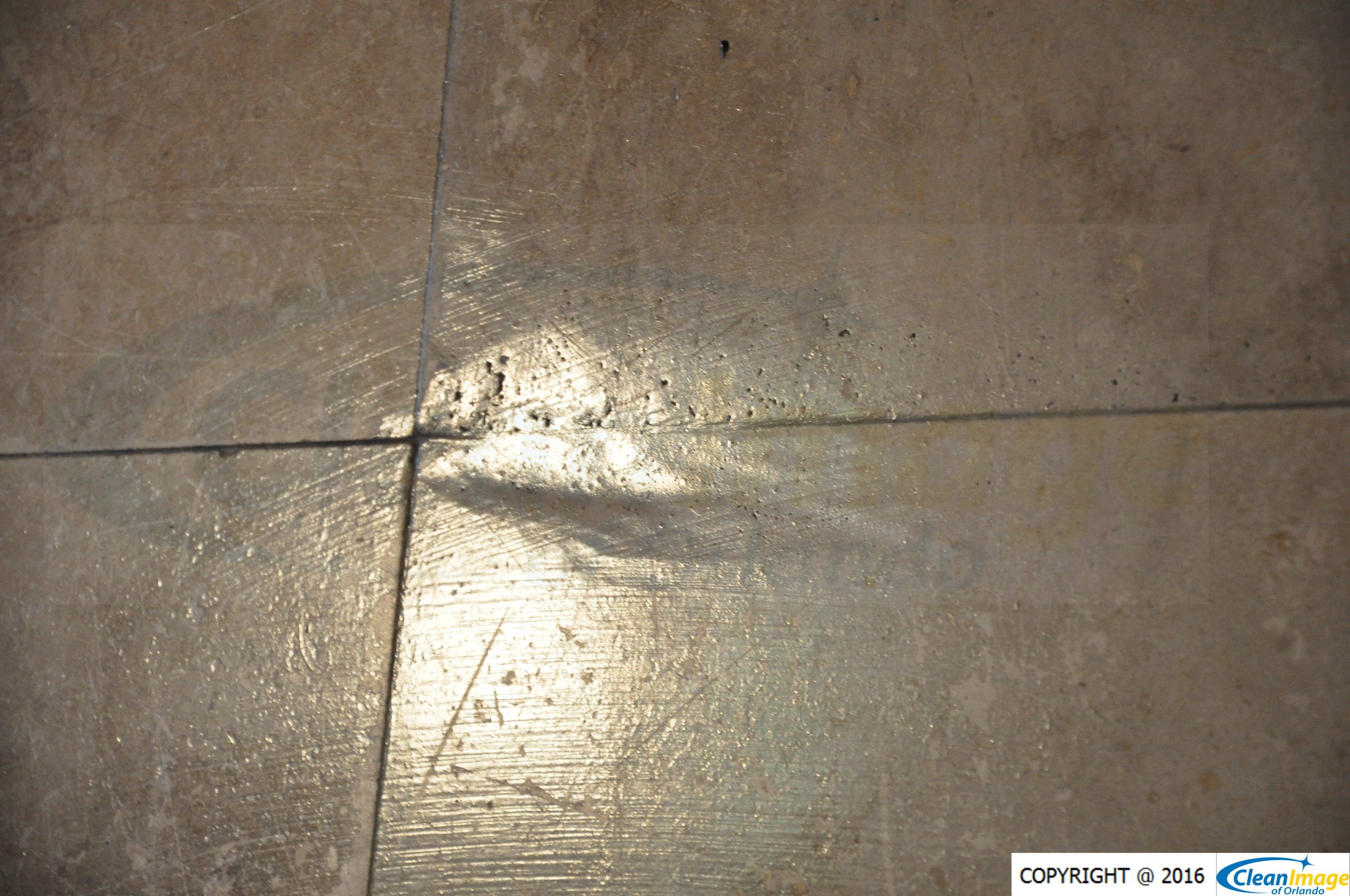
Then there is also damage that may occur if you hire a company that does not specialize in stone cleaning and refinishing, such as in the pictures shown. The new owners of this home had hired another company to clean their travertine floors. The owner had to stop the technician half way through cleaning because what she was witnessing. Mind you this was a company touting 20 years’ experience. The tool they were using to clean the floor was leaving significant scratching. What is astonishing is the technician didn’t notice the damage he was doing. Clean Image of Orlando was hired to deep clean, refinish and repair the damage that was done. The old saying comes into play here, “it doesn’t matter how long you have been doing it, it’s how long you been doing right”.
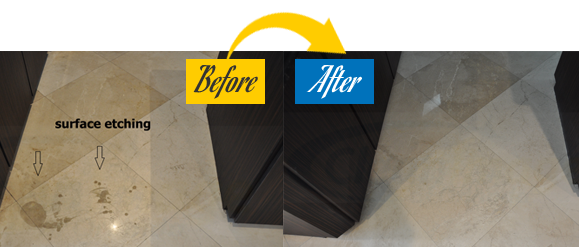
What Is Etching?
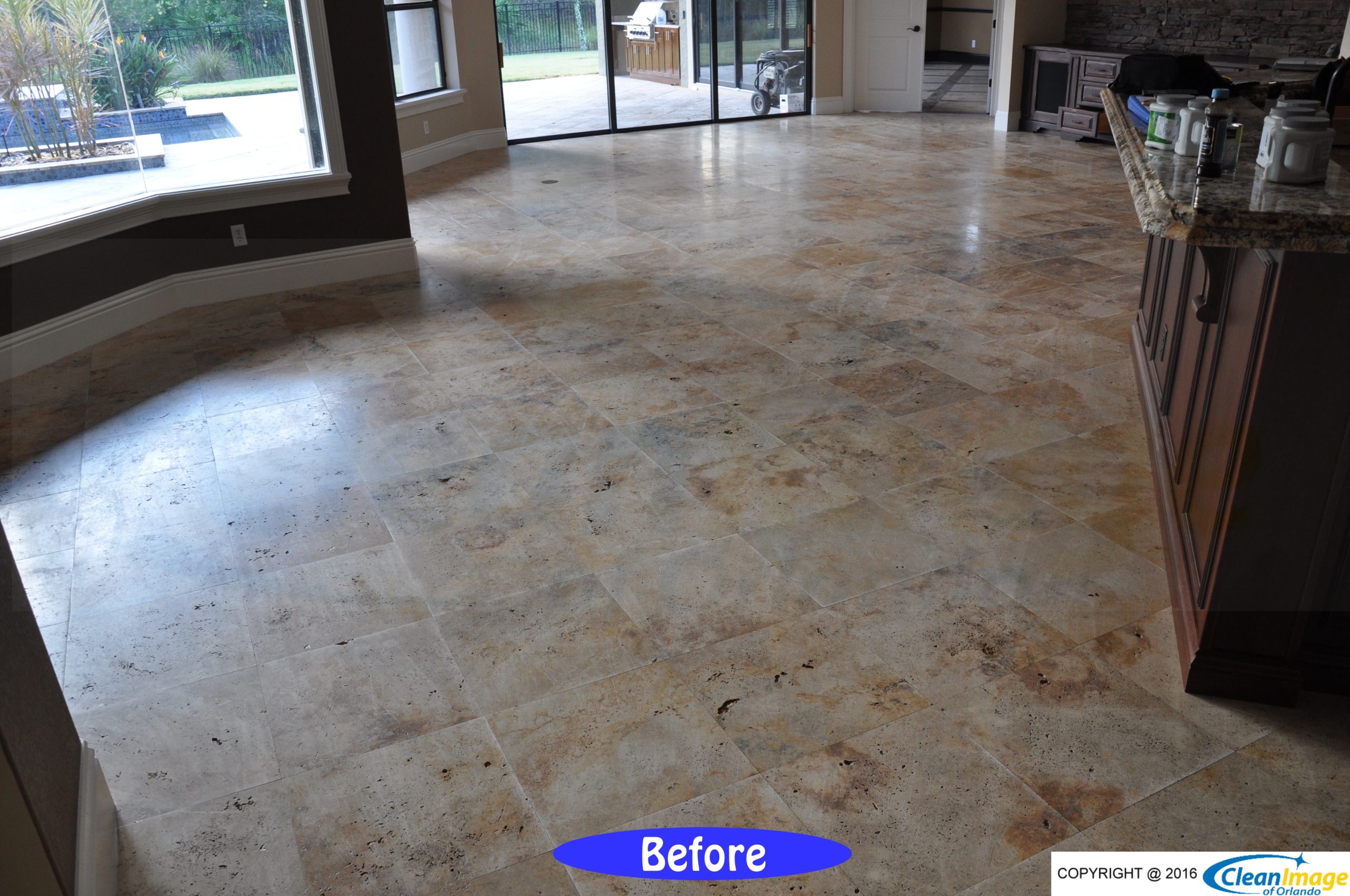
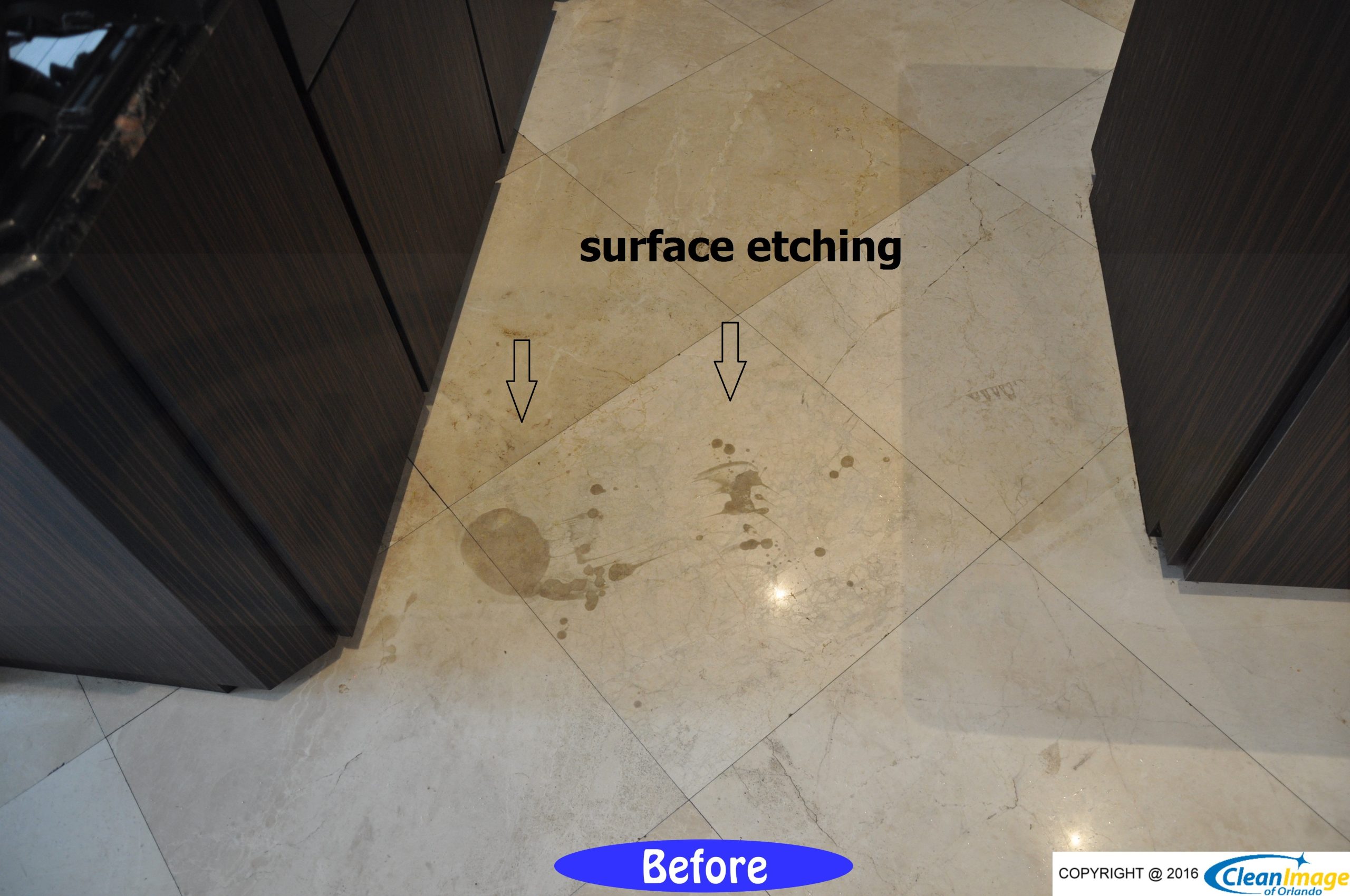
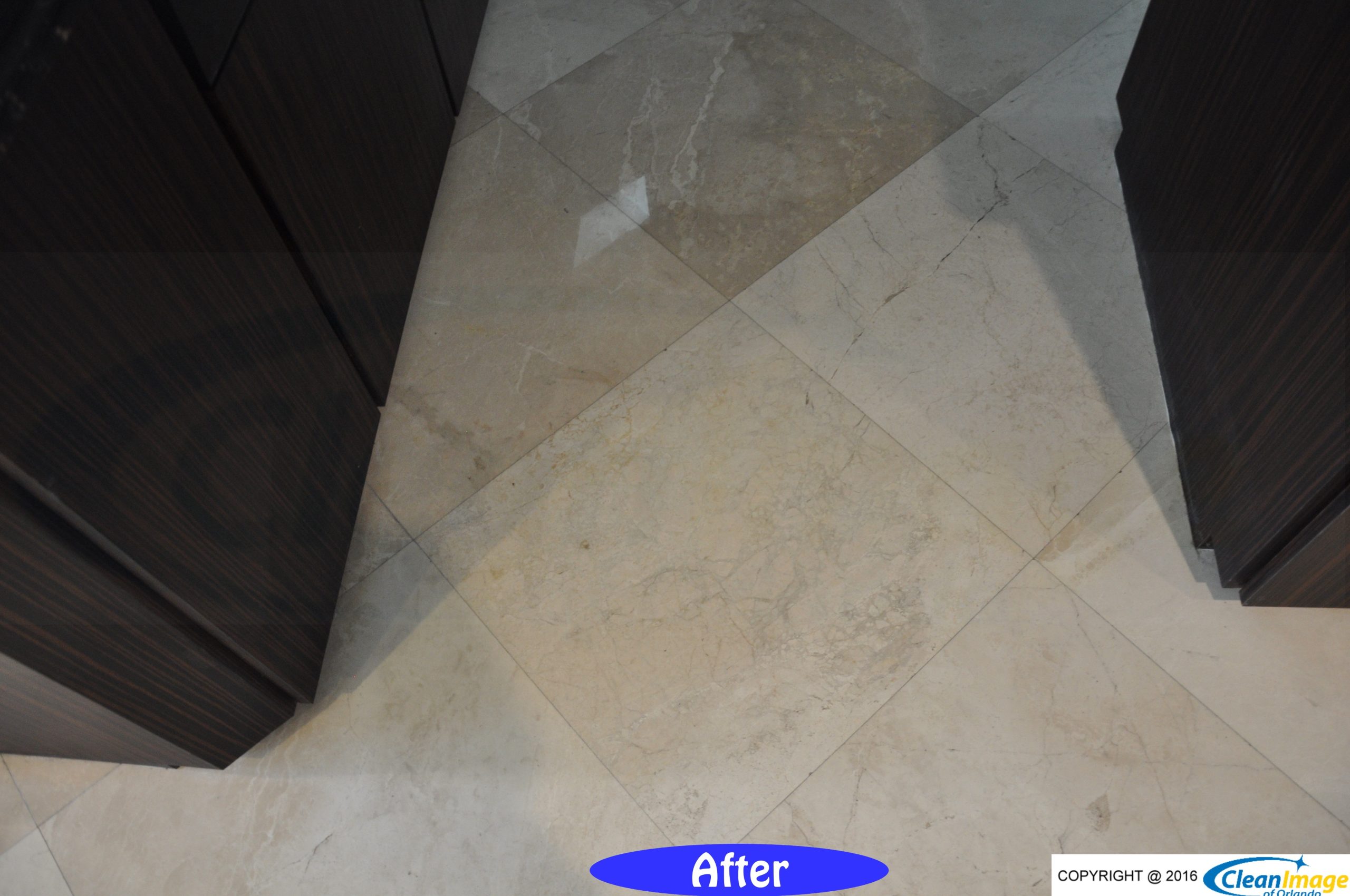
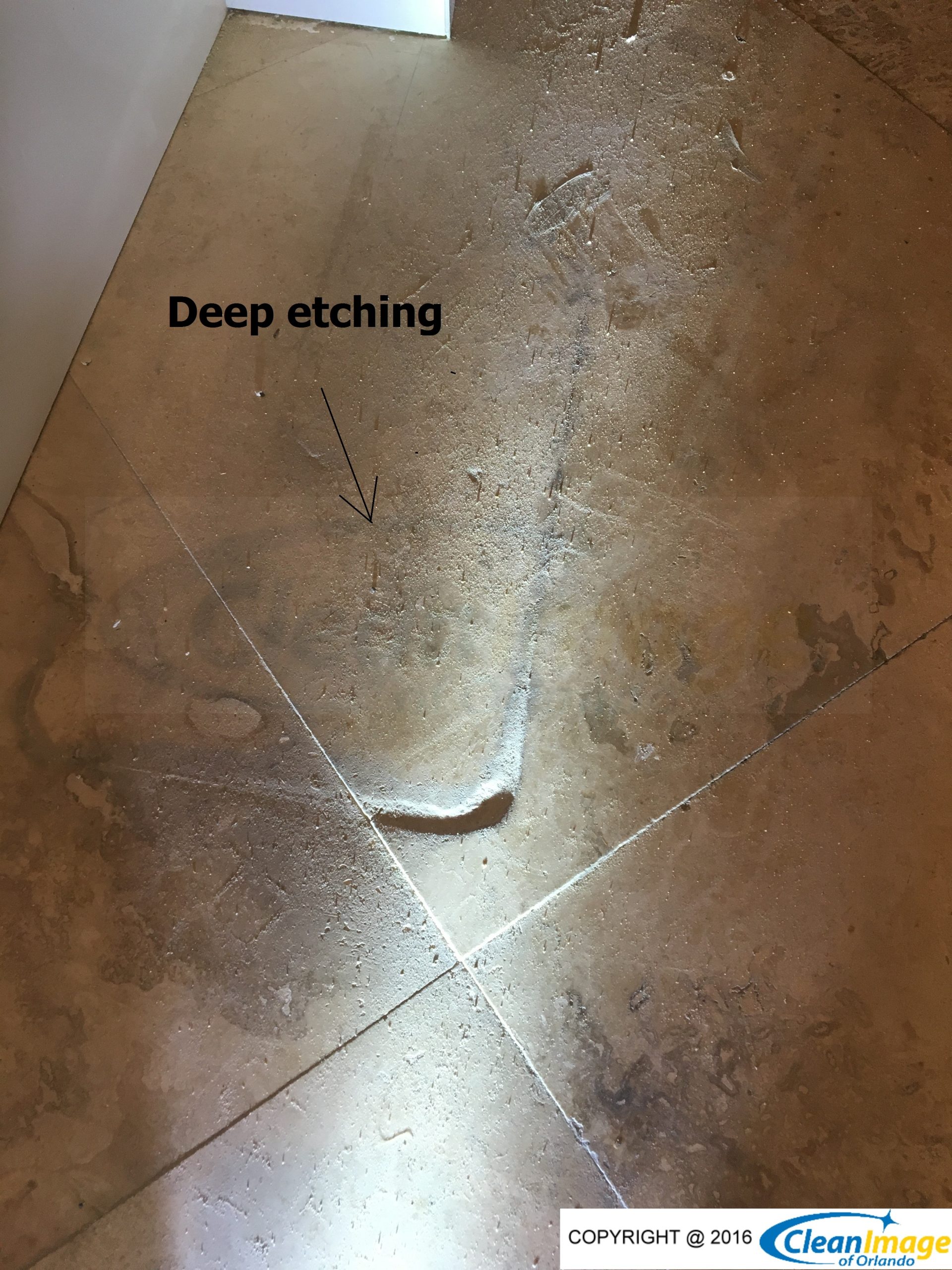
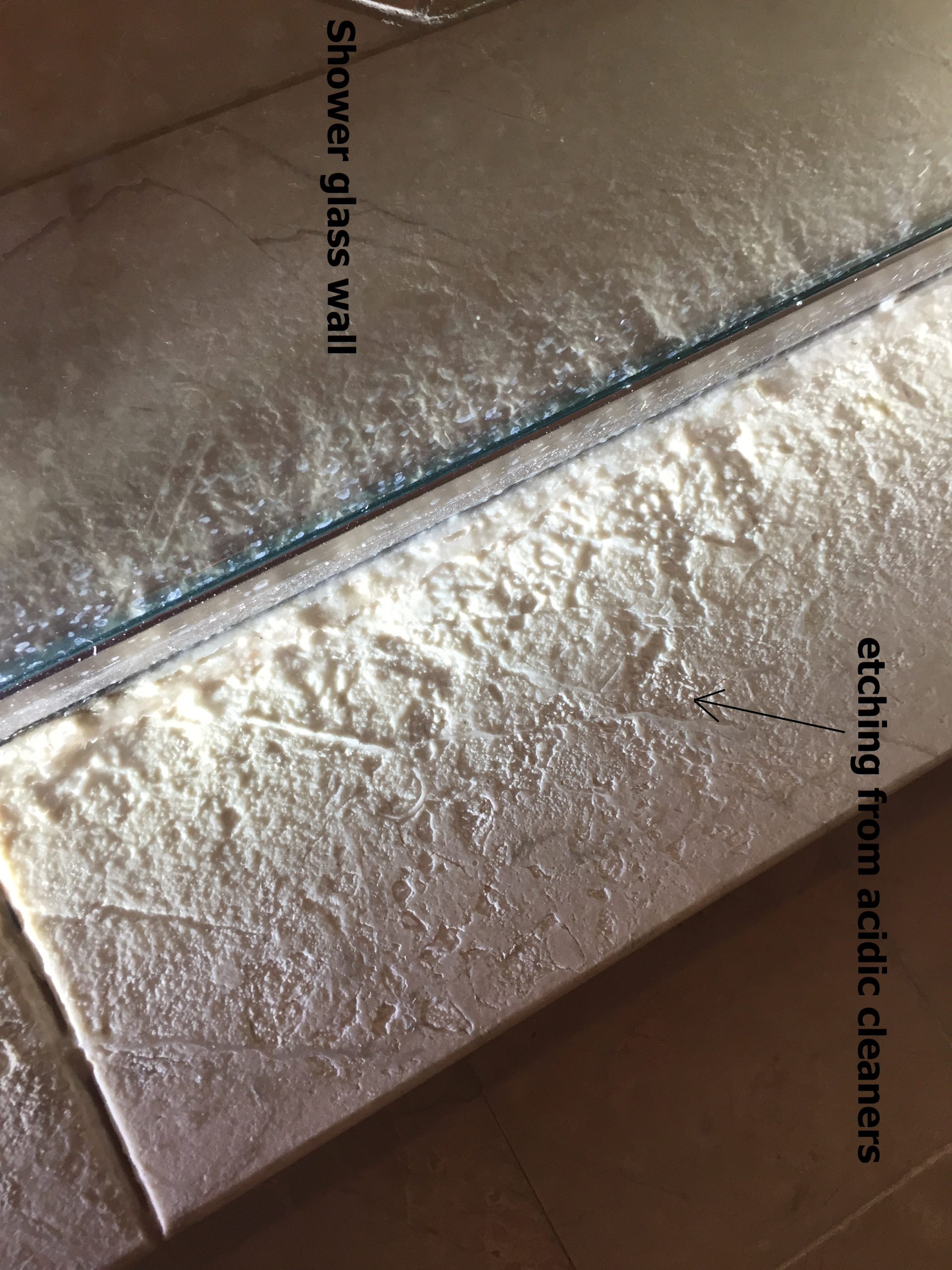
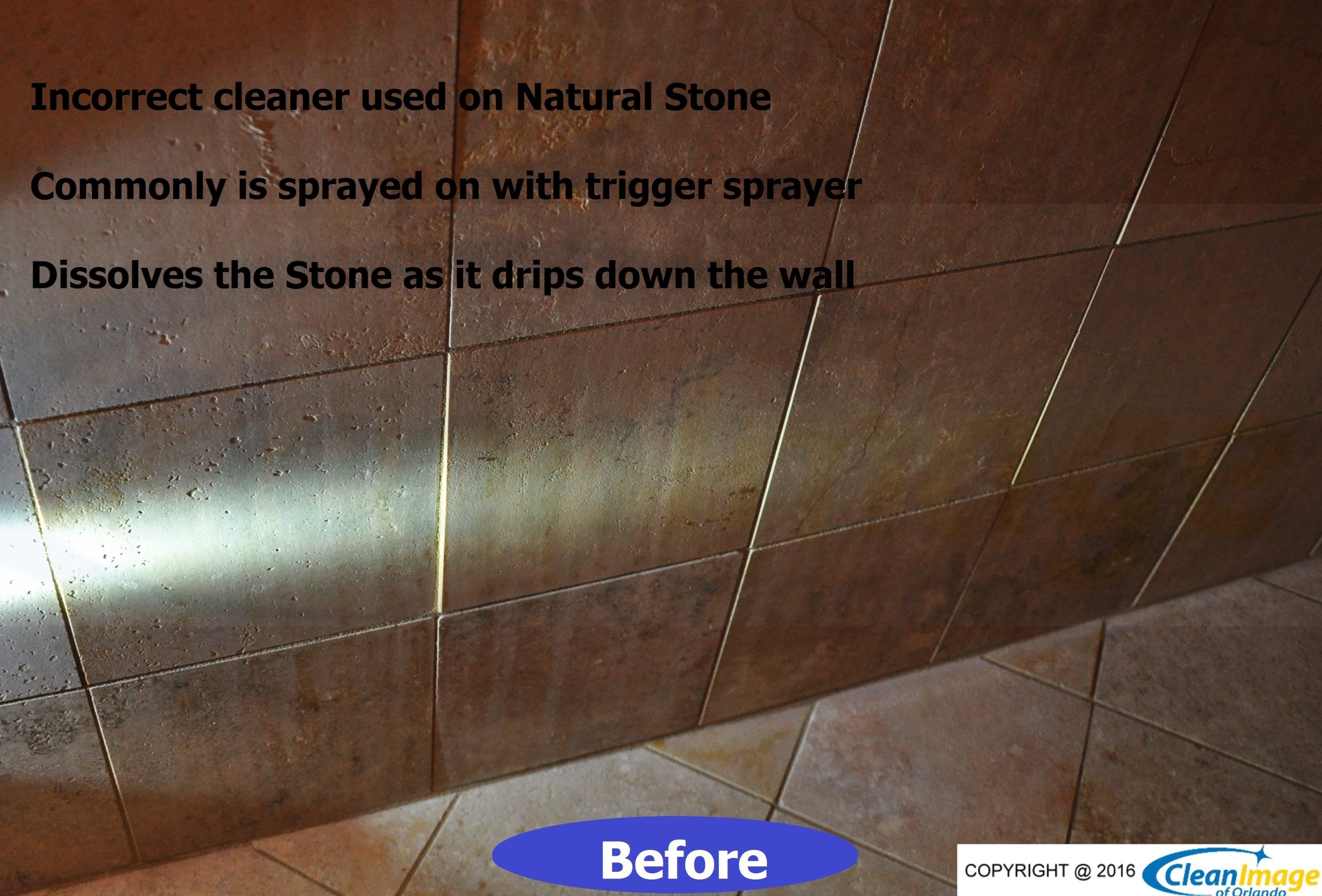
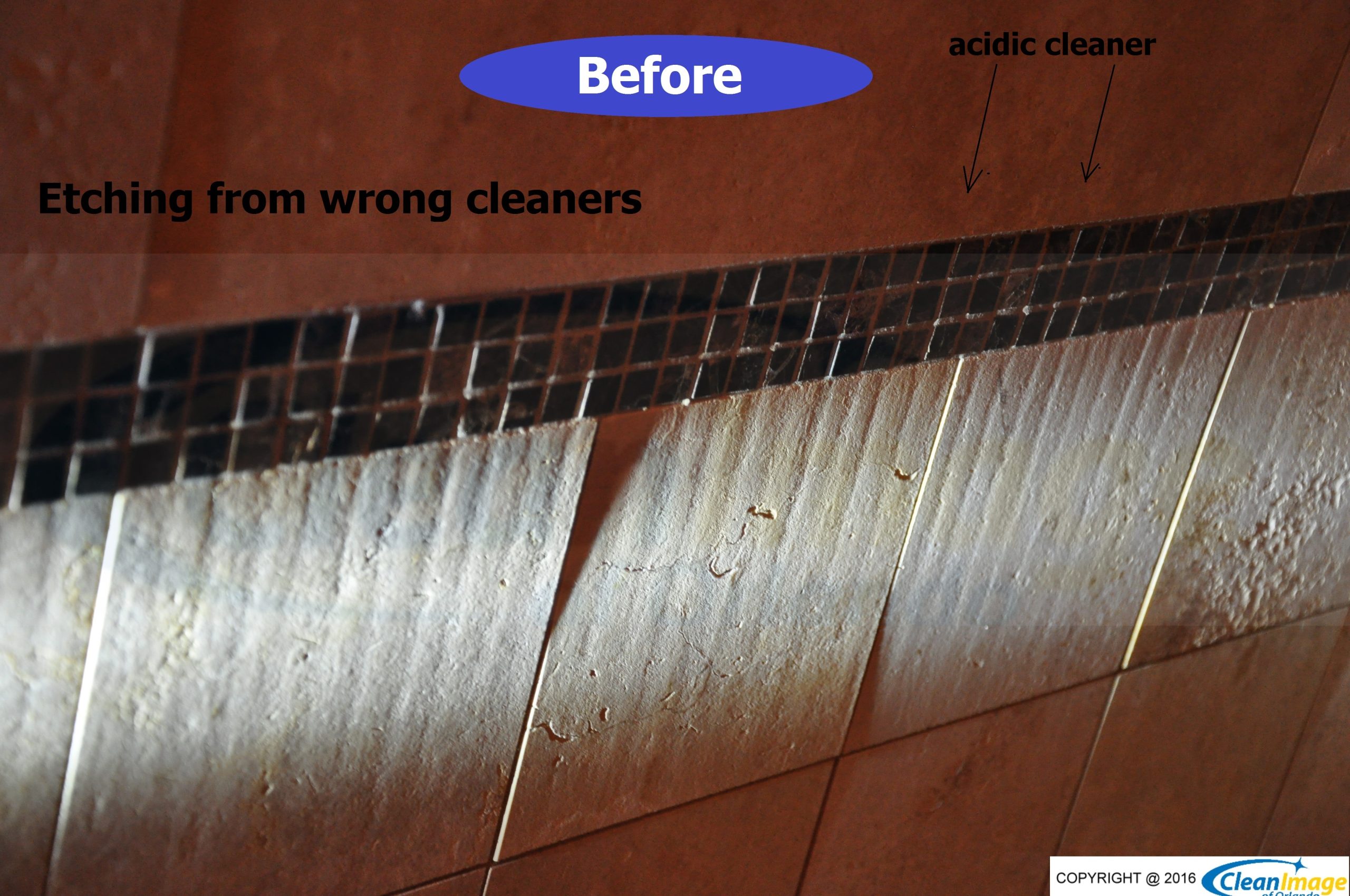
Etching as it relates to Marble, Travertine and Limestone, is when an acid reacts with the calcium carbonate, their primary composition, and literally eats or dissolves the surface. If you spill anything acidic on your natural stone floor, liquid or solid, you run a risk of etching your polished surface. What this is in laymen’s terms is the dissolving of the surface of the stone. This will not only remove the polished shine you once had, however it will also leave the area rough, causing soils to get trapped in the now rough etch and thus outlining it like you see here. The solution depending on how severe, or how deep the etch goes, is diamond hone and re polish to match the surrounding finish. Often if you spill something acid on your Marble, travertine or Limestone, you will readily notice and dark areas. The area will actually be lighter in color with a loss of any shine. As time goes on the rougher texture of the etch attracts soil and the etch will become pronounced. Never use acid based cleaners on natural stone floors, including vinegar(aced-acid).
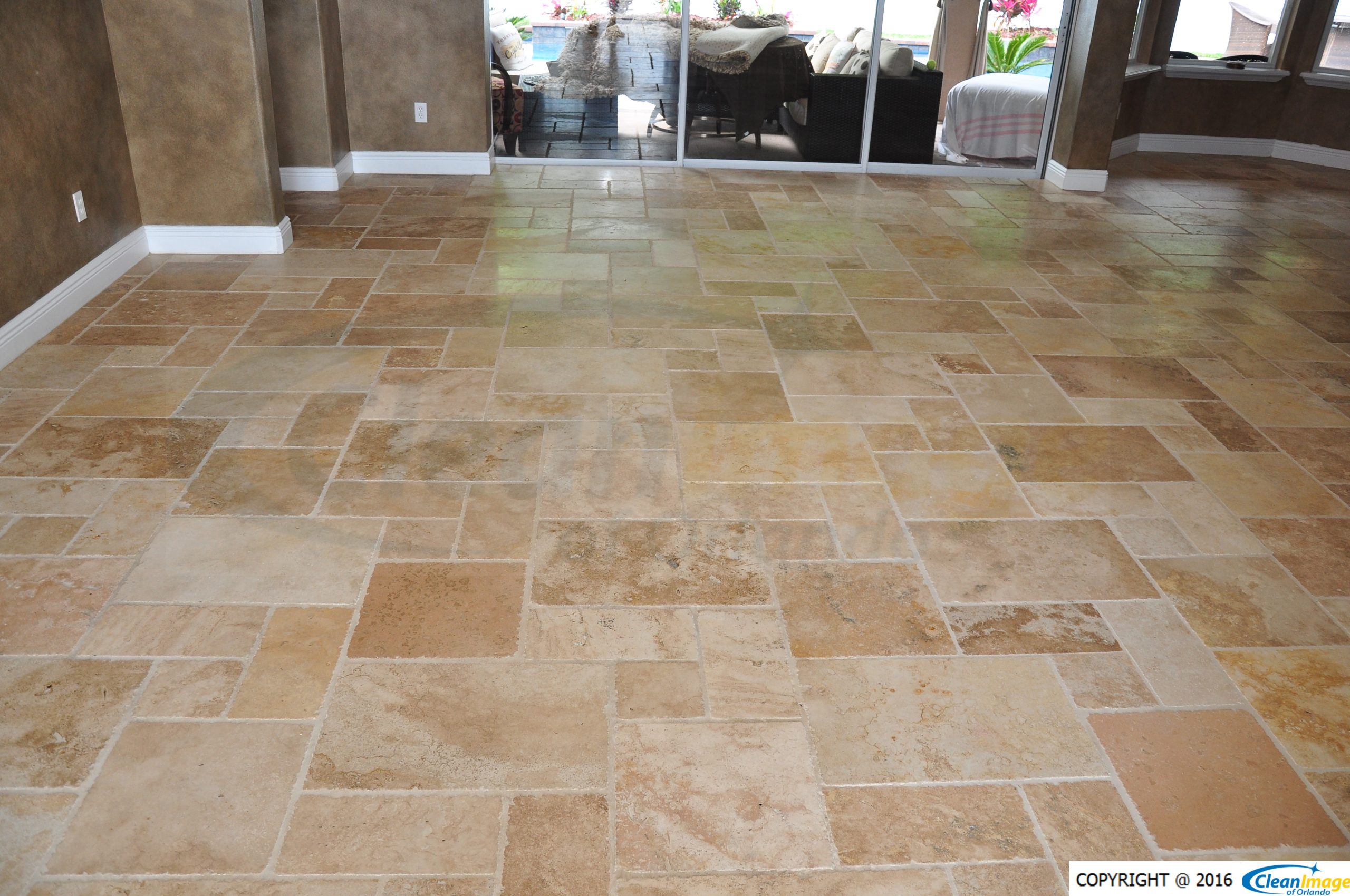
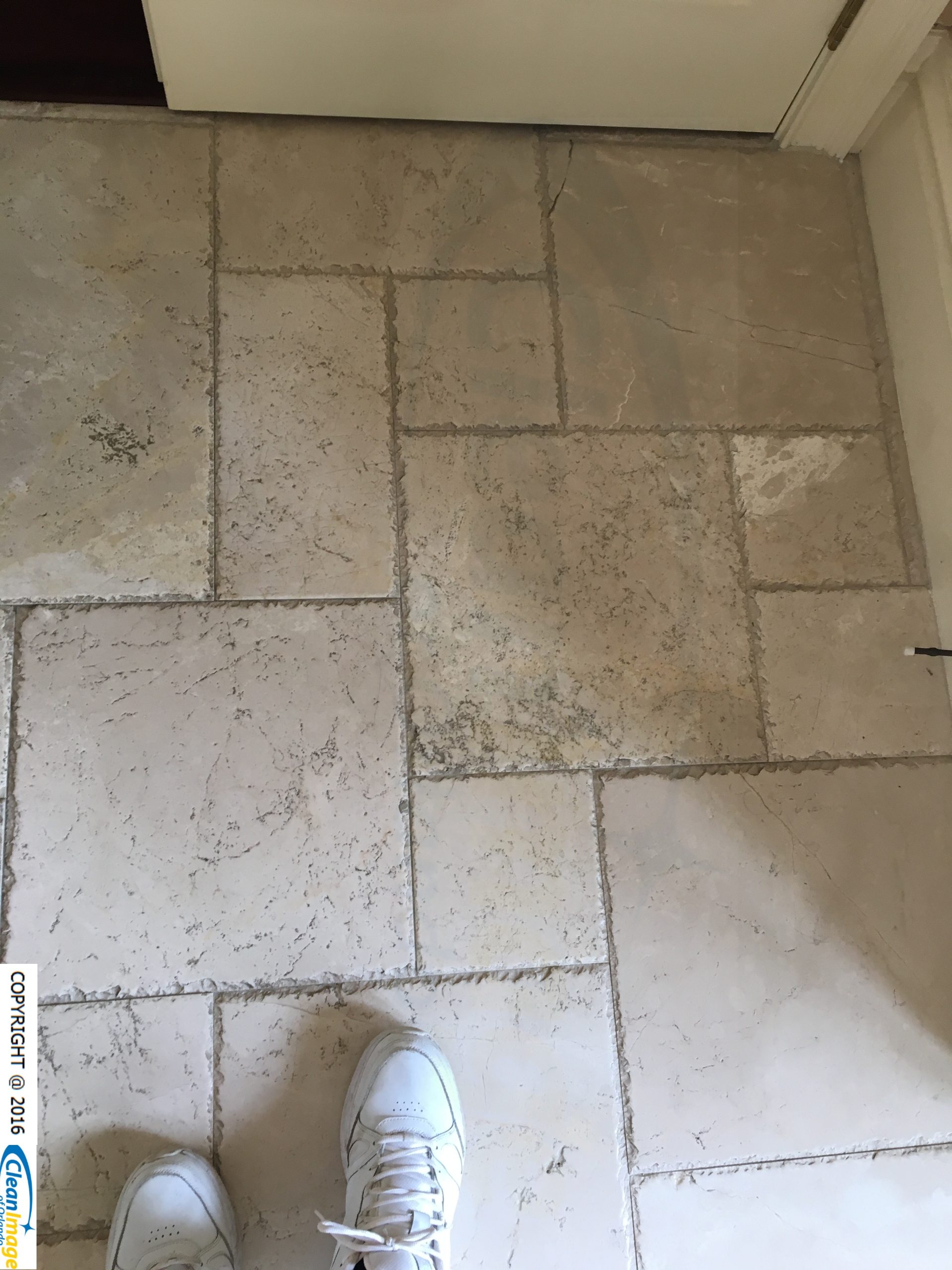
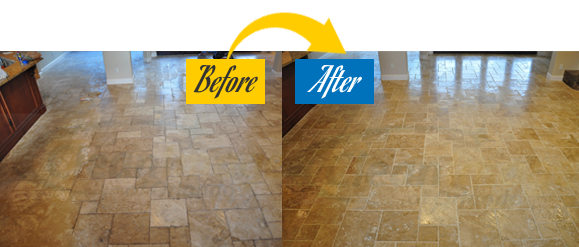
What is a Castle Installation? (Also Known As Ashlar Or French Pattern)
Why Shouldn't I Put A Coating Sealer On My Stone
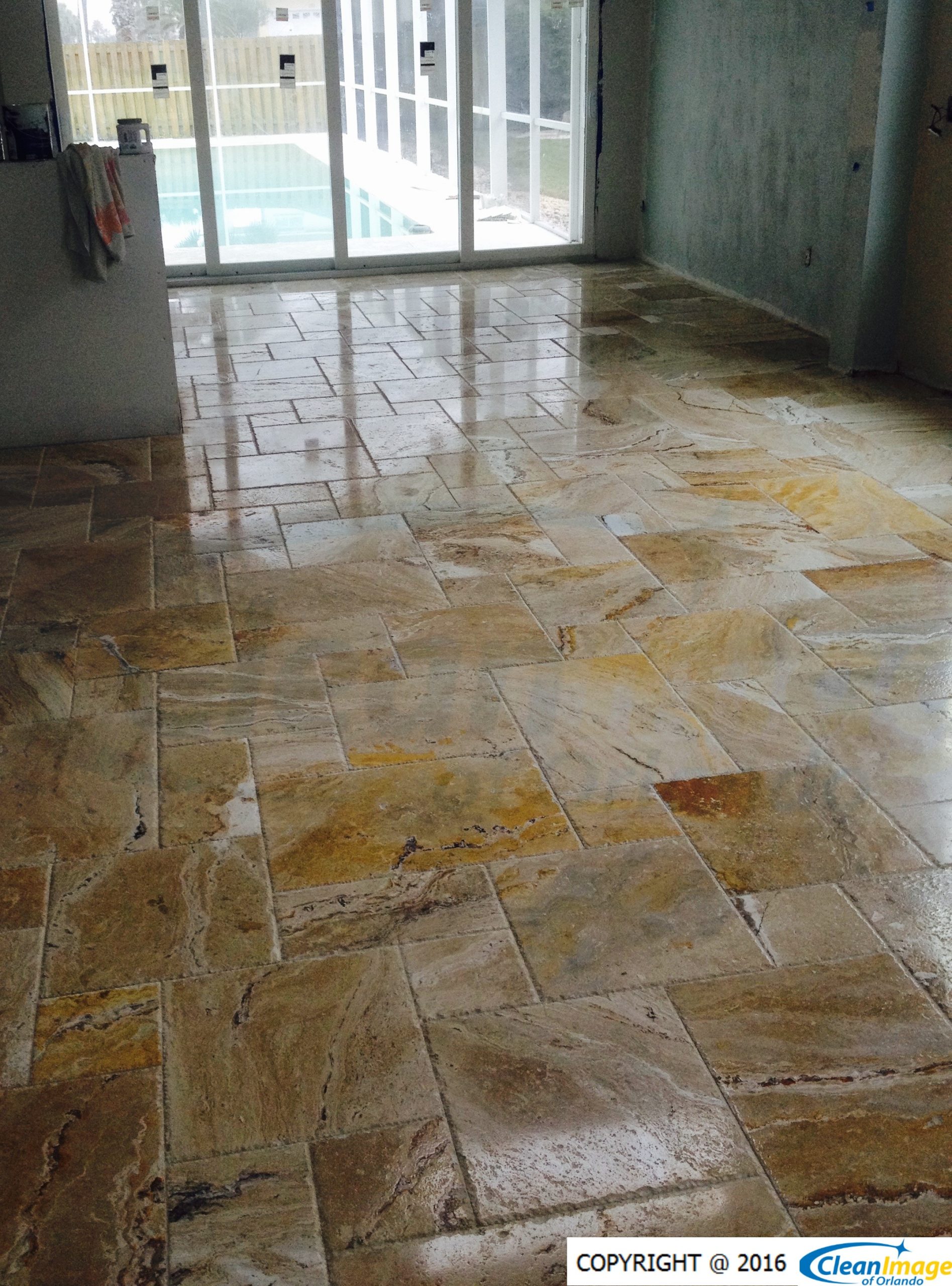
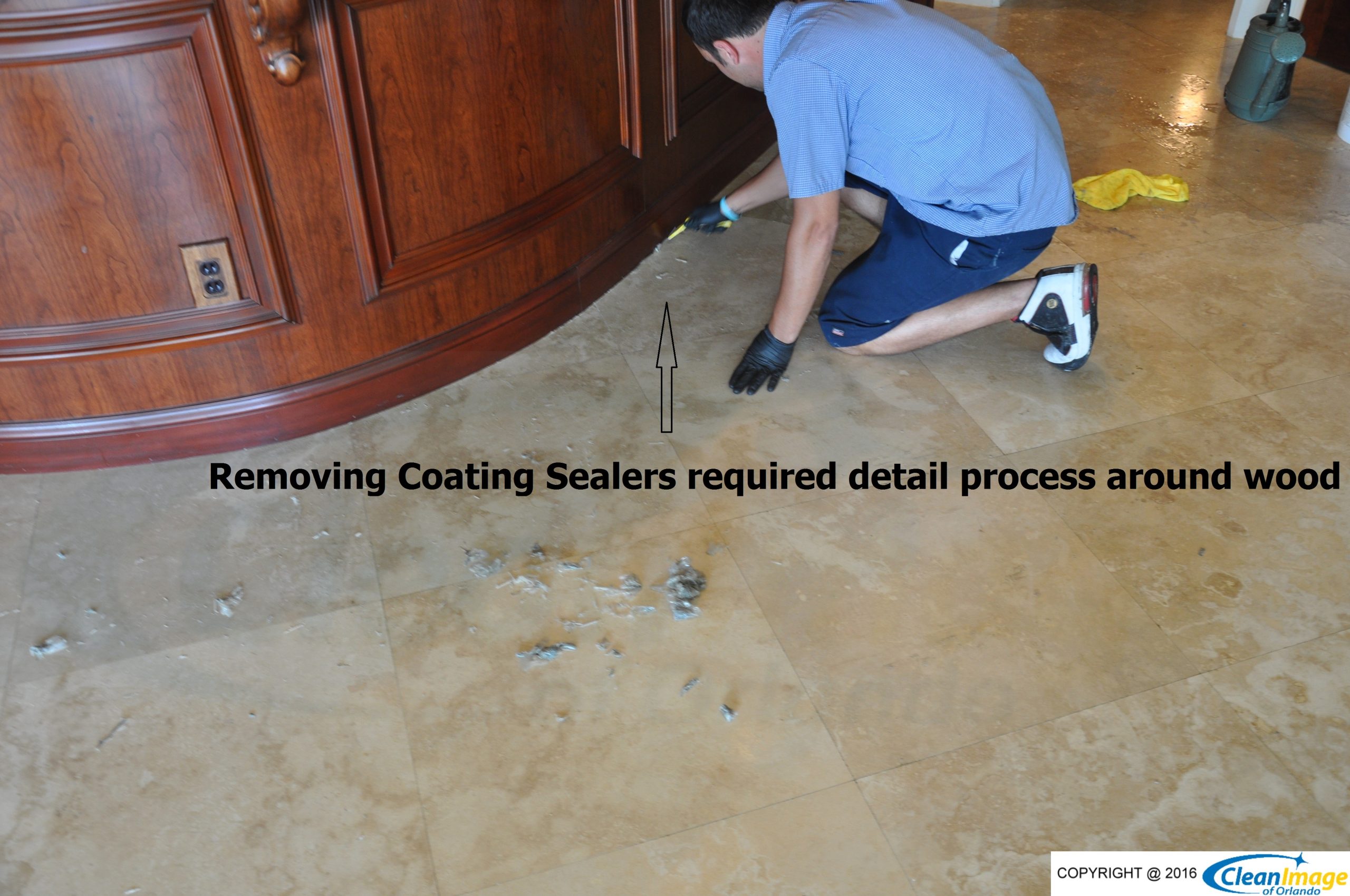
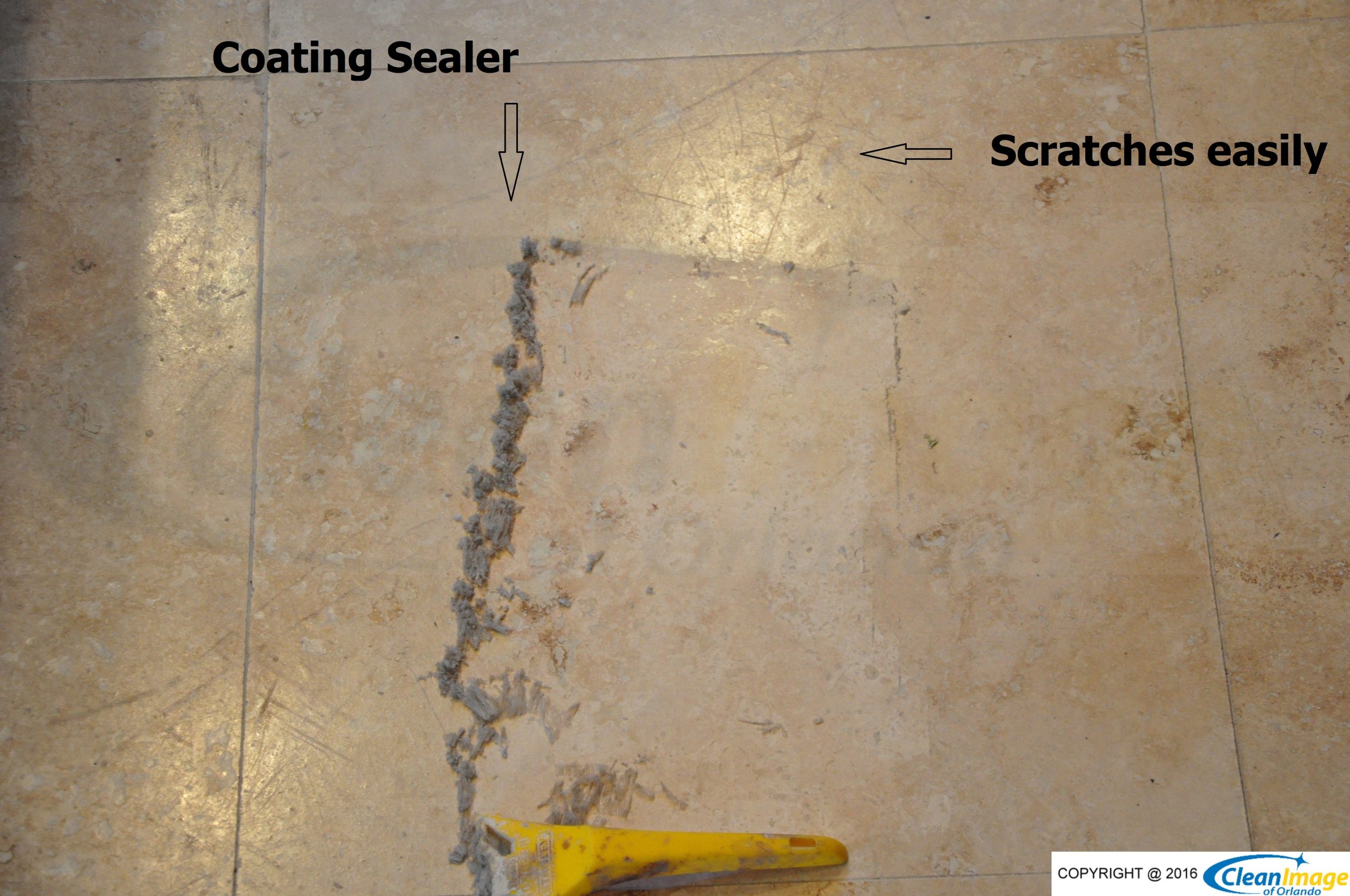
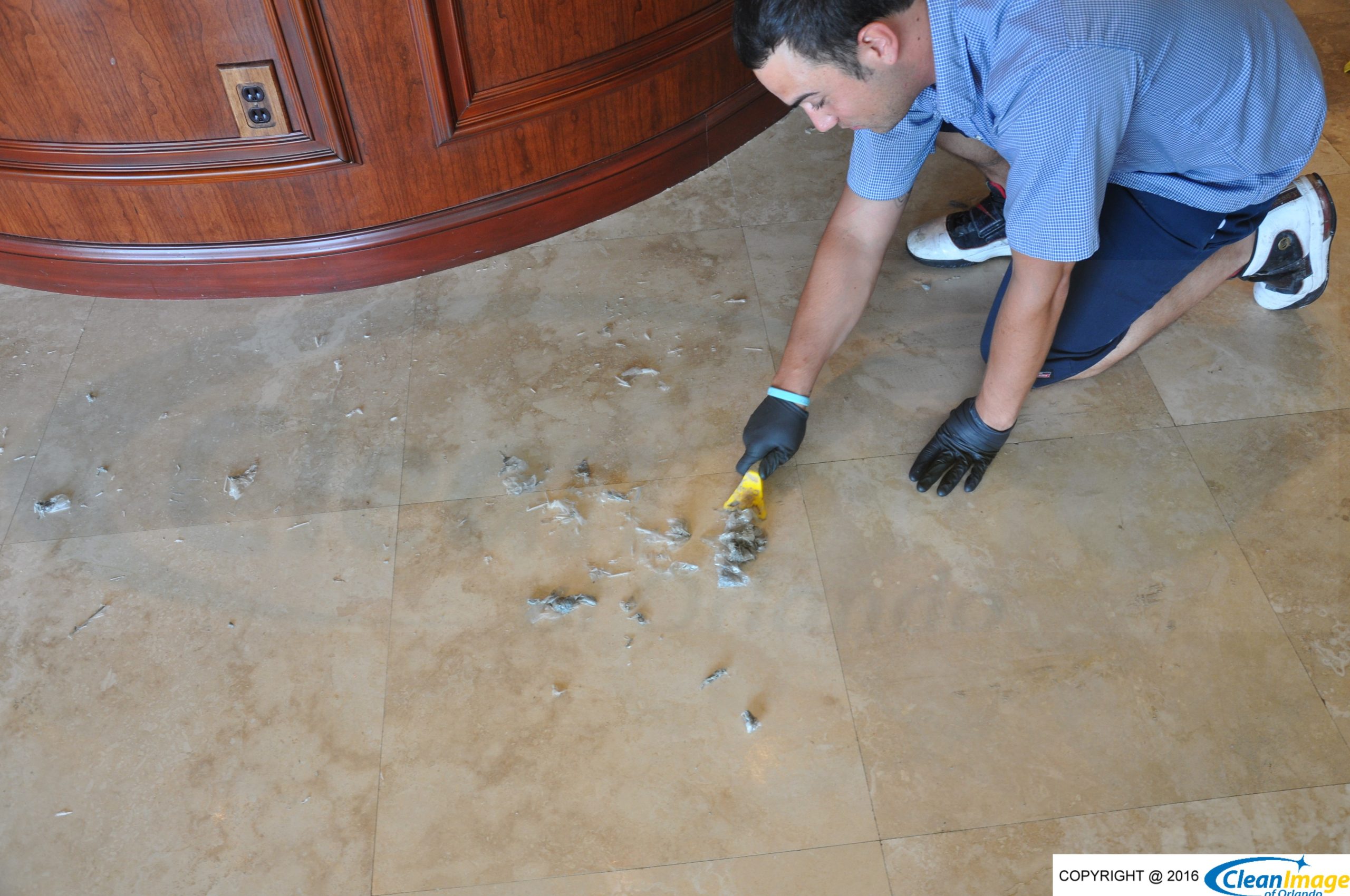
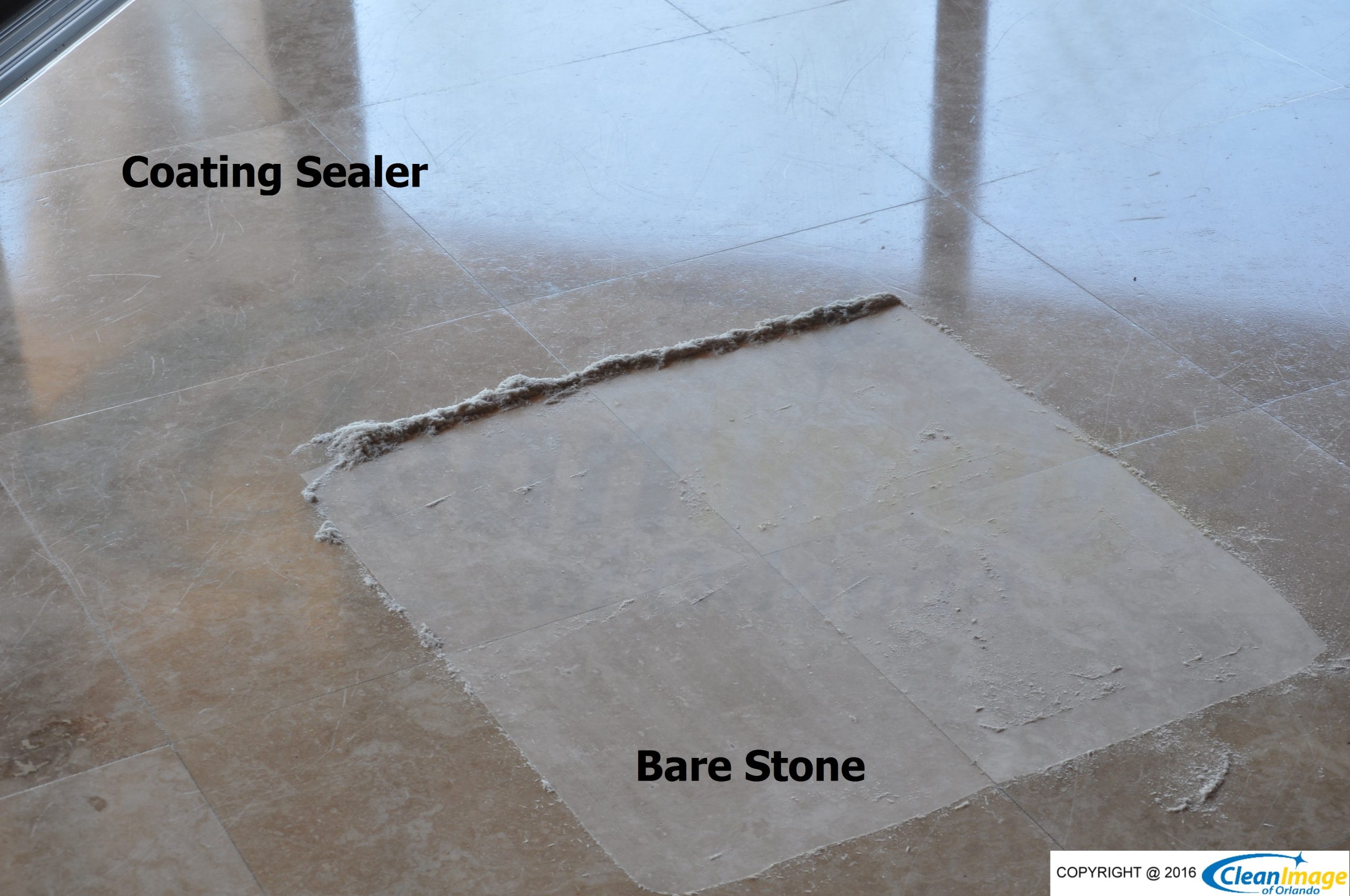
Topical coating sealers on smooth interior stone tend to scratch very easily and “ugly” out very quickly. You would also think the “sealer” would keep the floor cleaner longer, when in fact it gets soiled much faster and when it comes time to clean, you will not be able to. This is because the soil is embedded into the sealer, not on top like you would imagine a topical sealer should work on stone. At this point, to “clean” your floors, we must use a chemical stripper to break down the sealer. Clean Image of Orlando does NOT recommend topical sealers on interior travertine in almost all cases. We recommend penetrate sealers, or impregnating sealer. View the many pictures to see results of topical sealer applications.
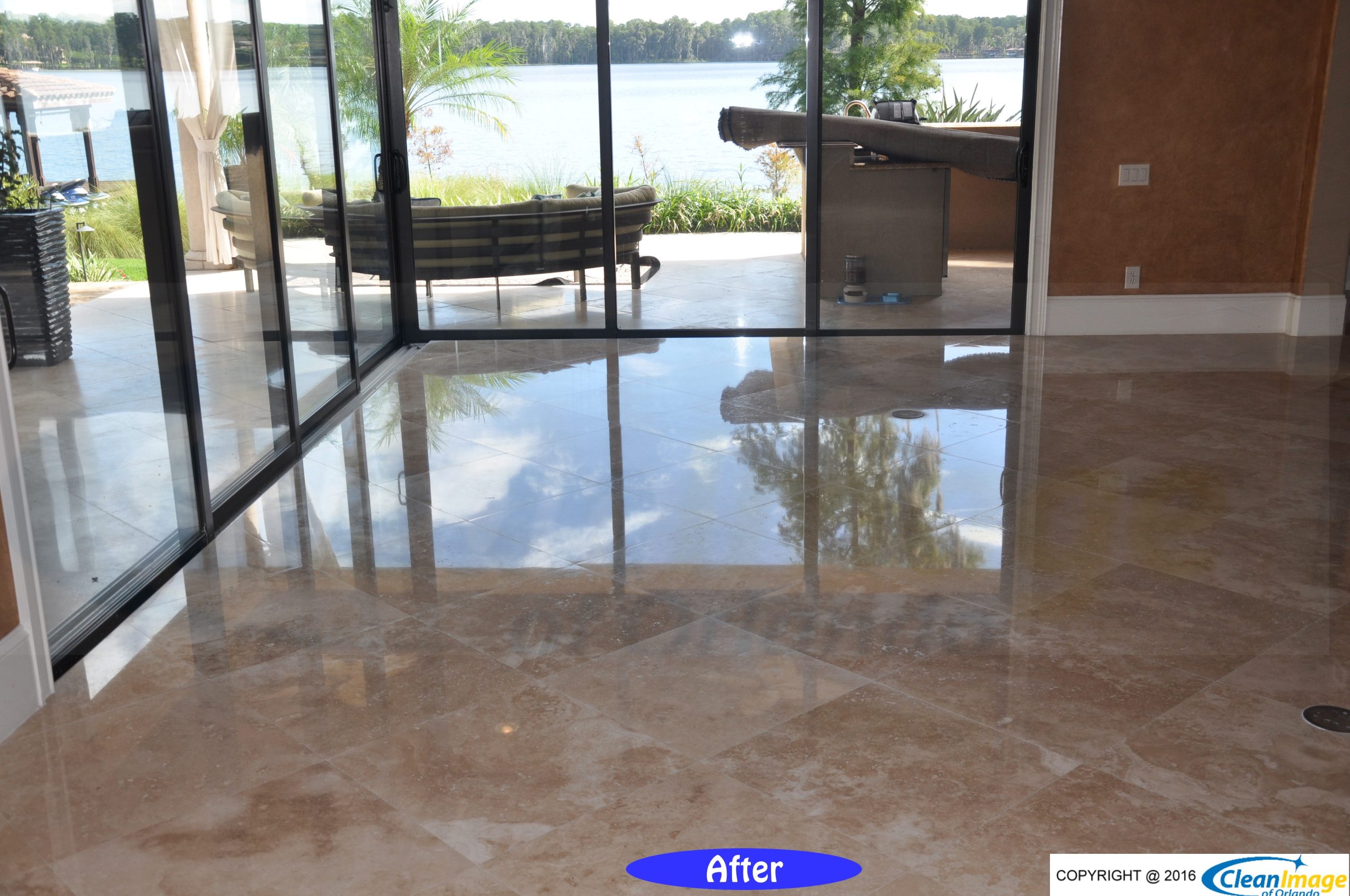
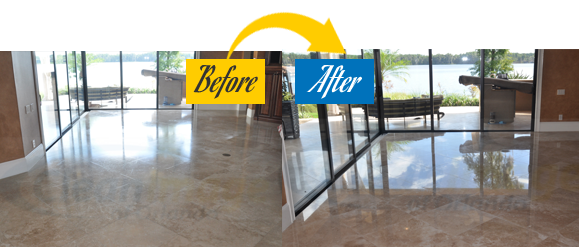
There is no comparison in appearance of a natural stone polish and a coating “polish”, as you can see in the pictures above. Coating sealers will often take away the natural beauty of stone by making it cloudy with diminishing its clarity. Often coating sealers are applies out of ignorance, or just bad information.
Are All Crack Repairs The Same?
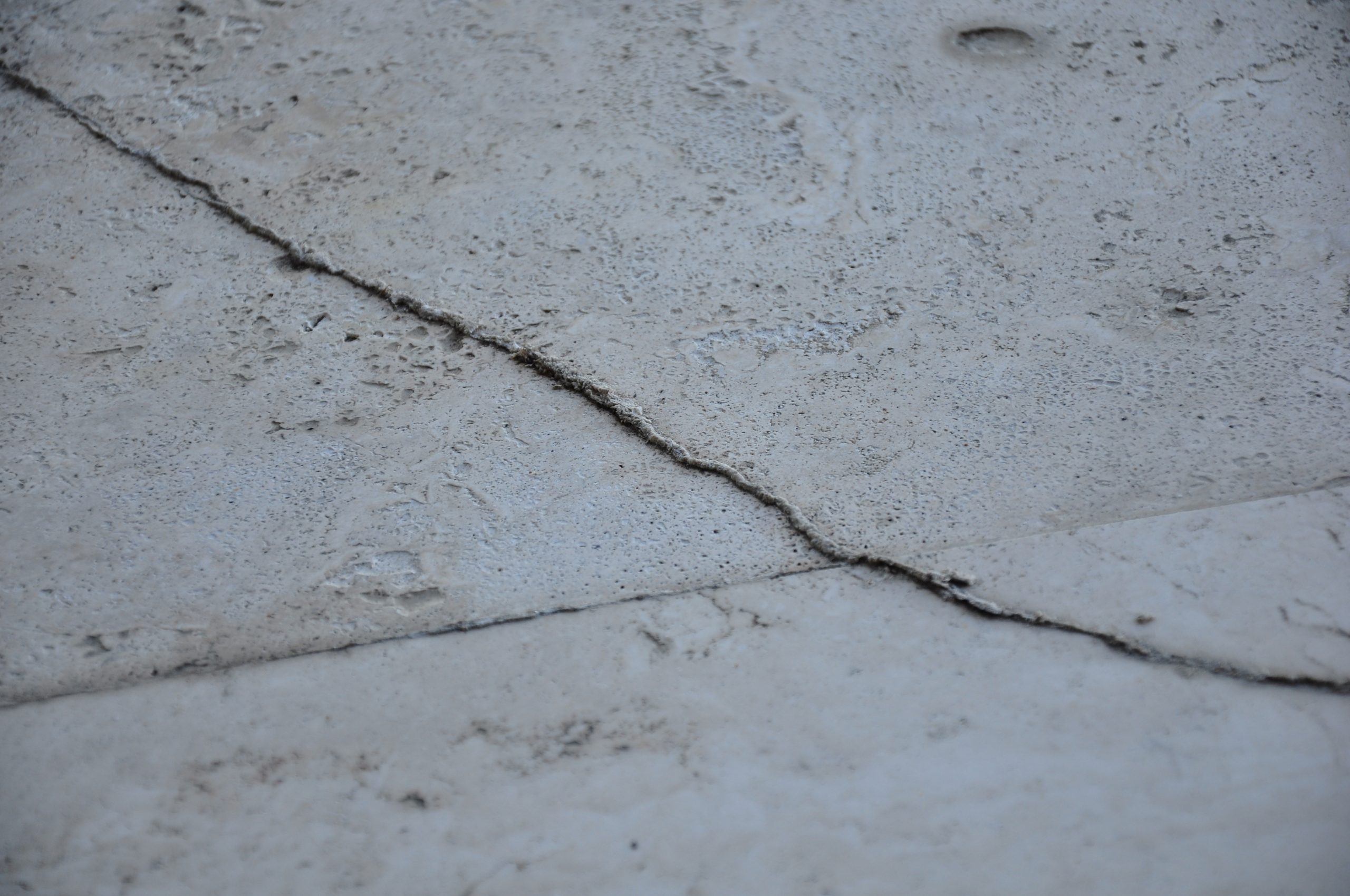
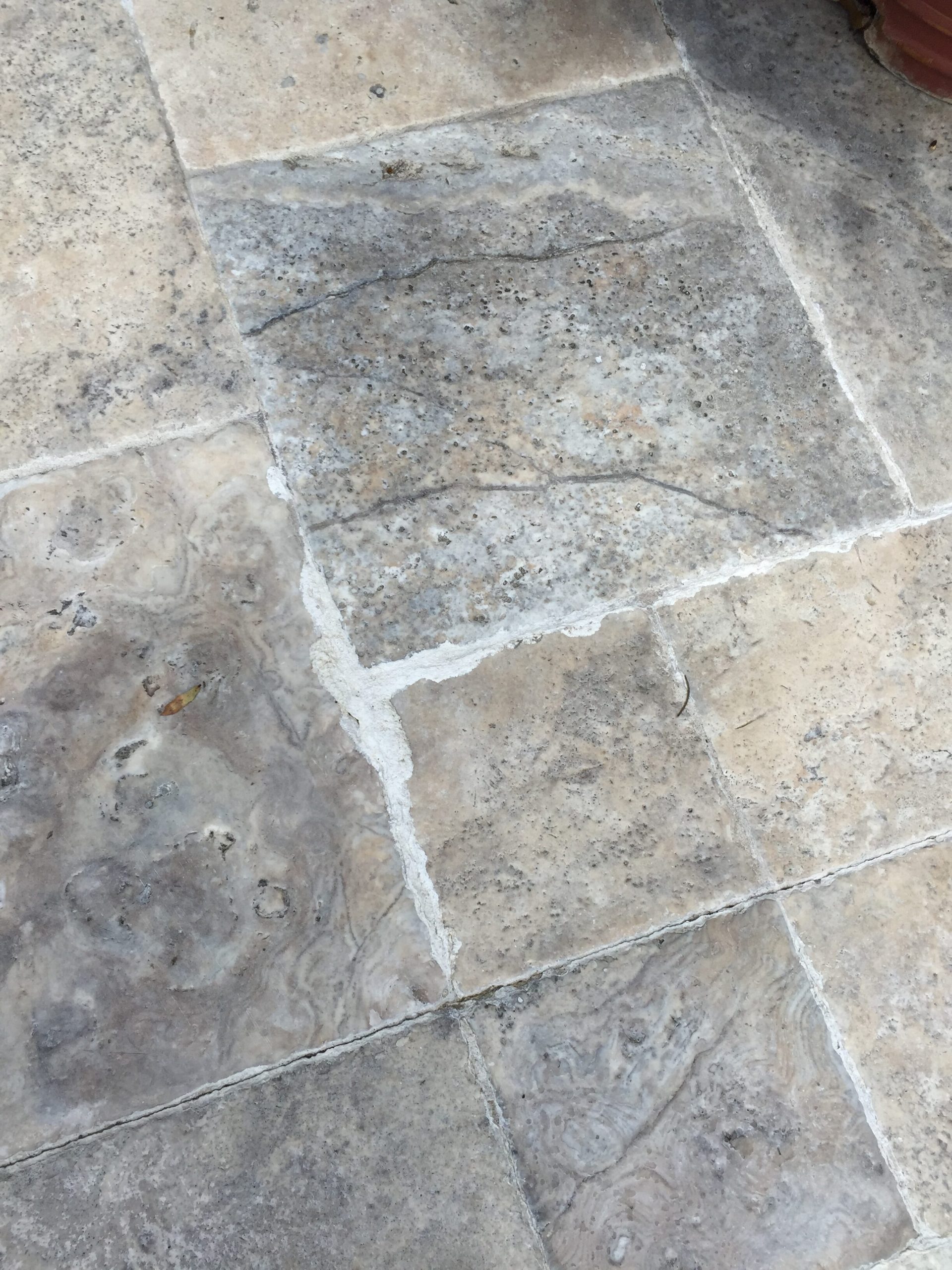
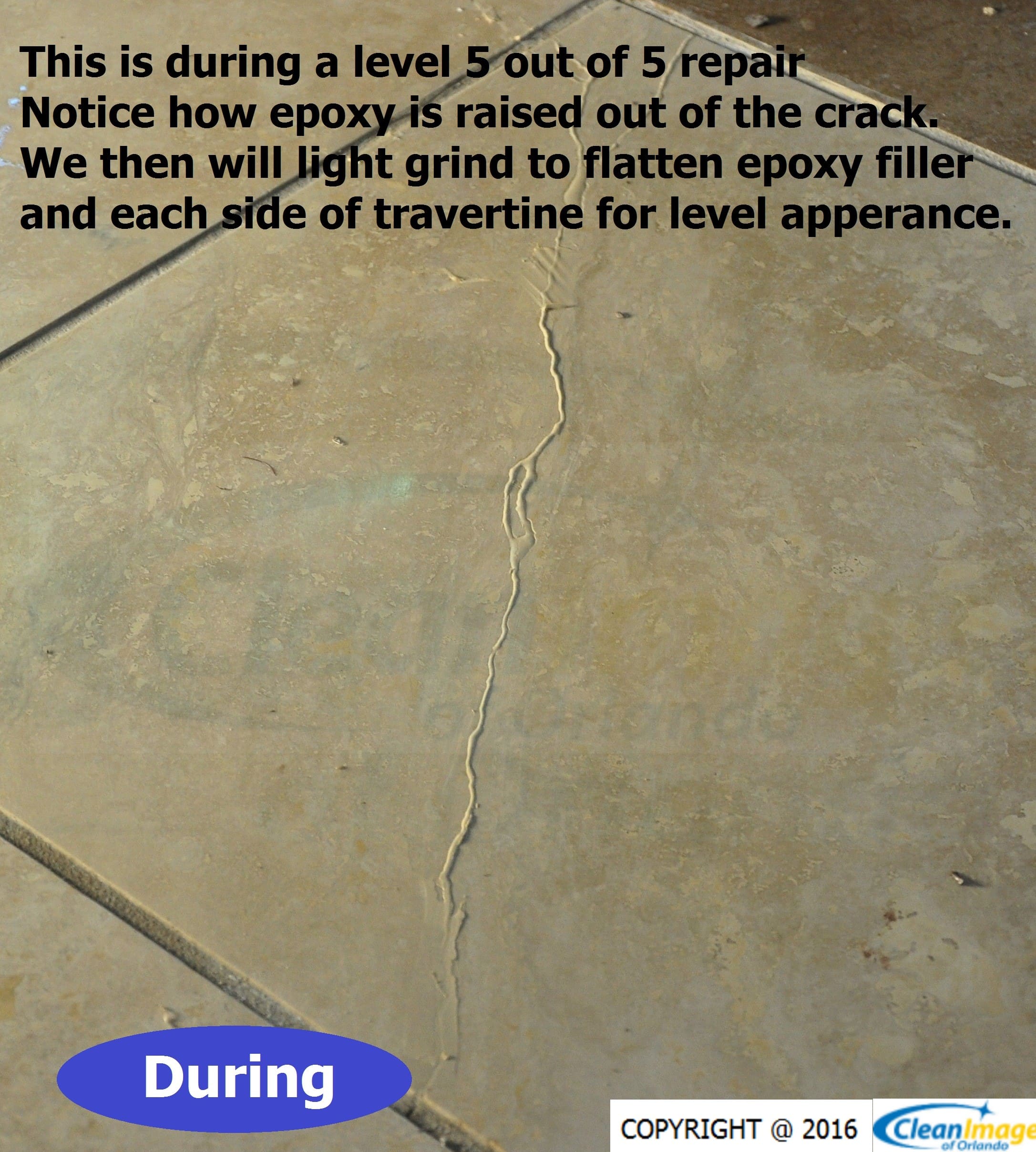
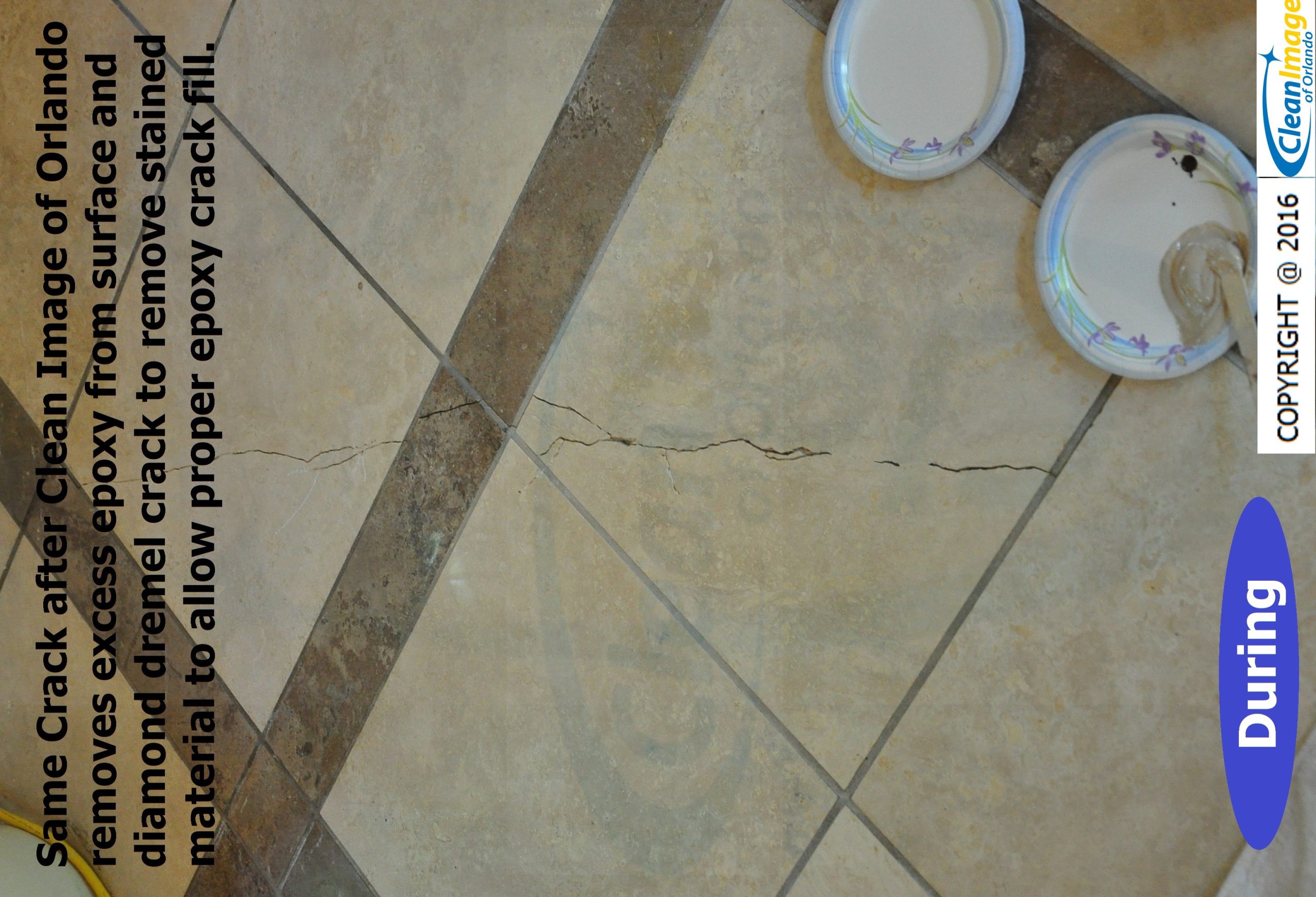
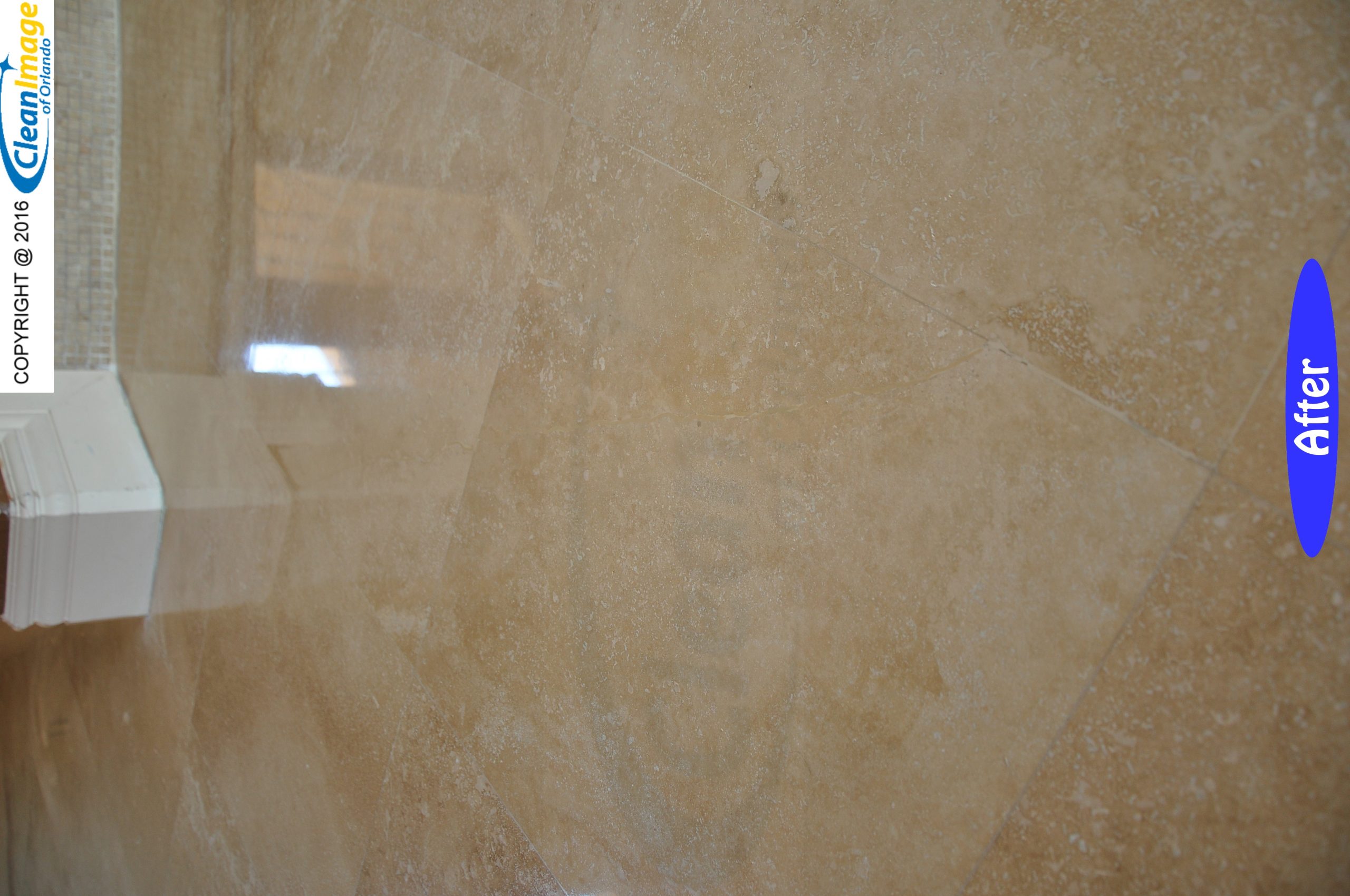
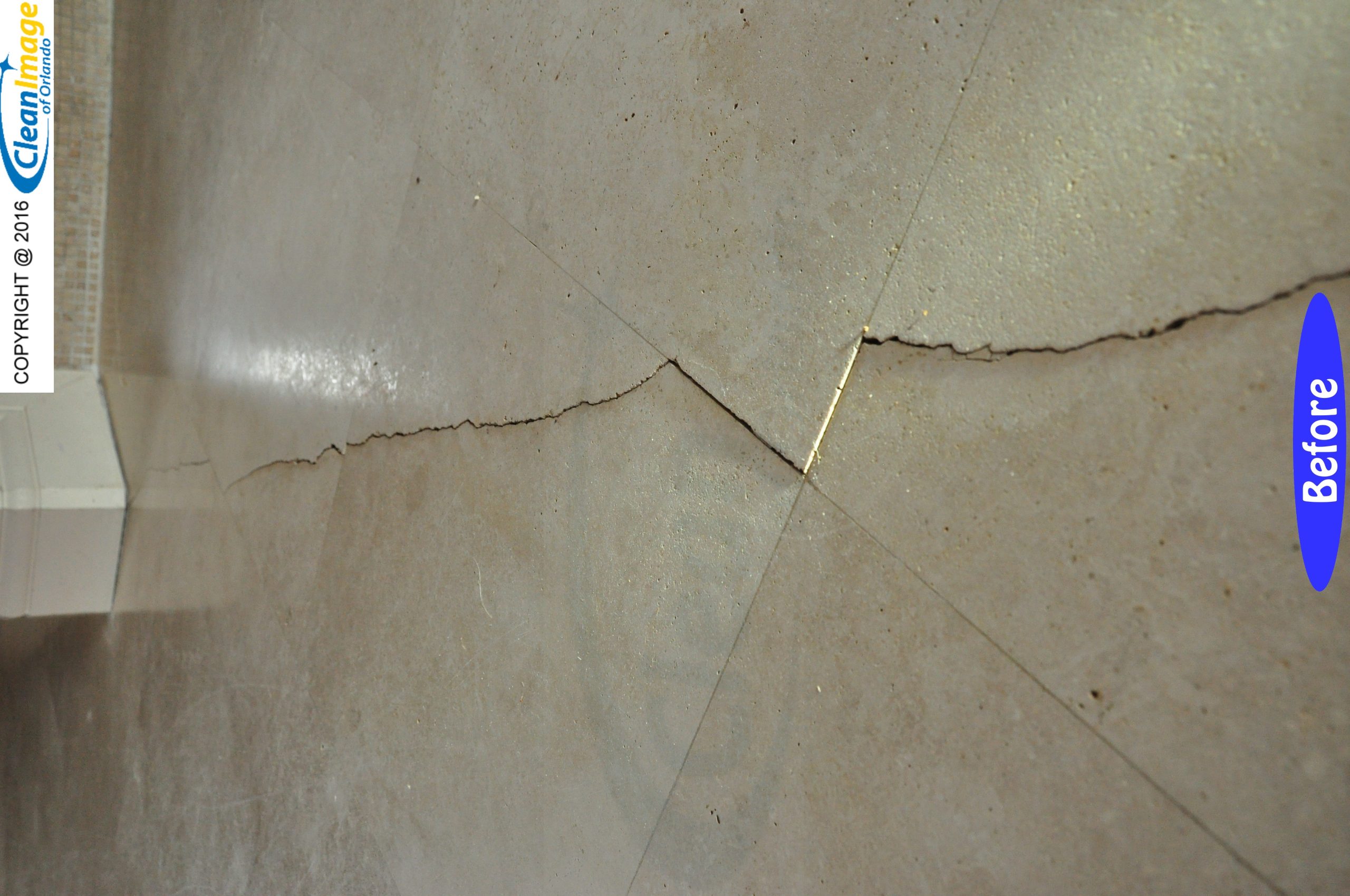
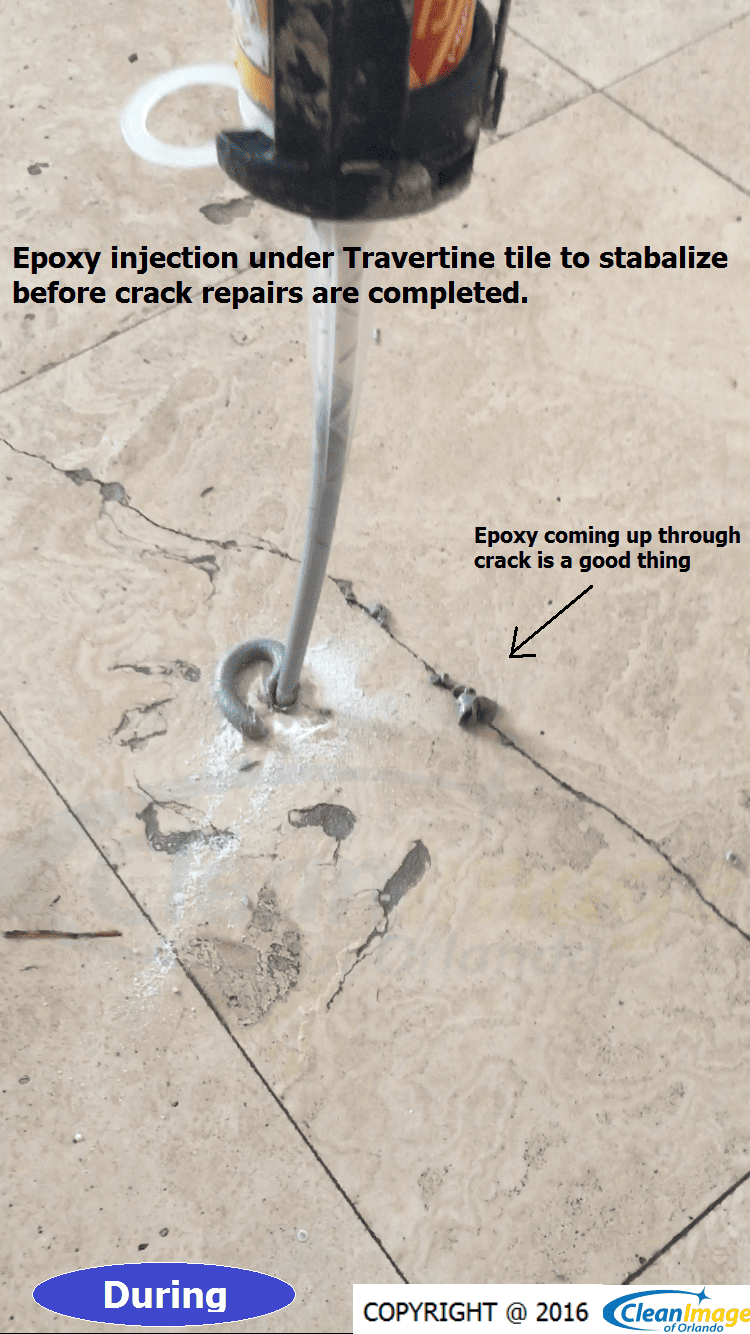
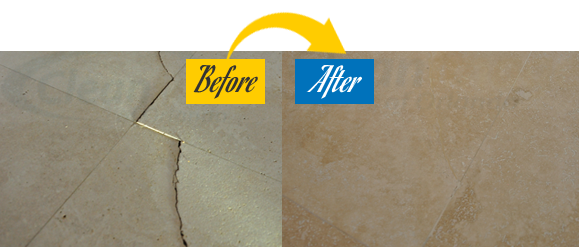
Not all Crack repairs are the same. As you can see in both before pictures, it appears as if someone just smeared dark epoxy over the crack and walked away. We run into this quite frequently. When this was first completed, it probably looked ok from a distance, however it will quickly turn into what you see, a repair that looks worse than the original crack. This is what separates Clean Image from other company’s, as it takes knowledge and time to do it correctly. The key to proper settlement crack repairs is preparation.
Are All Hole Repairs The Same?
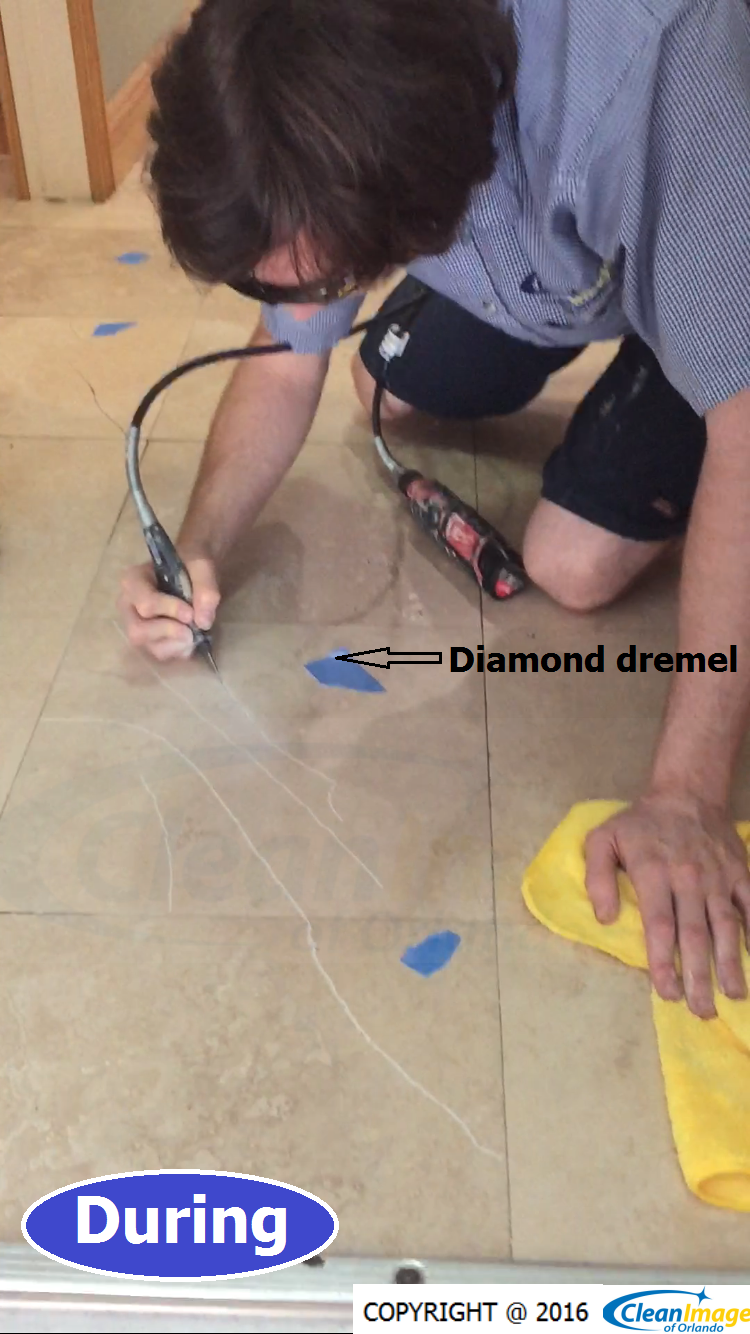
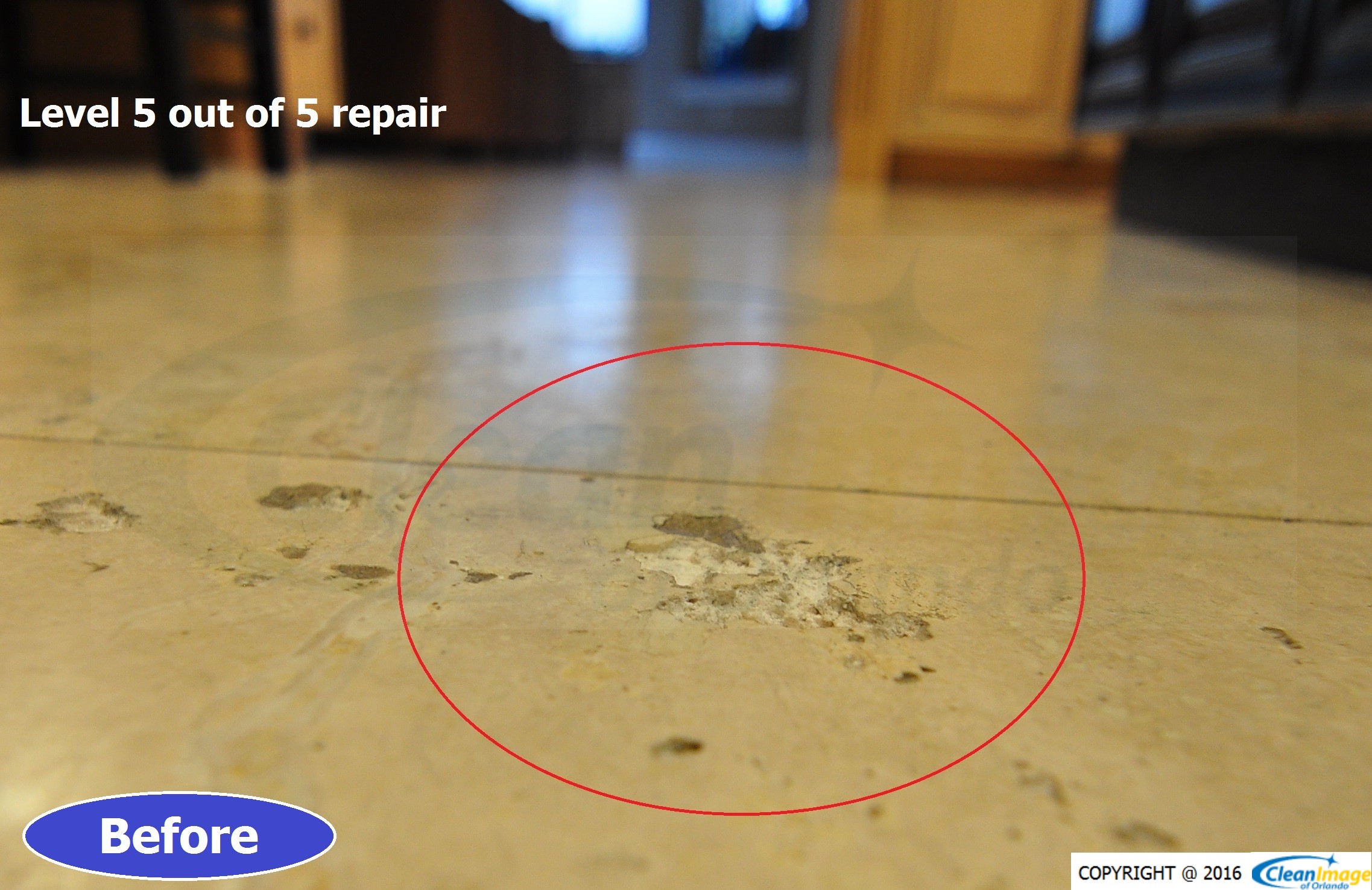
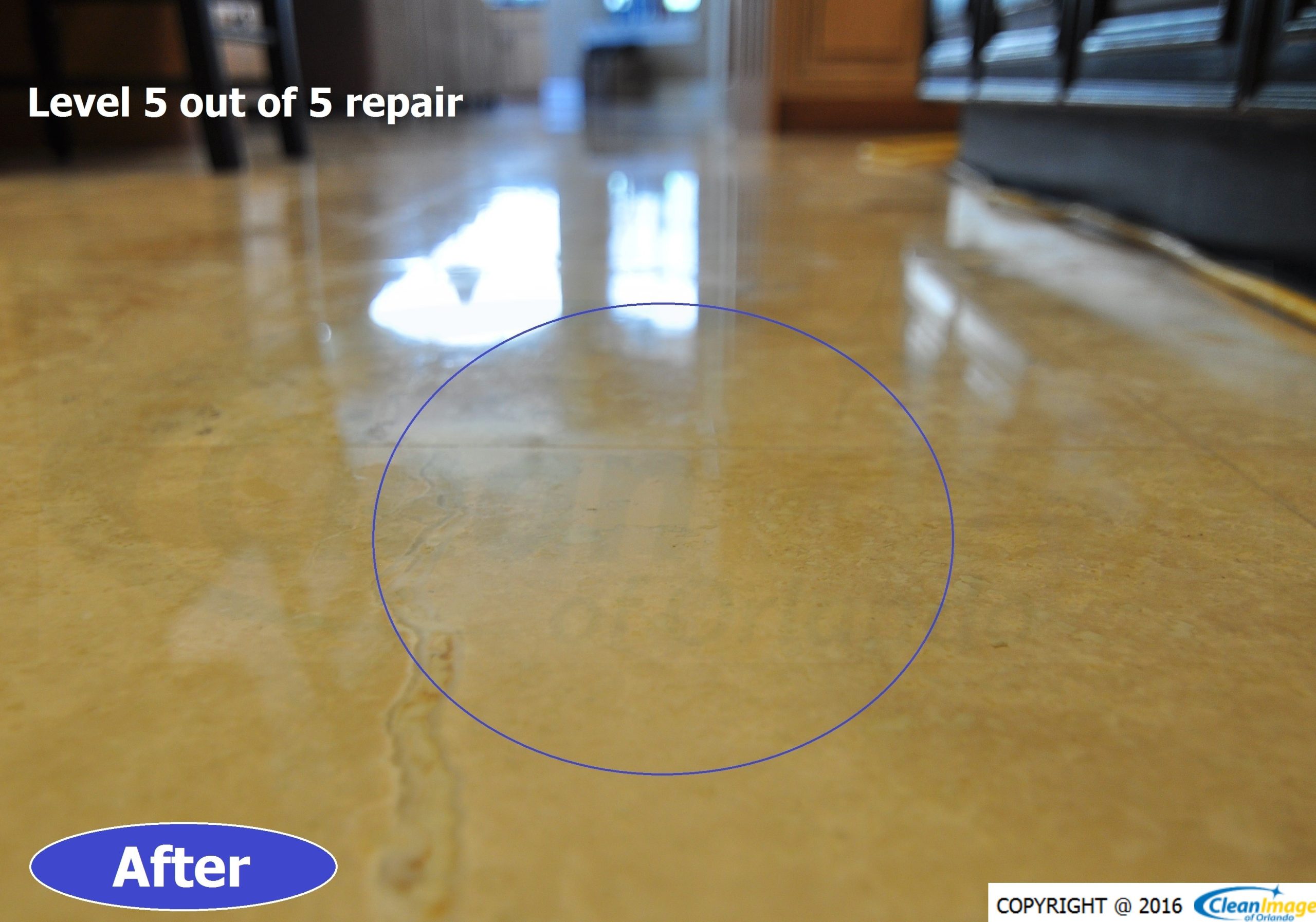
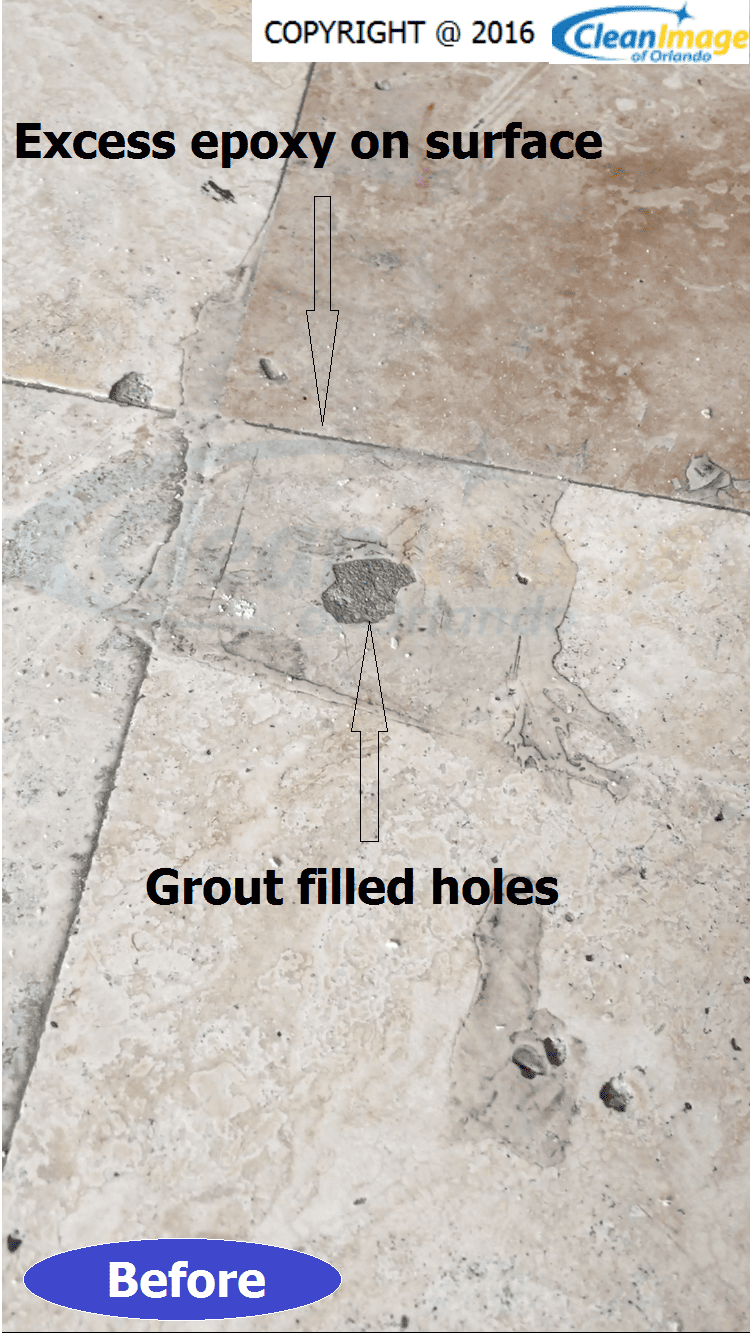
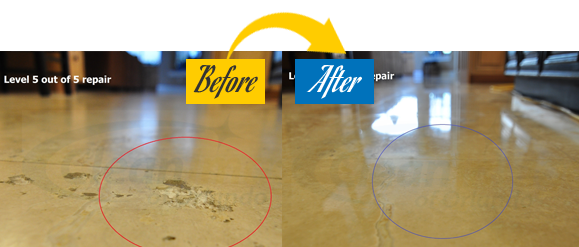
No, all hole repairs are not the same. Often when the incorrect material is used, we have to use small diamond bits to remove bad repairs before filling with good repair material. Here we have an attempt to fill the hole with grout at one point. Then a second company came in and tried to put a layer of epoxy over the hole. To properly repair this hole, all the bad materials have to be removed. We often use tiny diamond bits on Dremel tools to remove bad repairs to allow the right epoxy material to go in.
What Is A Hi-Hone Finish?
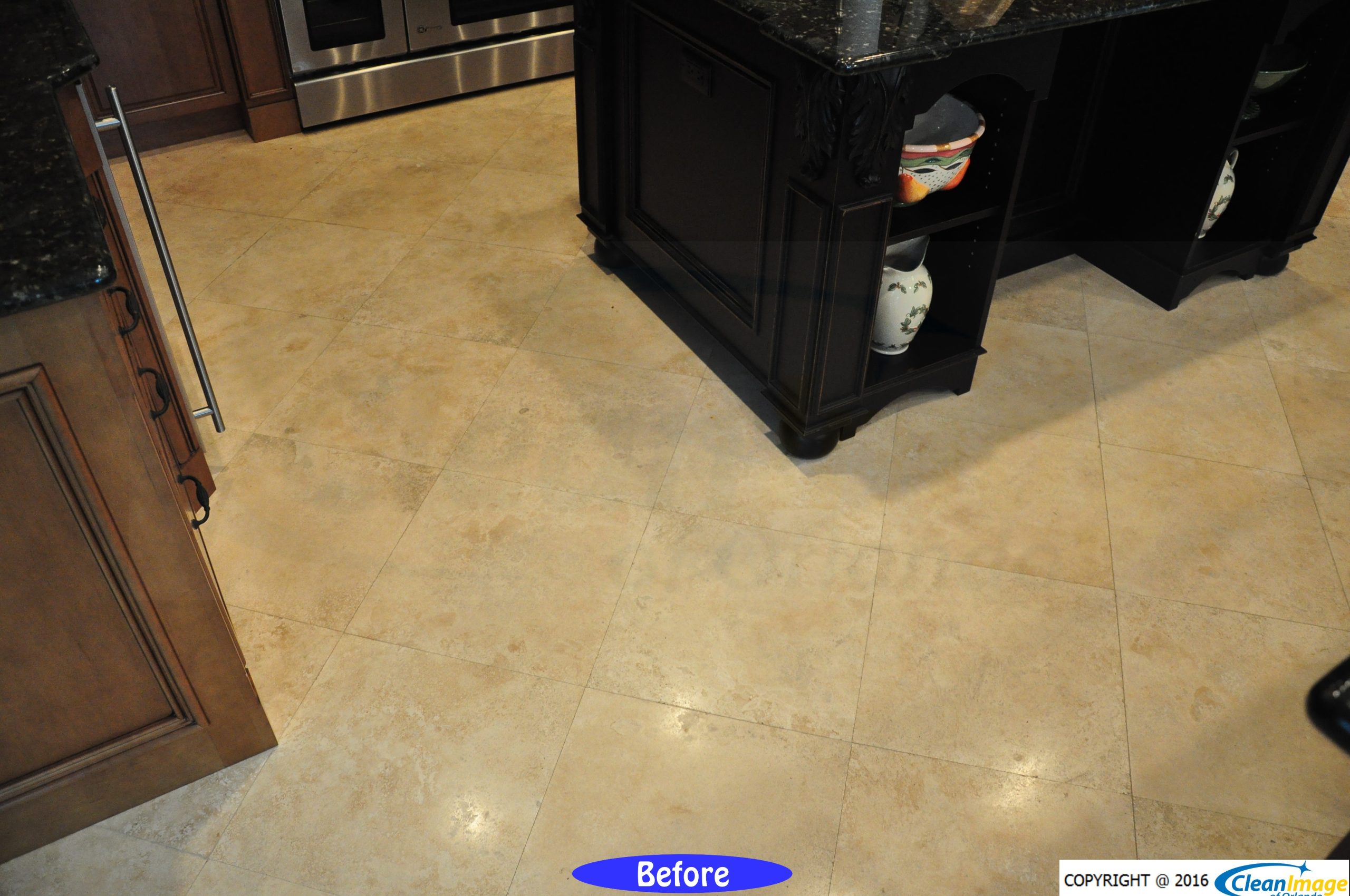
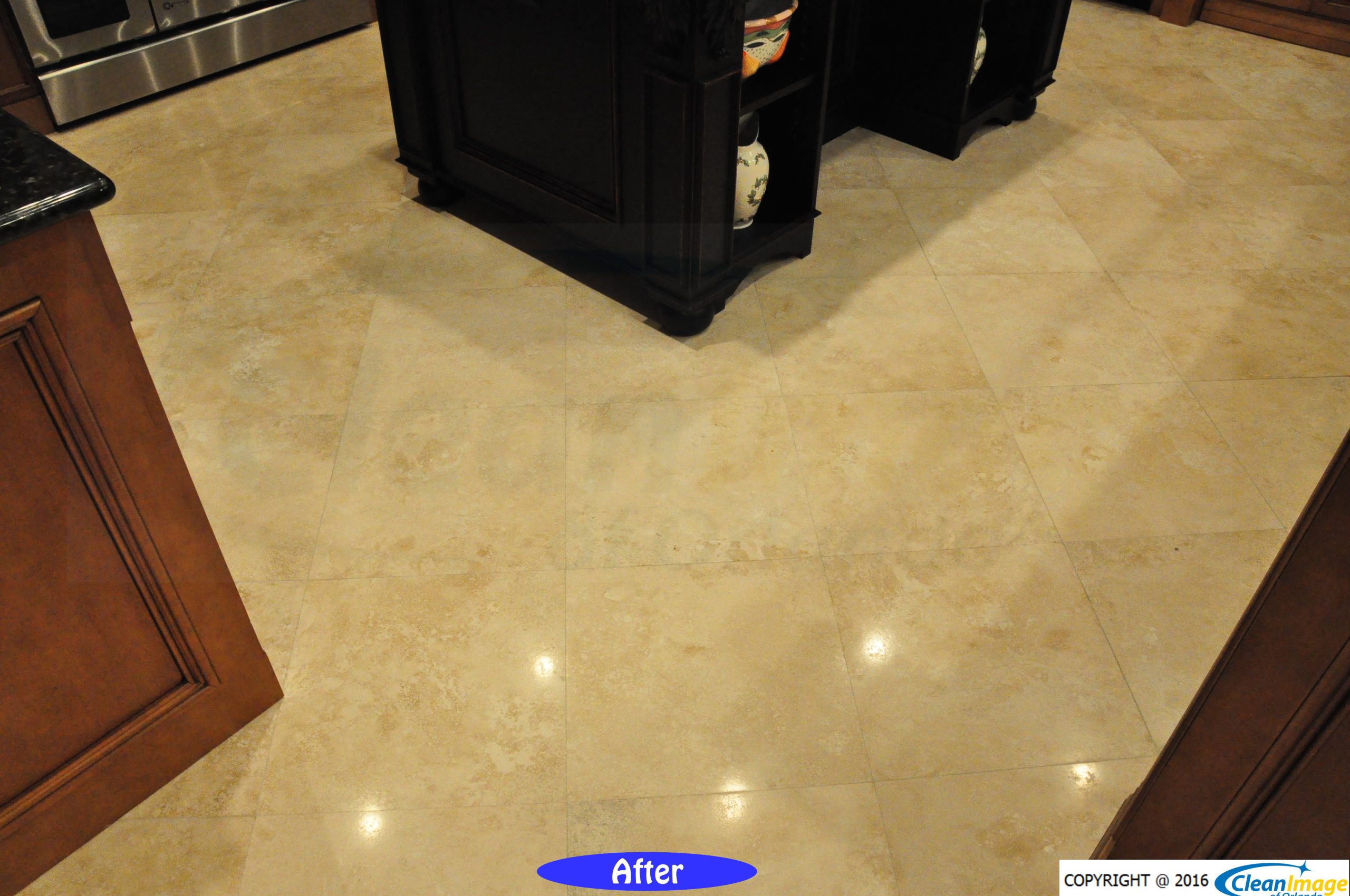
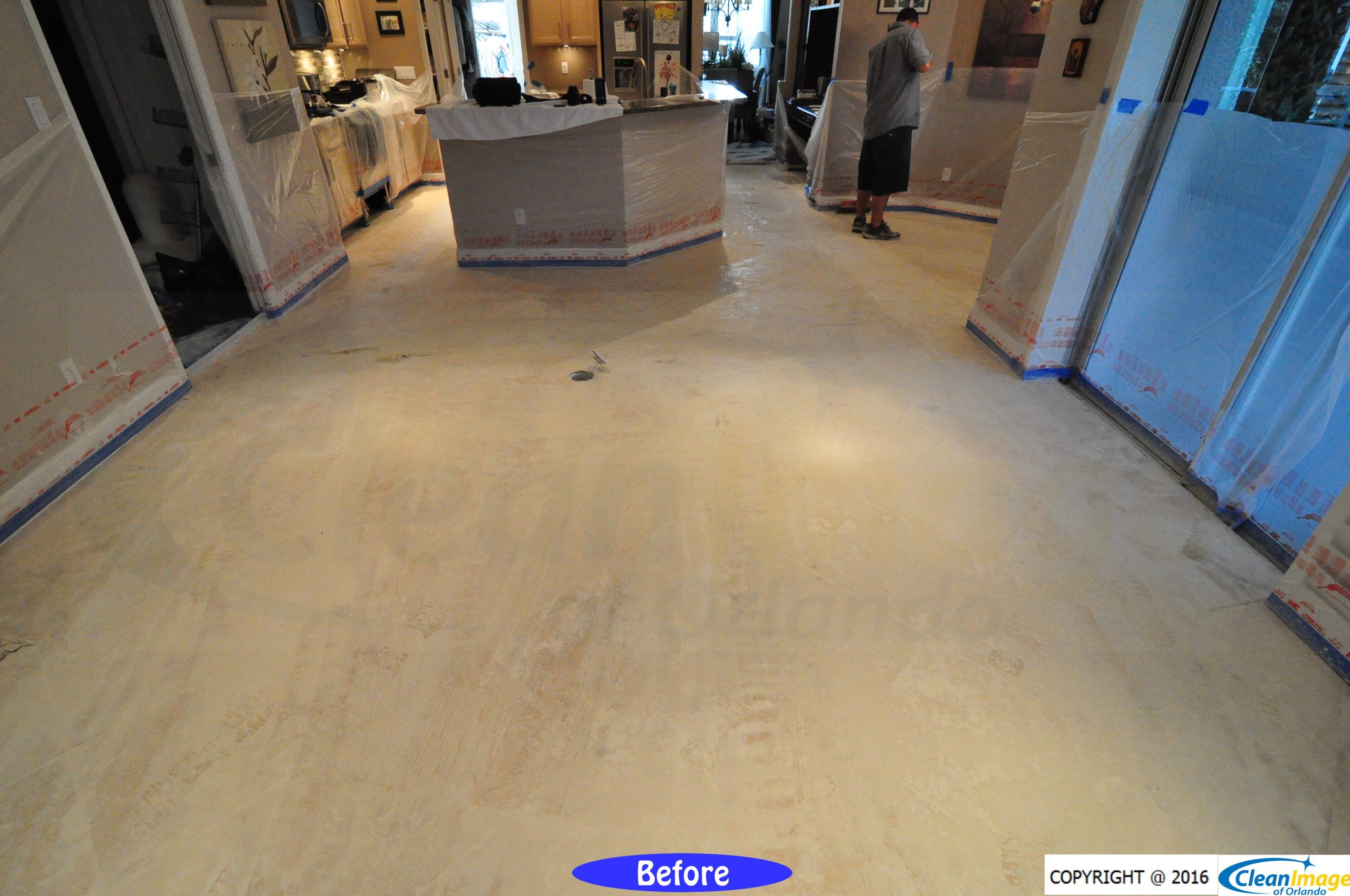
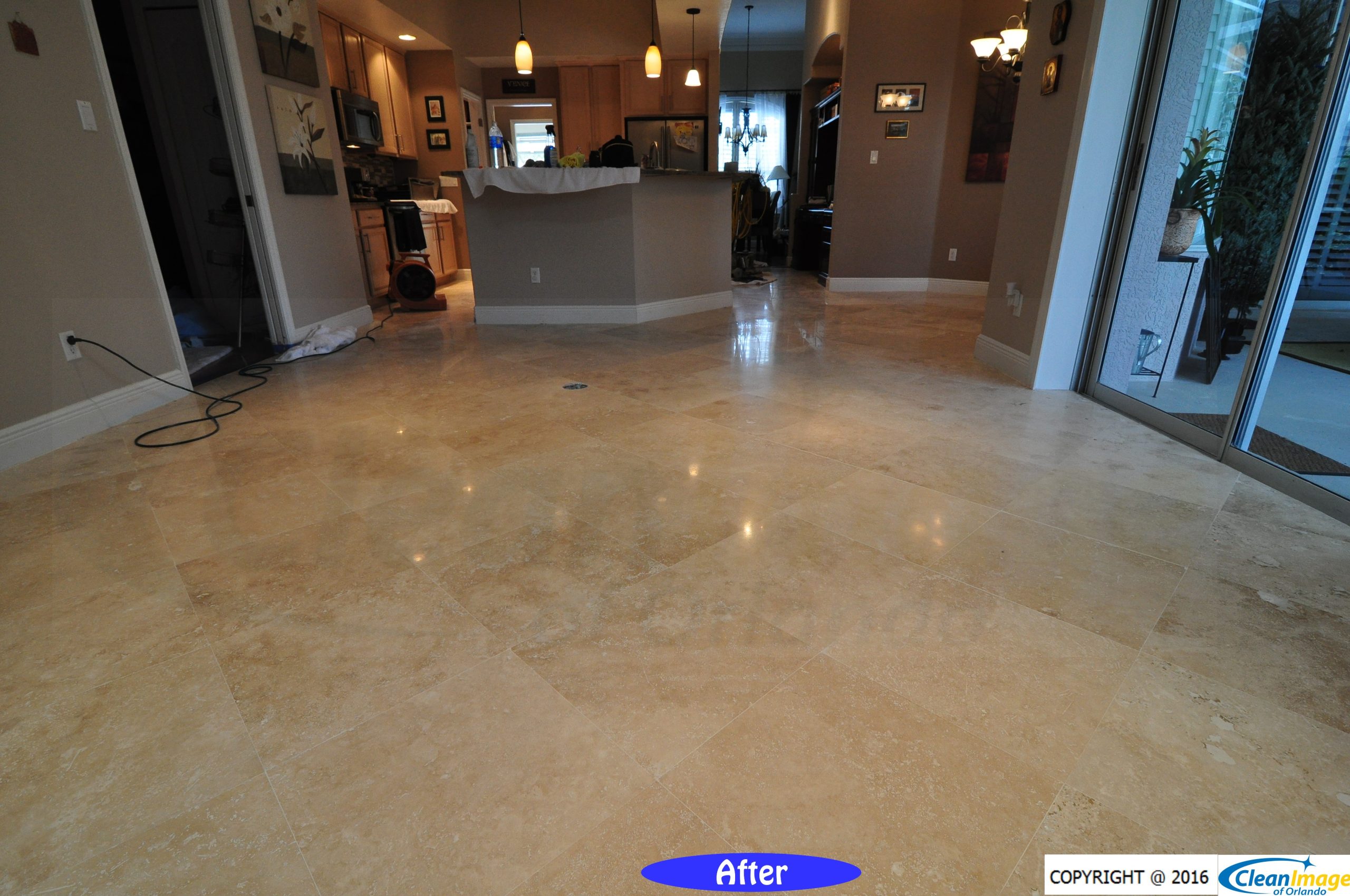
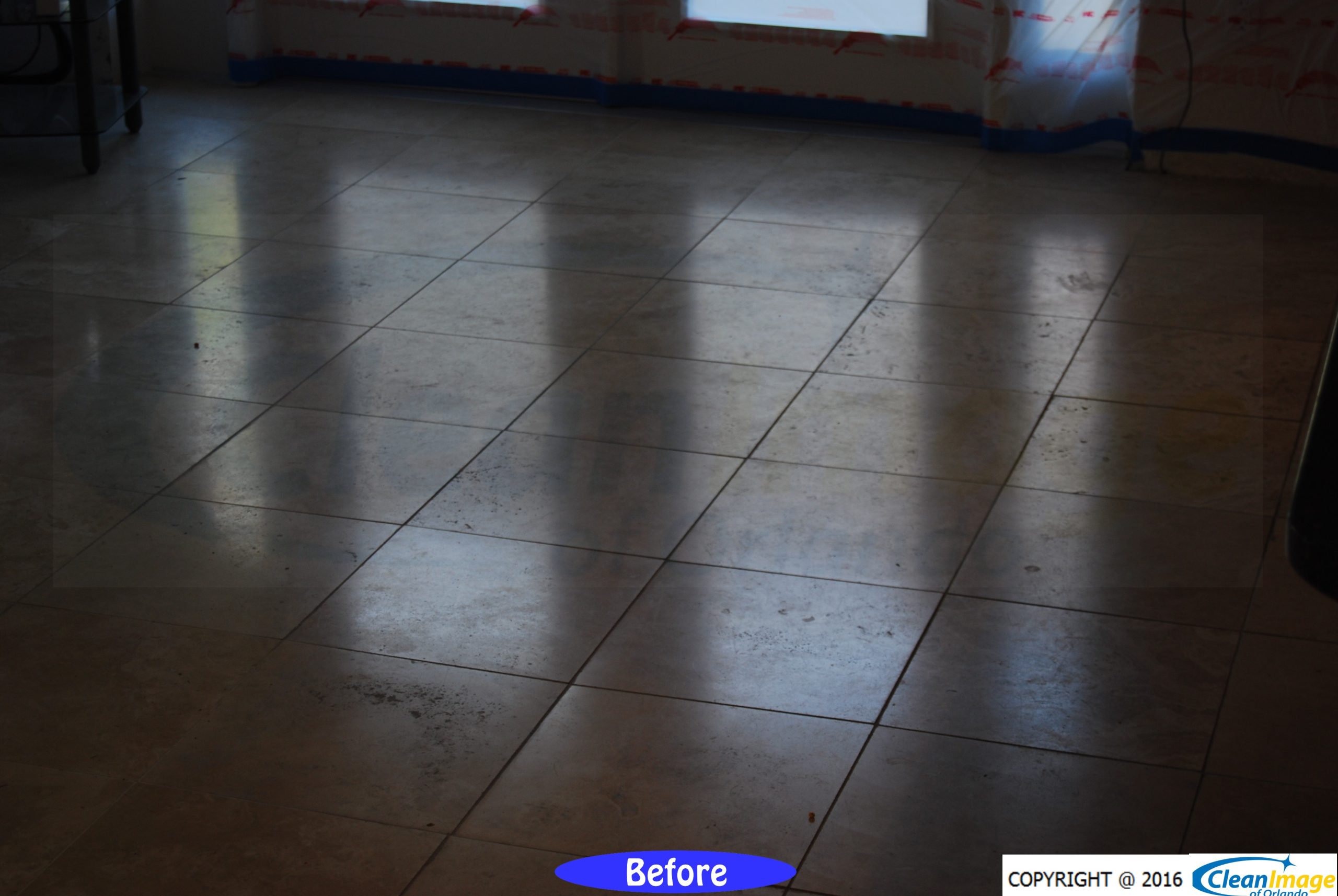
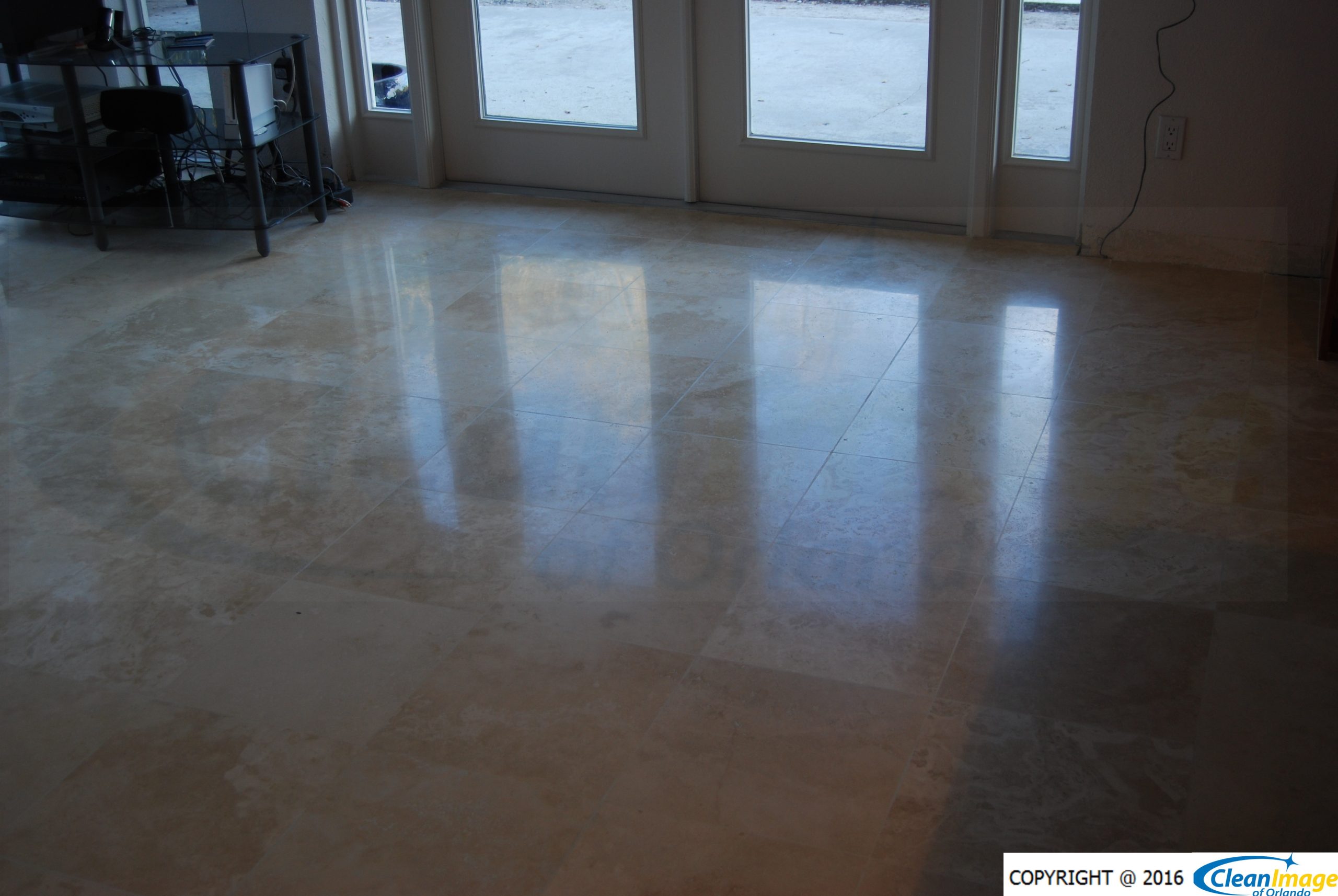
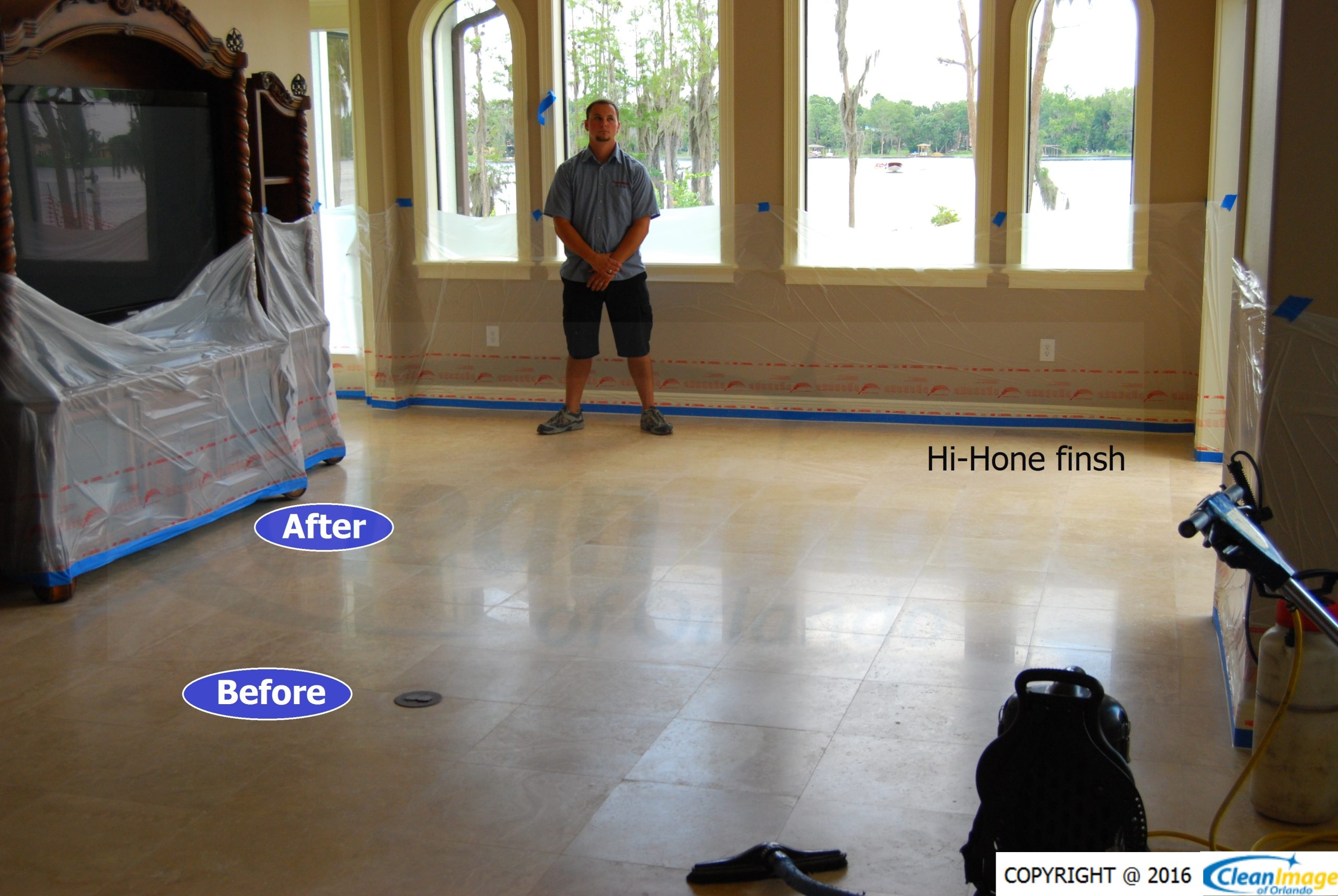
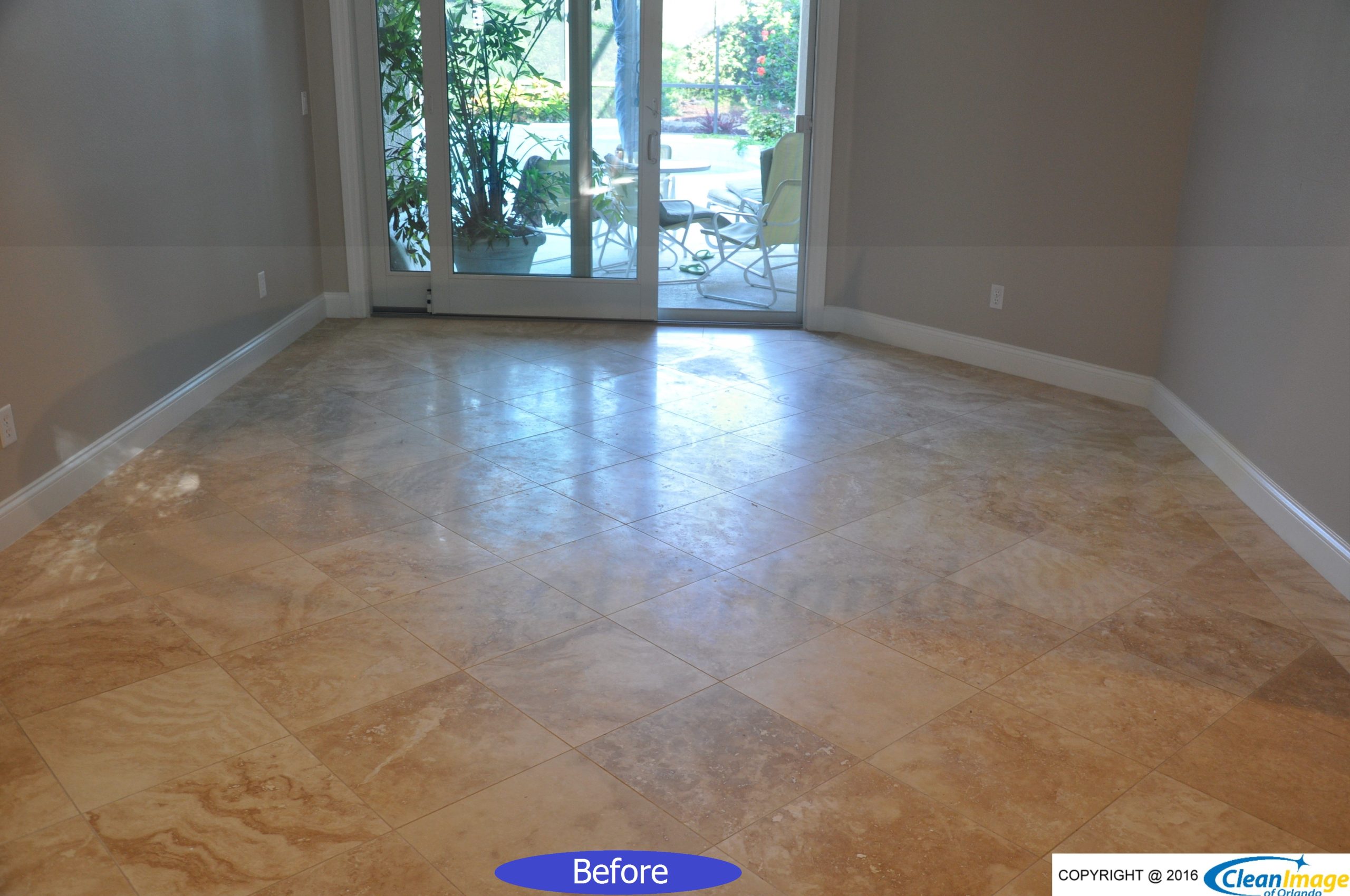
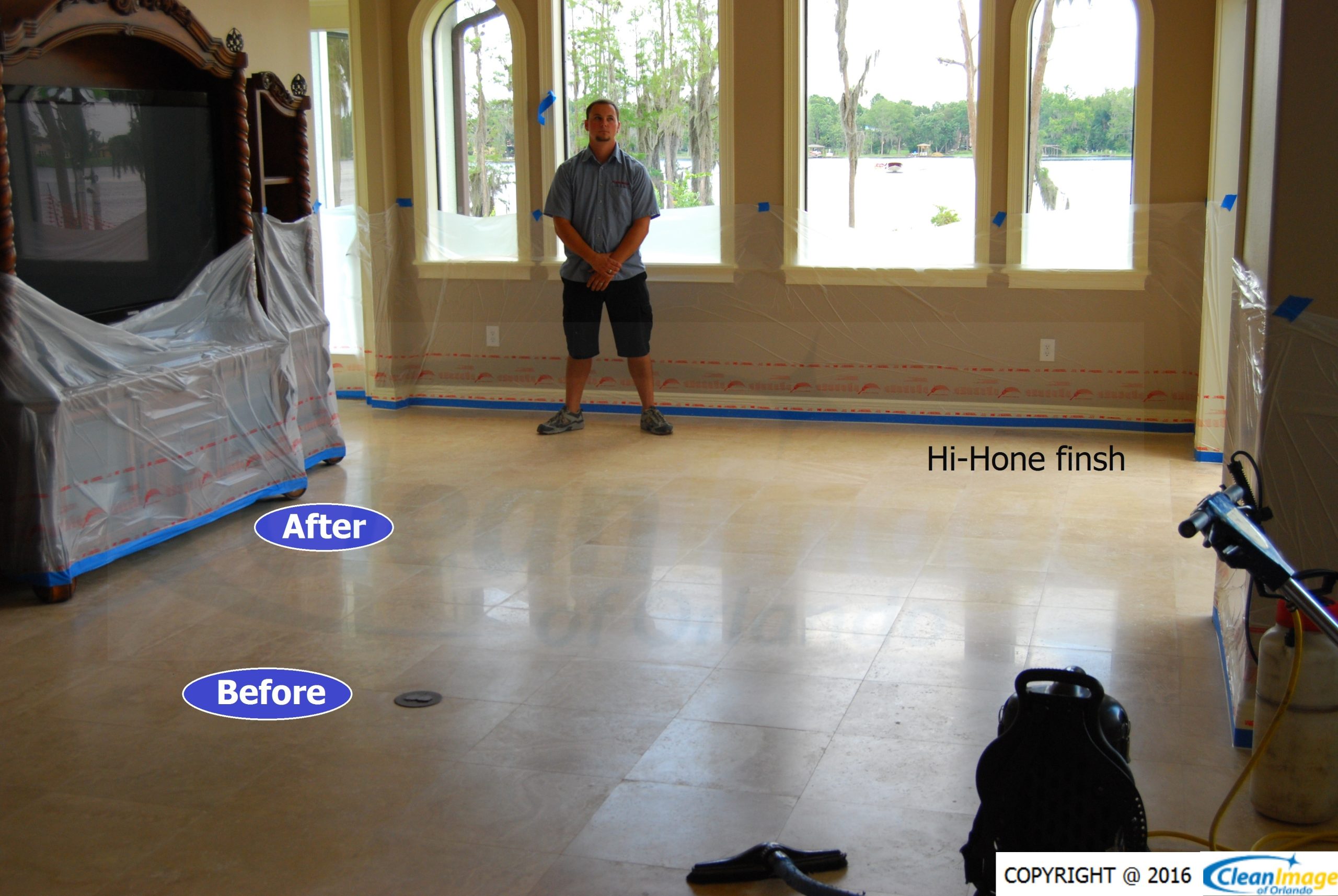
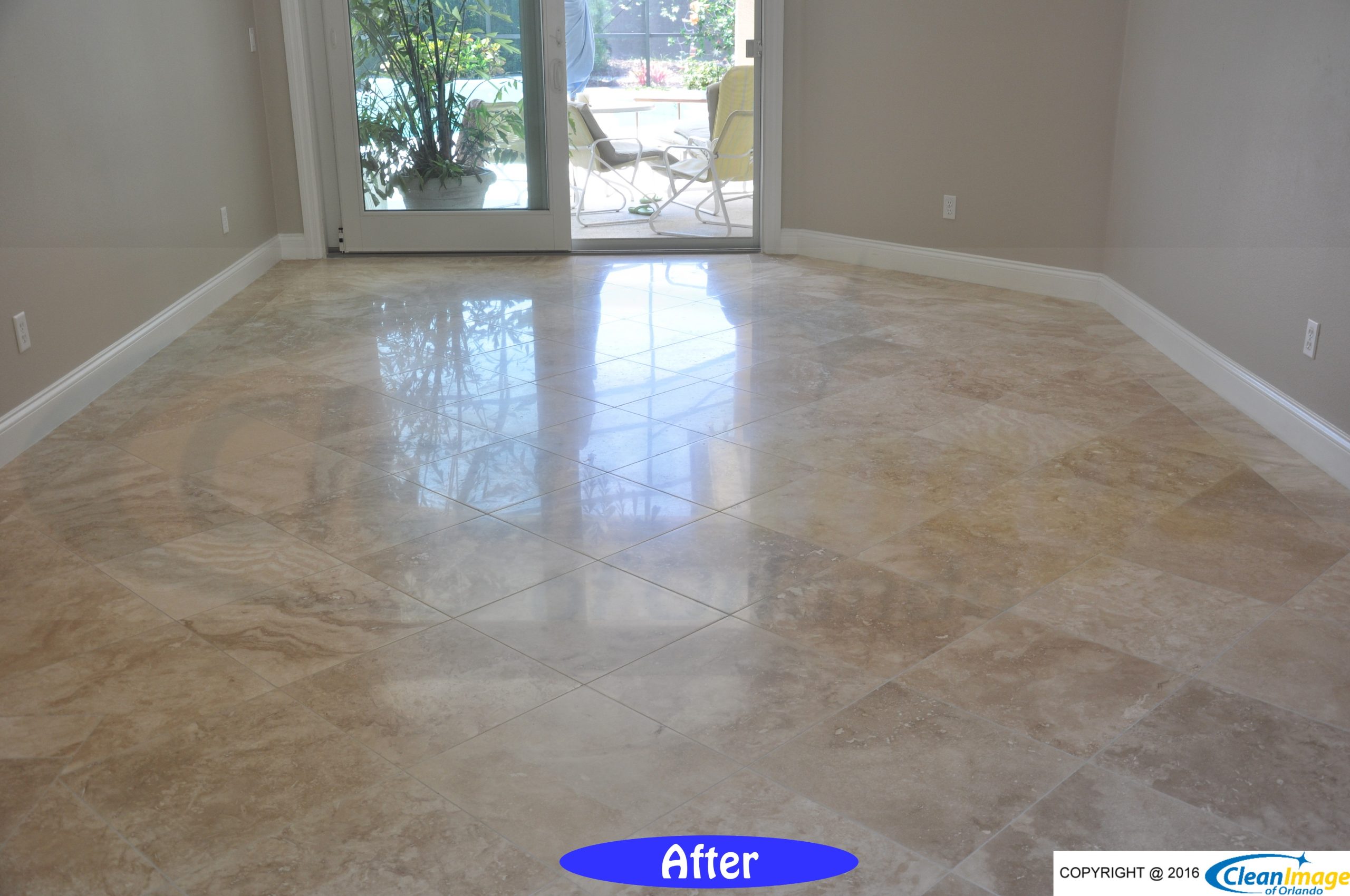
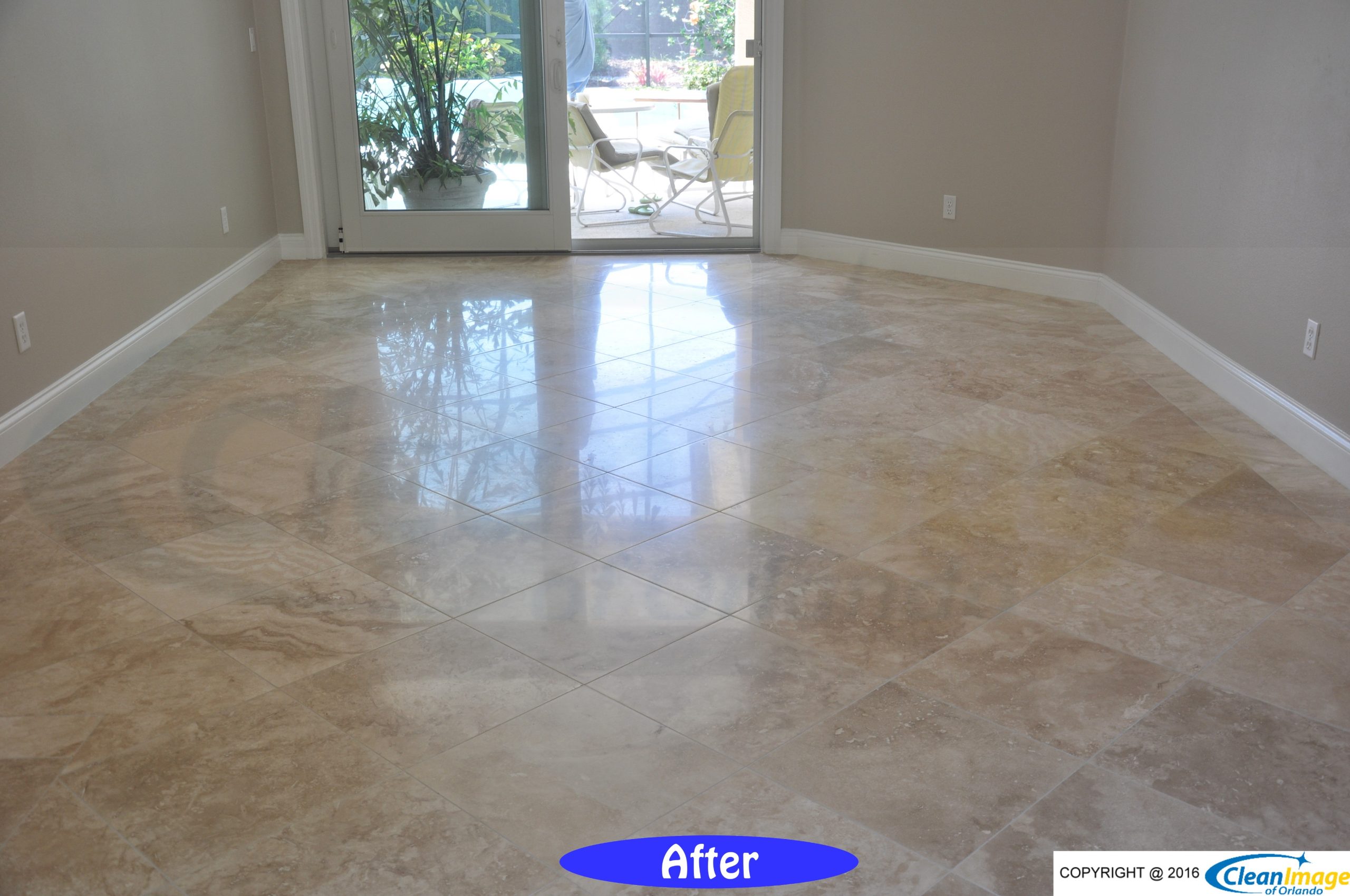
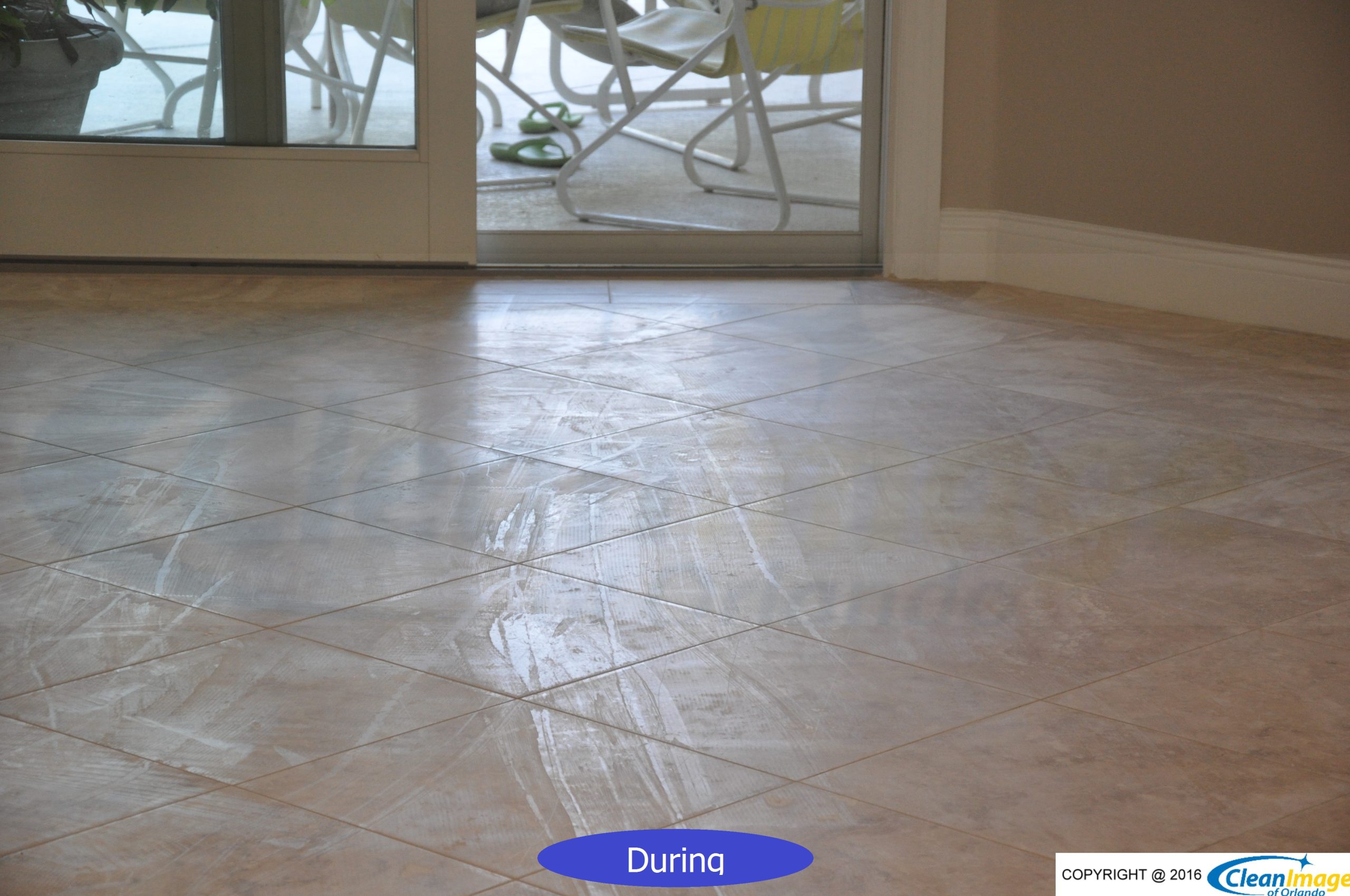
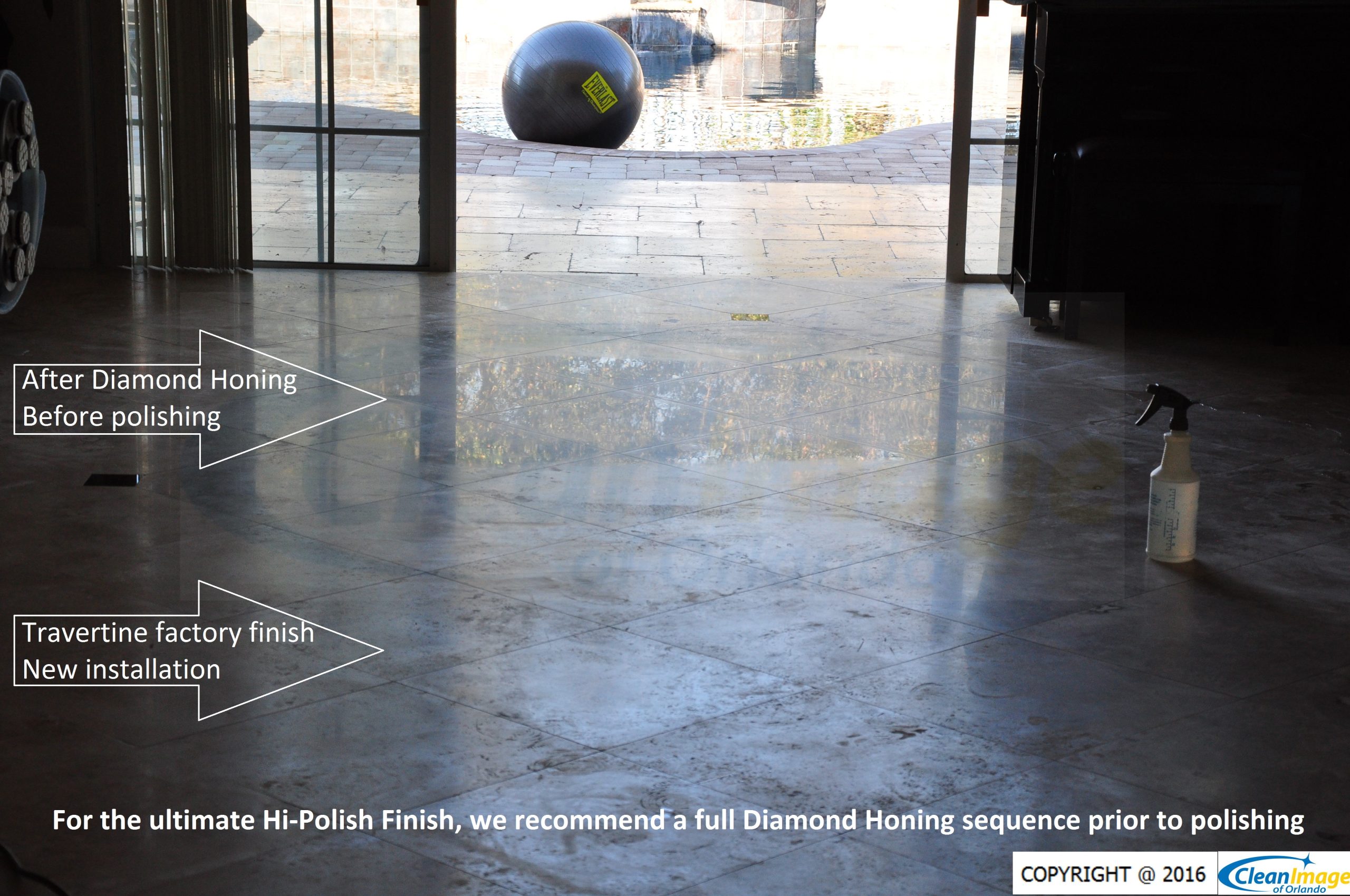
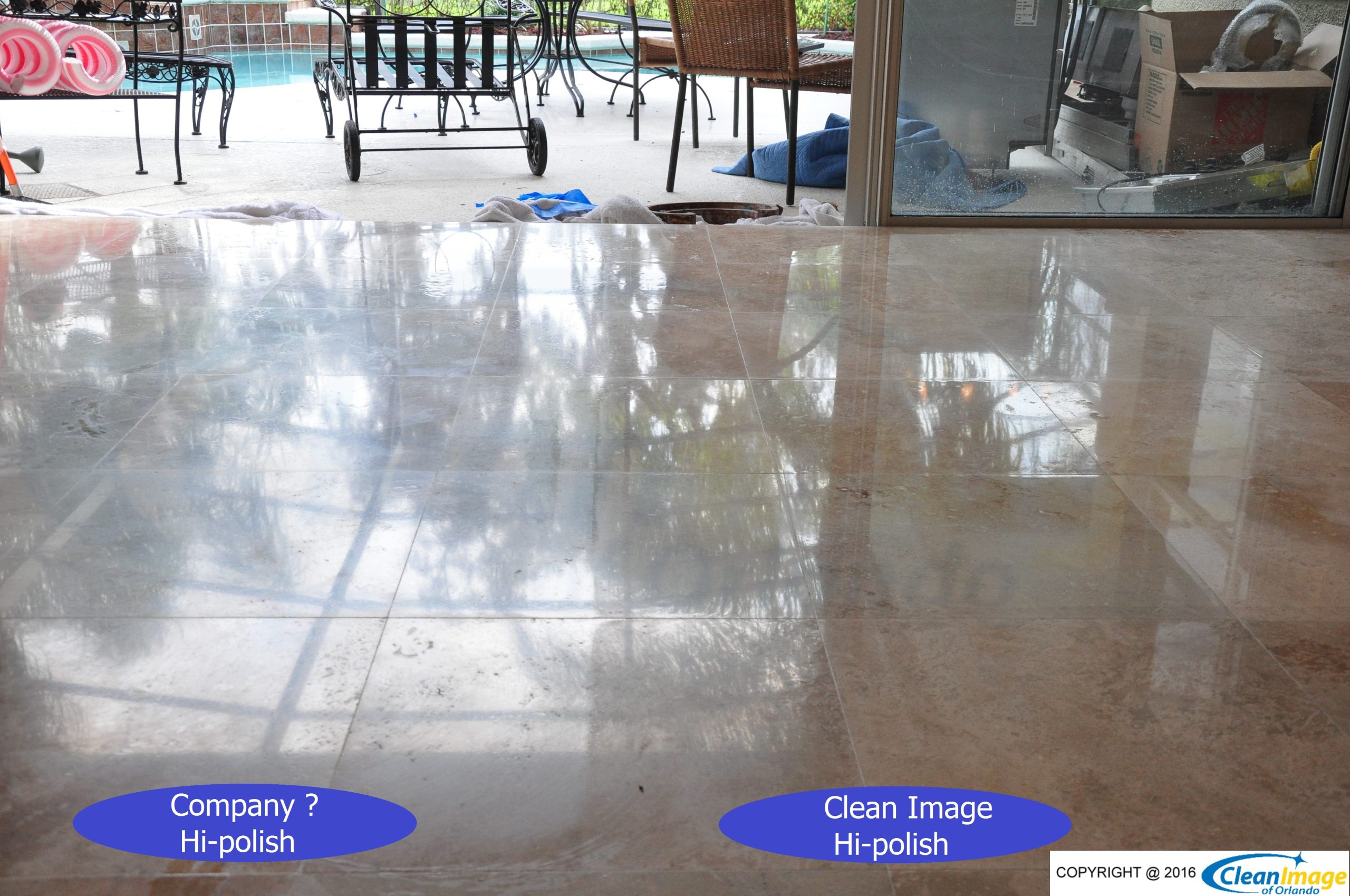
Are All High Hi-Polish Finishes The Same?
This can be very confusing to customers who have Travertine, (or Marble-Limestone) when first researching for stone refinishing companies to refinish there stone floors. There can be conflicting information, on the internet, and from “professionals” you may speak with. So often the main question then becomes, “how much do you charge?”.
Even after explaining the process to some of my customers, they think 1 pass of the “big machine” and it done right? So this section is to help explain the pictures. If you have Clean Image of Orlando come out for an in home estimate, we can also show you videos on our Ipads to also help explain the process. We want you to know, at least the basic principles, so you can make an educated decision and spend your money wisely.
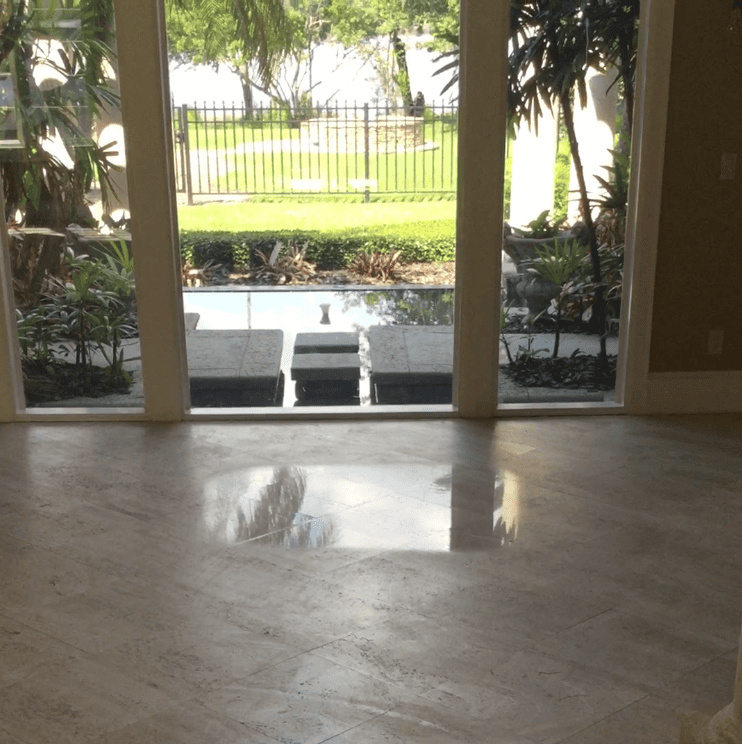
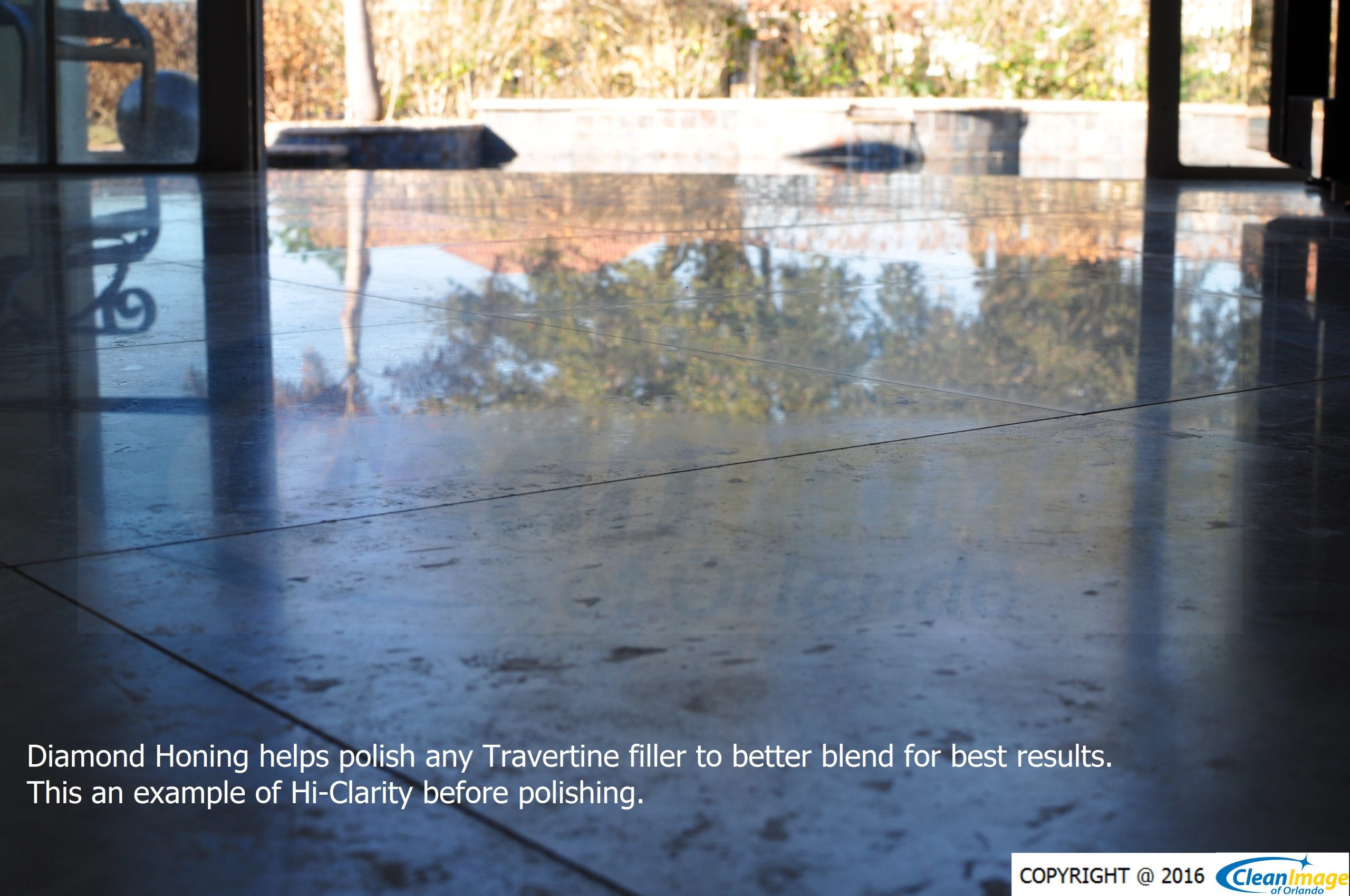
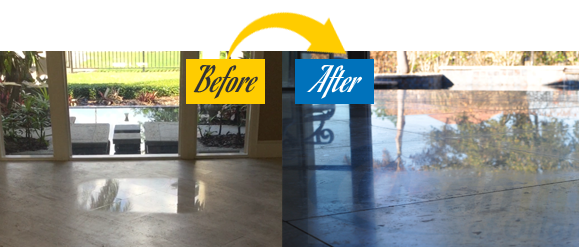
The following pictures will hopefully shed some light on some differences. First and foremost, do not use a coating sealer in attempt to achieve a shine. See why you shouldn’t put a coating sealer section for further explanation.
What Is Spalling?
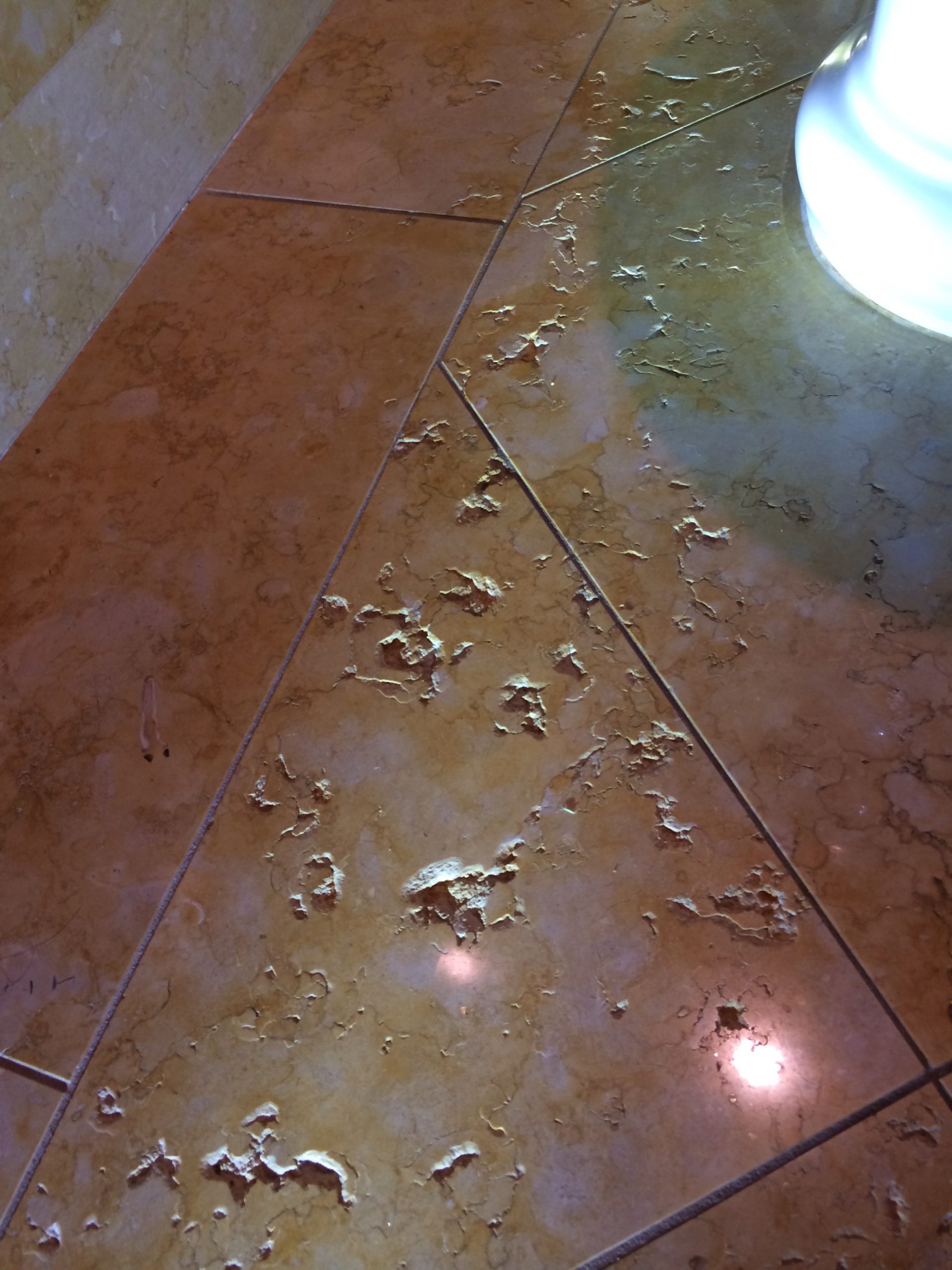
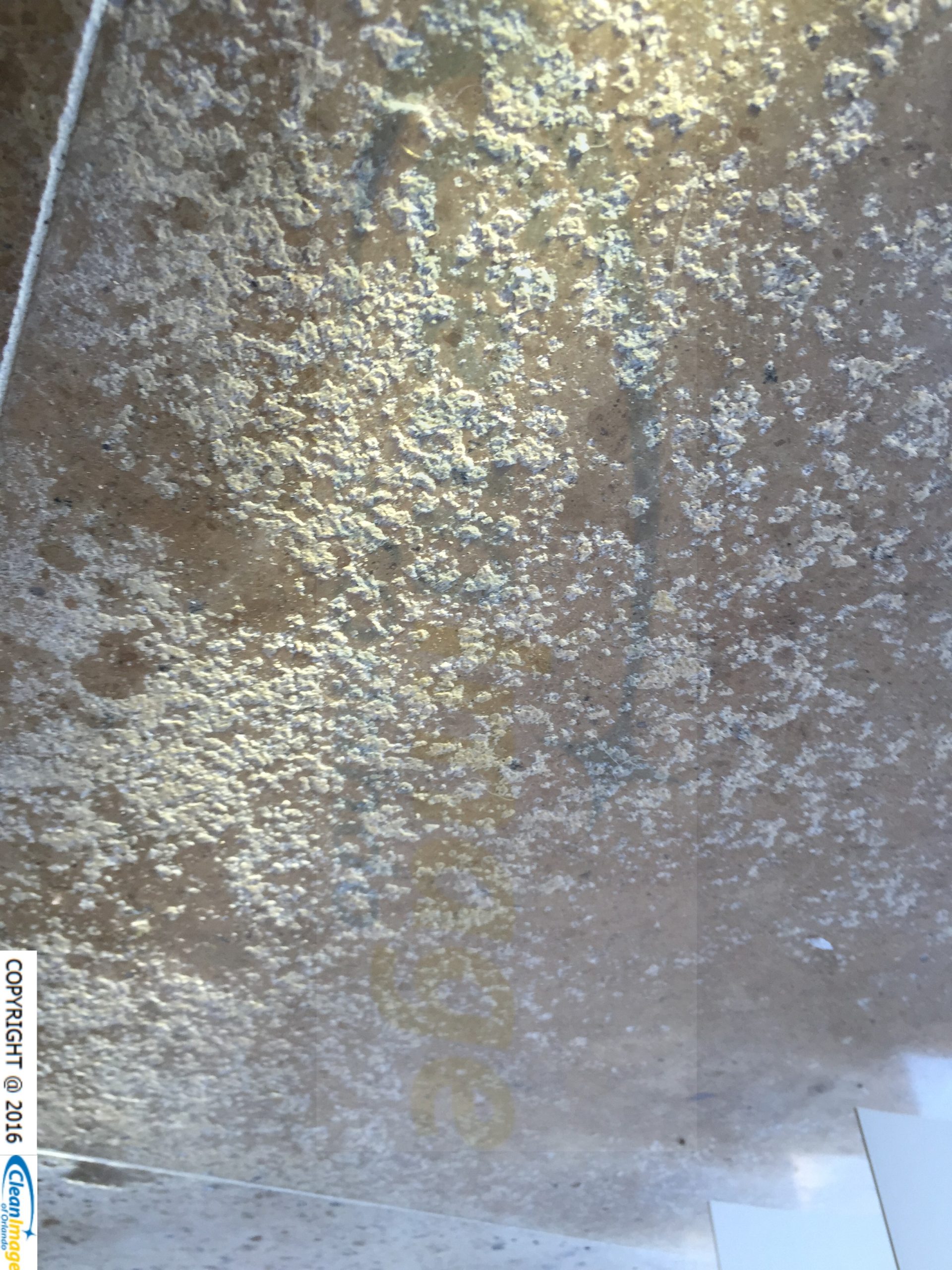
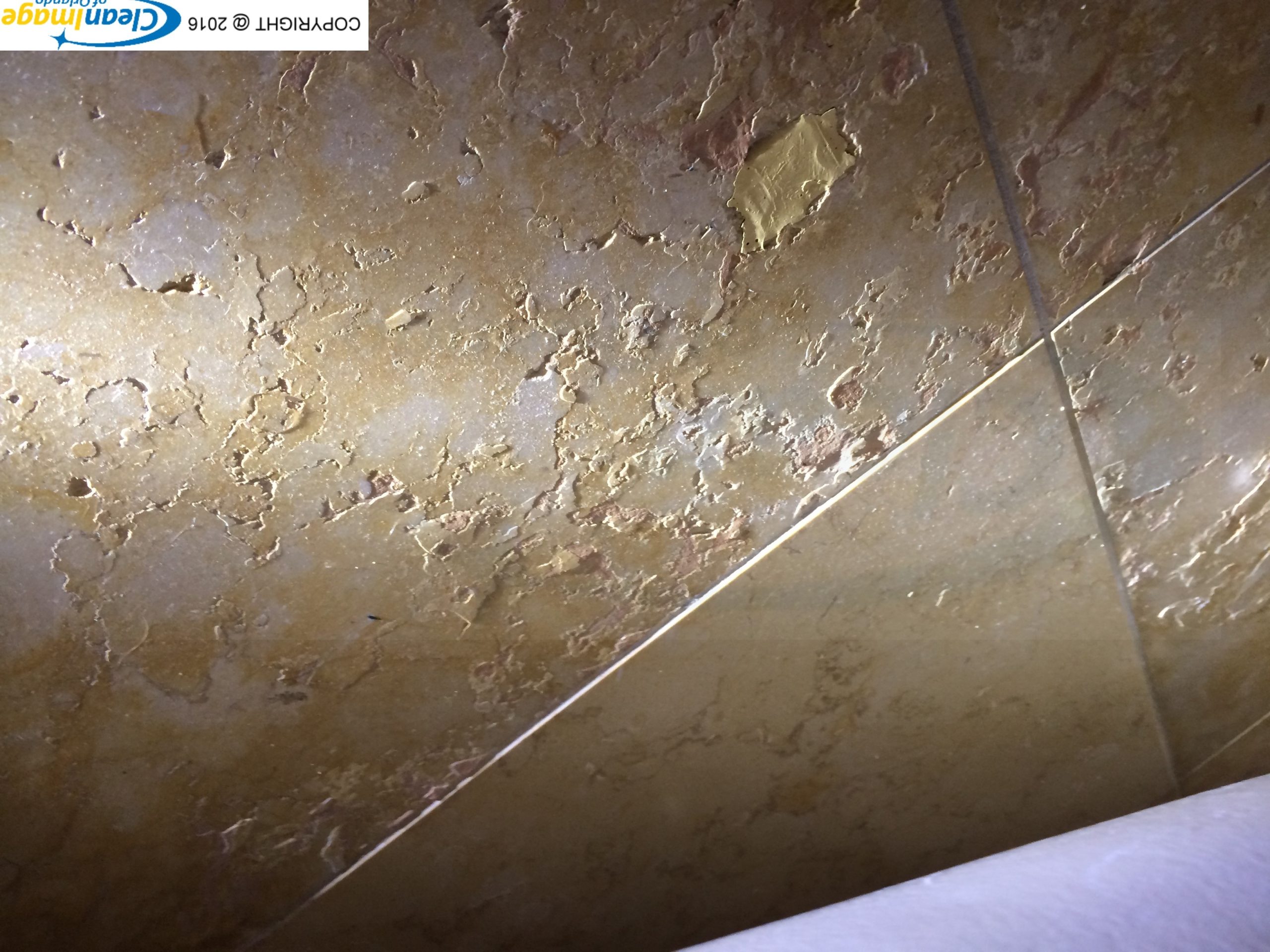
Marble, Travertine and Limestone all are subject to spalling. Spalling can occur for different reasons. The primary reason is moisture migrates from the slab and gets trapped under the surface trying to evaporate out. This creates hydrostatic pressure under the surface and it is this pressure that causes the stone to break to release the moisture pressure. This can be caused from topical coatings or waxes that do not allow the stone to “breathe”, or to let moisture vapor from the surface. Also, some forms of Crystallizers have been known to cause or accelerate some stones to spall. Also the moisture may contain dissolved minerals that when reach the stone surface crystallize, or form an efflorescence that expands and breaks the surface of stone apart.
What Is Lippage?
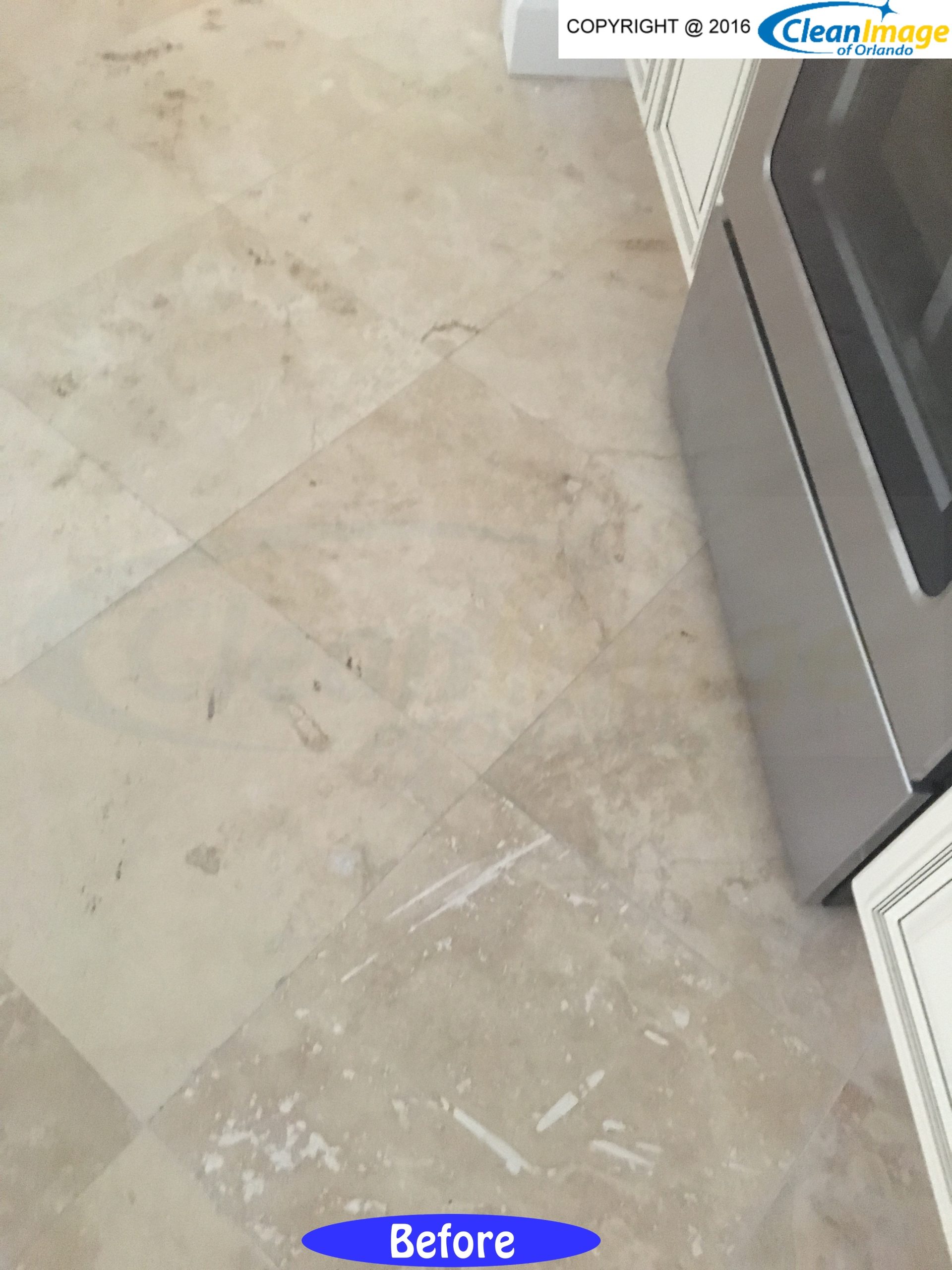
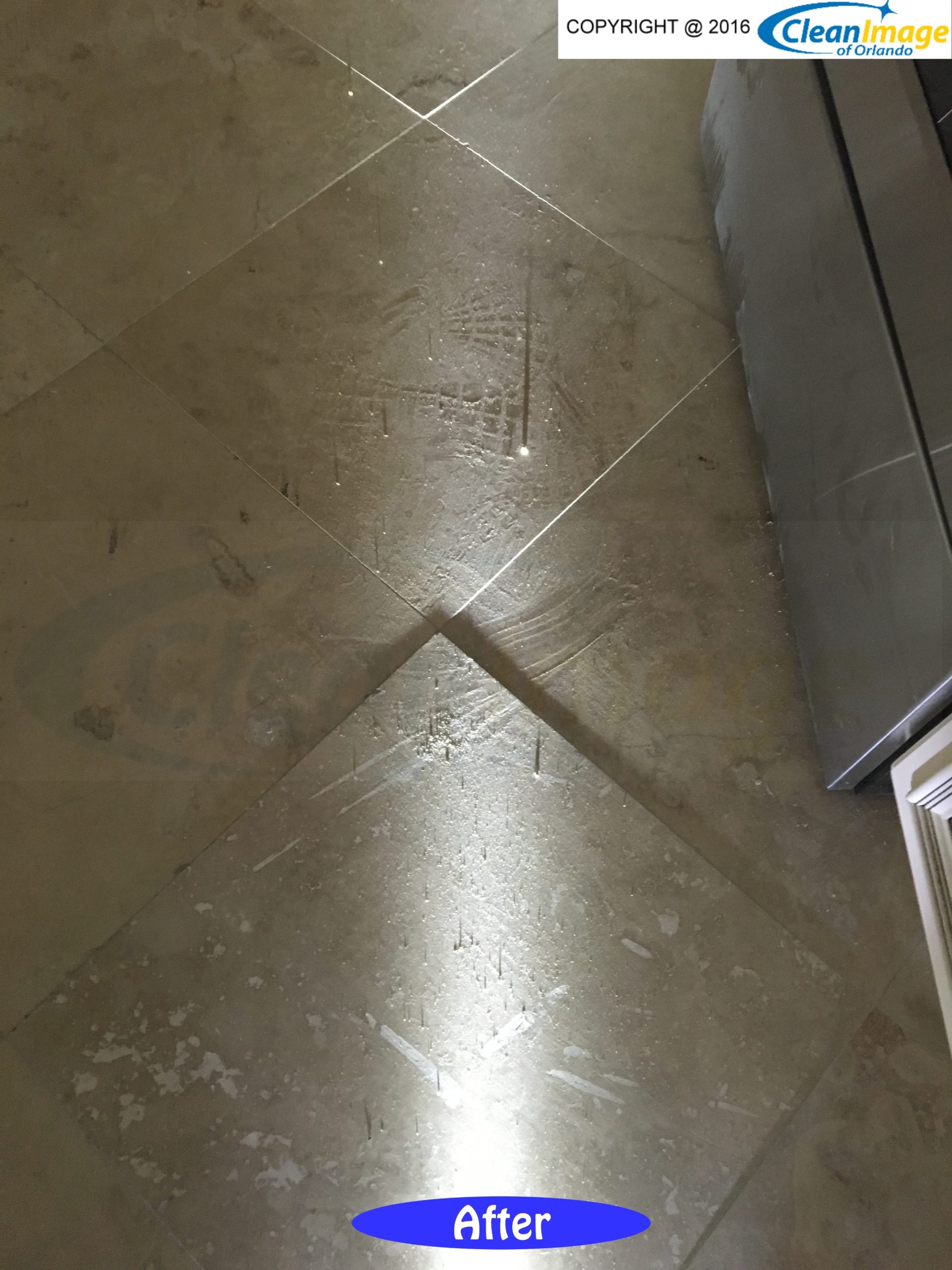
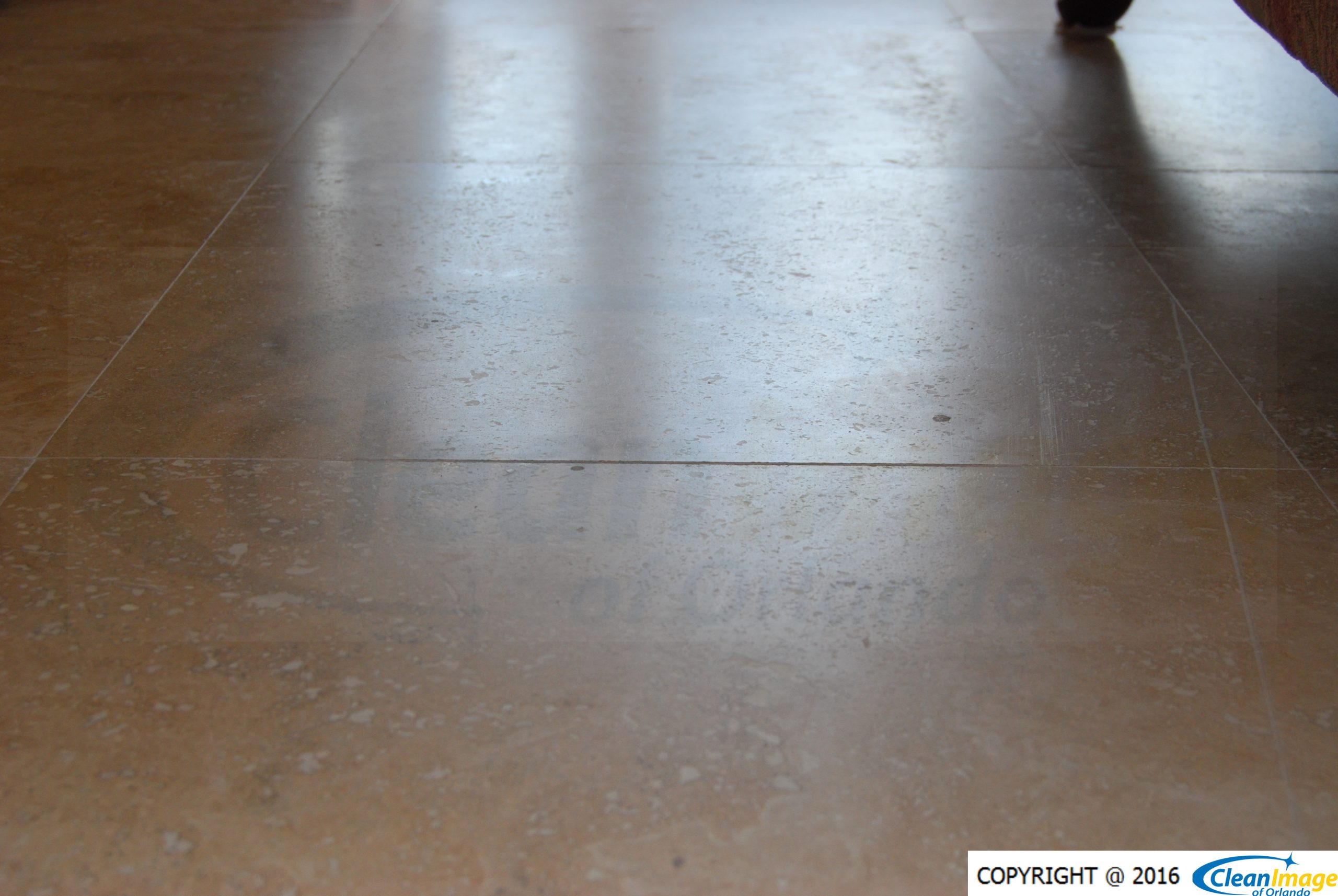
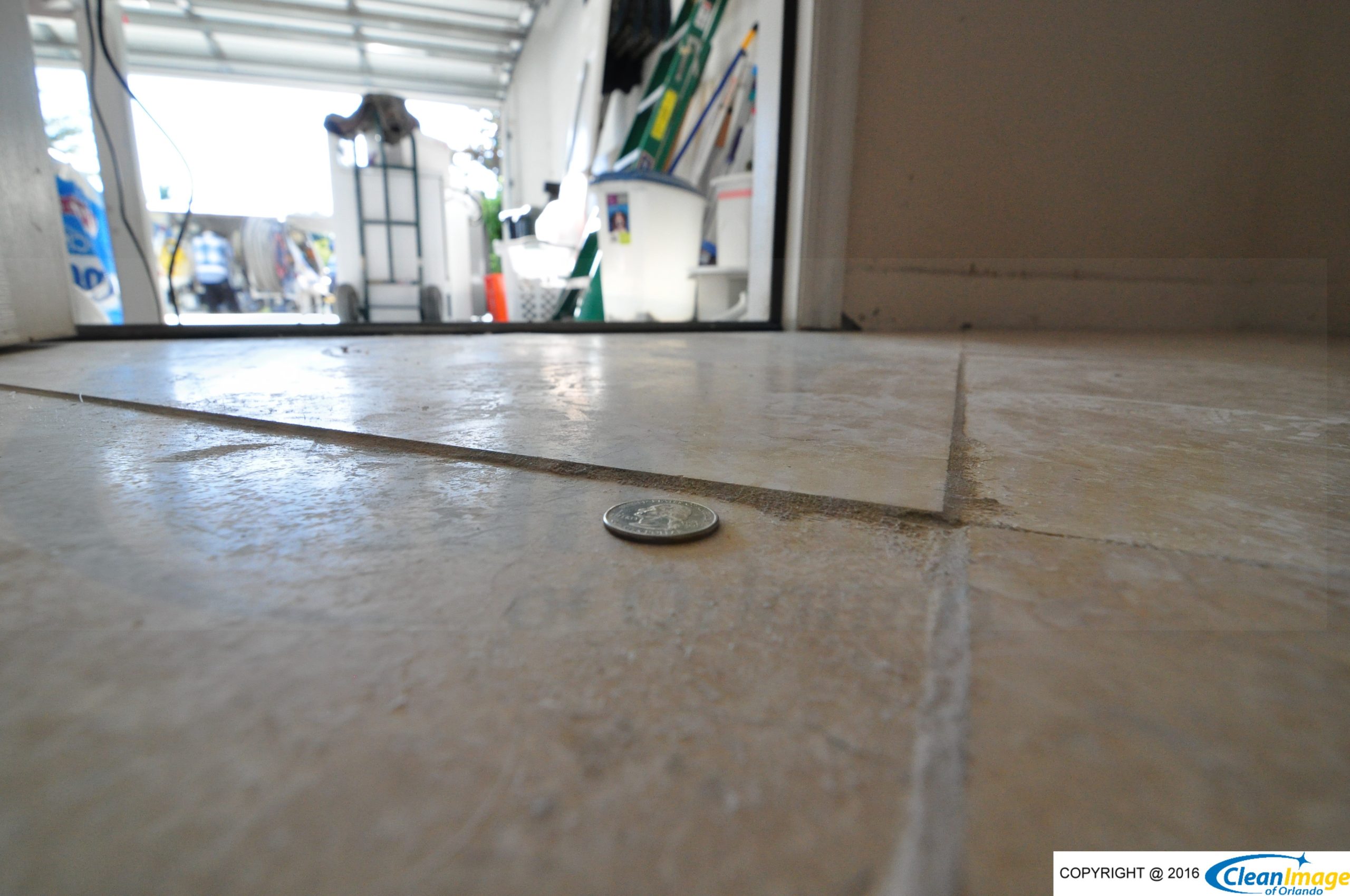
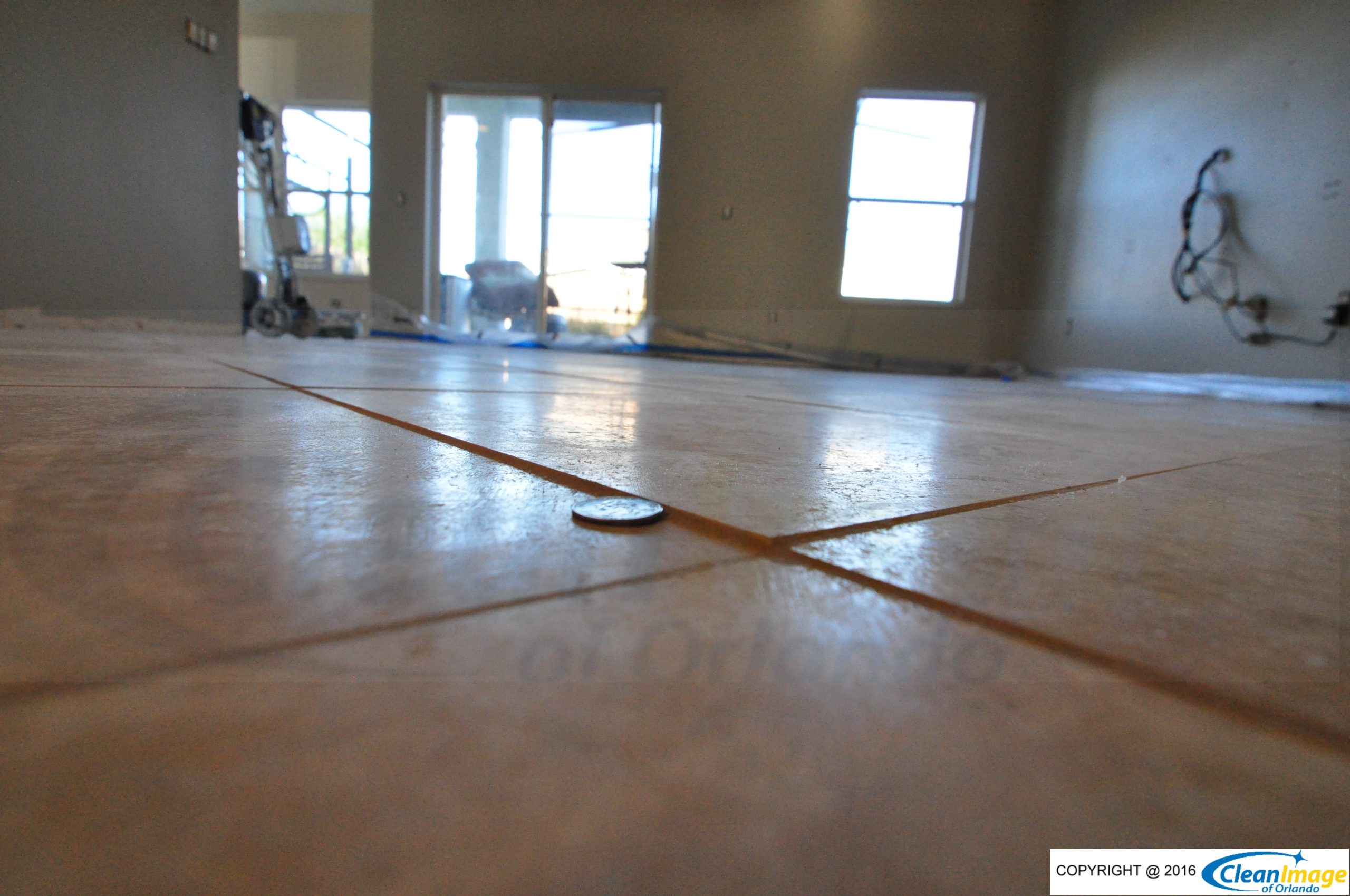
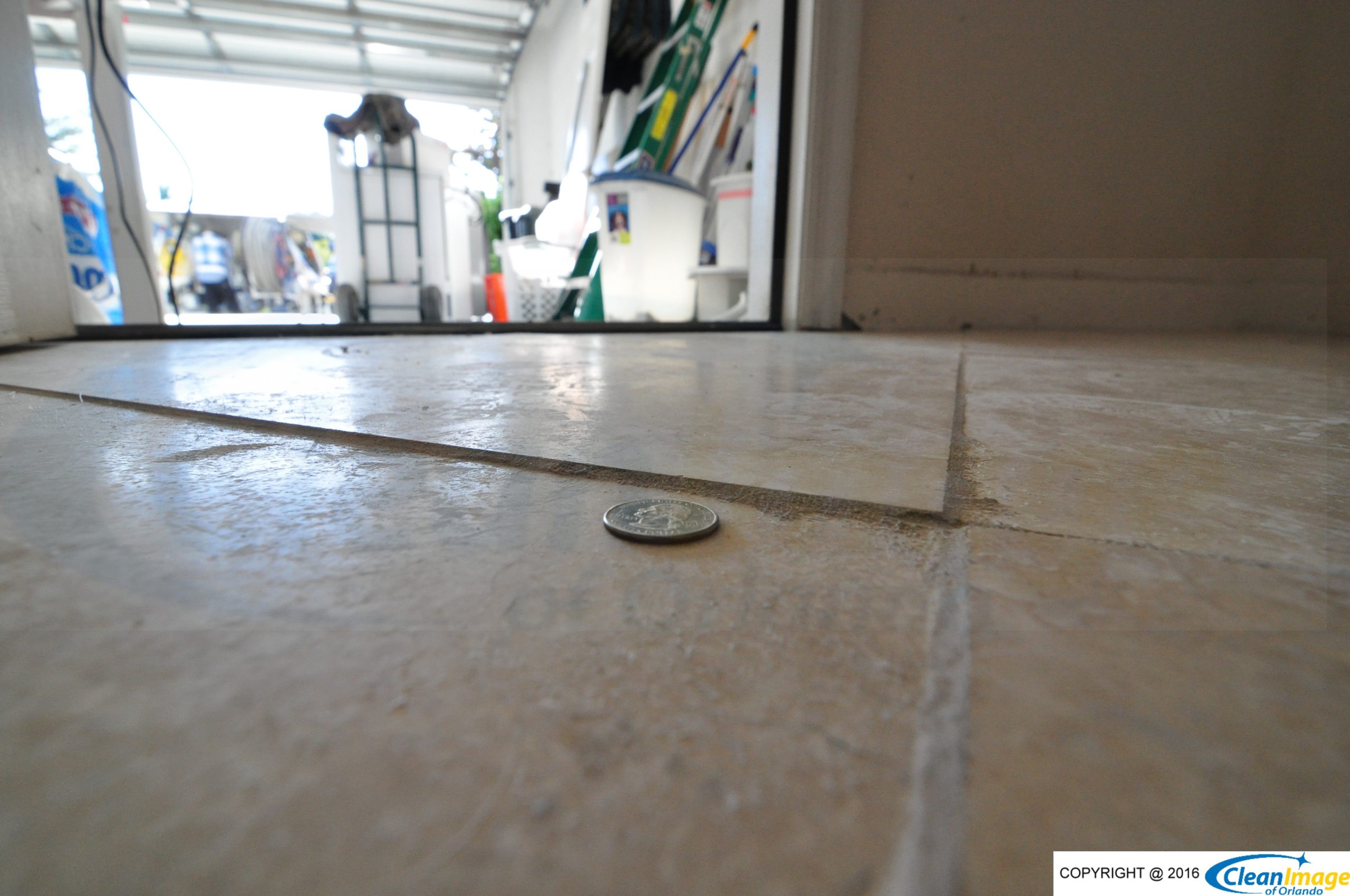
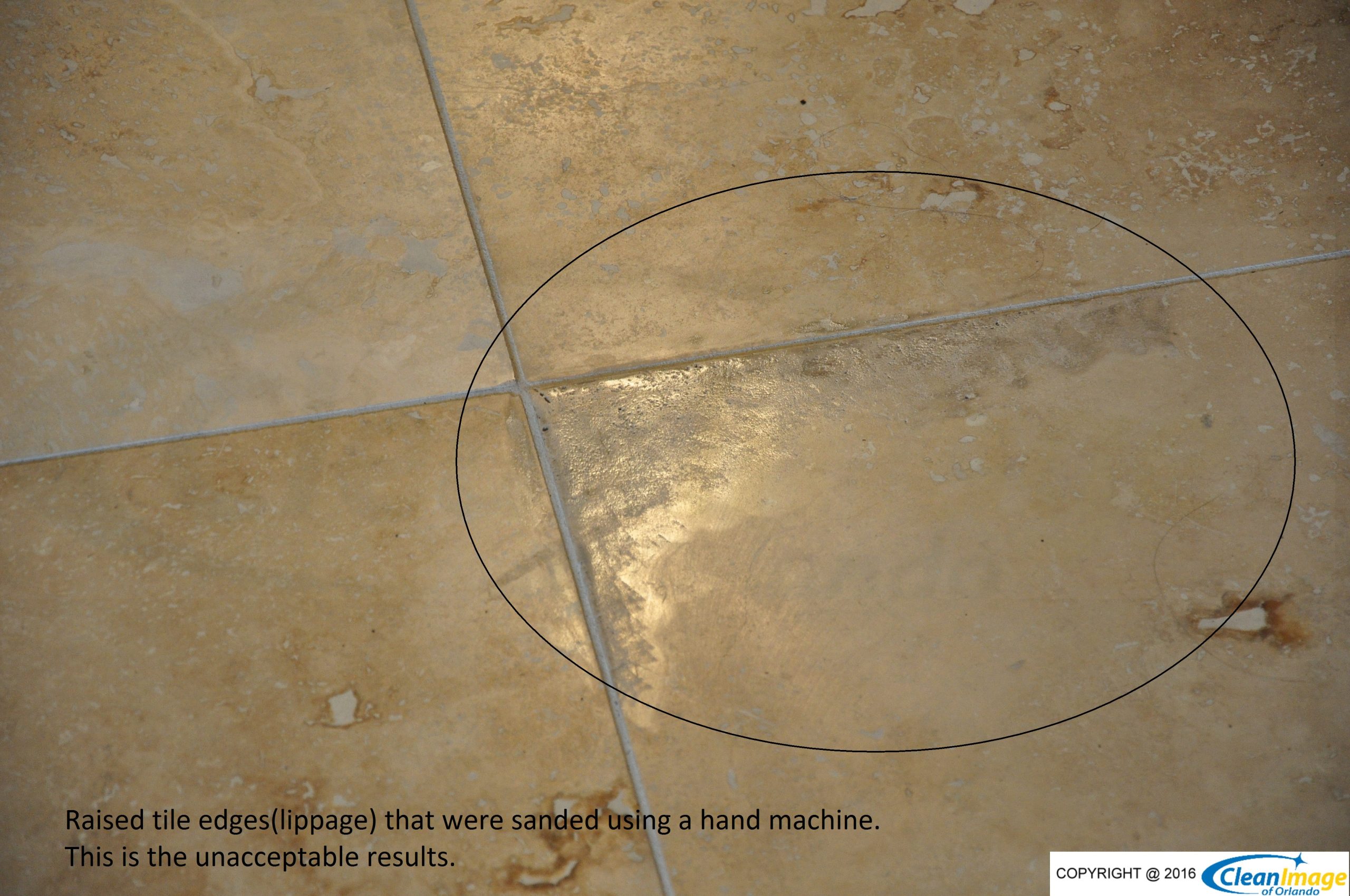
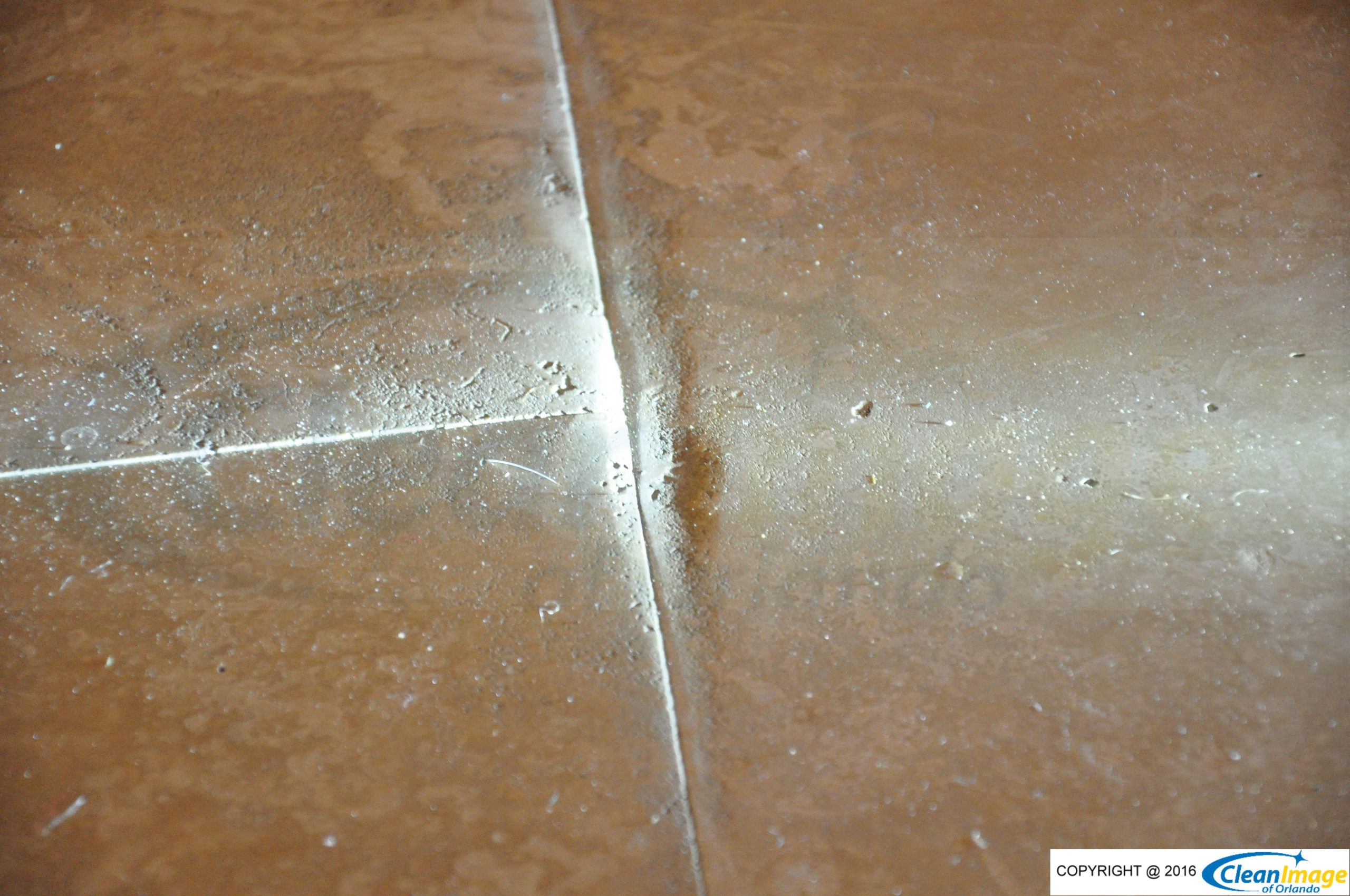
Here are some examples of travertine lippage. Tile lippage is where you have significant difference in tile height levels between adjacent tiles. This is due to improper installation. This can possibly cause a trip and fall issues, cleaning maintenance issues and of course is un slightly.
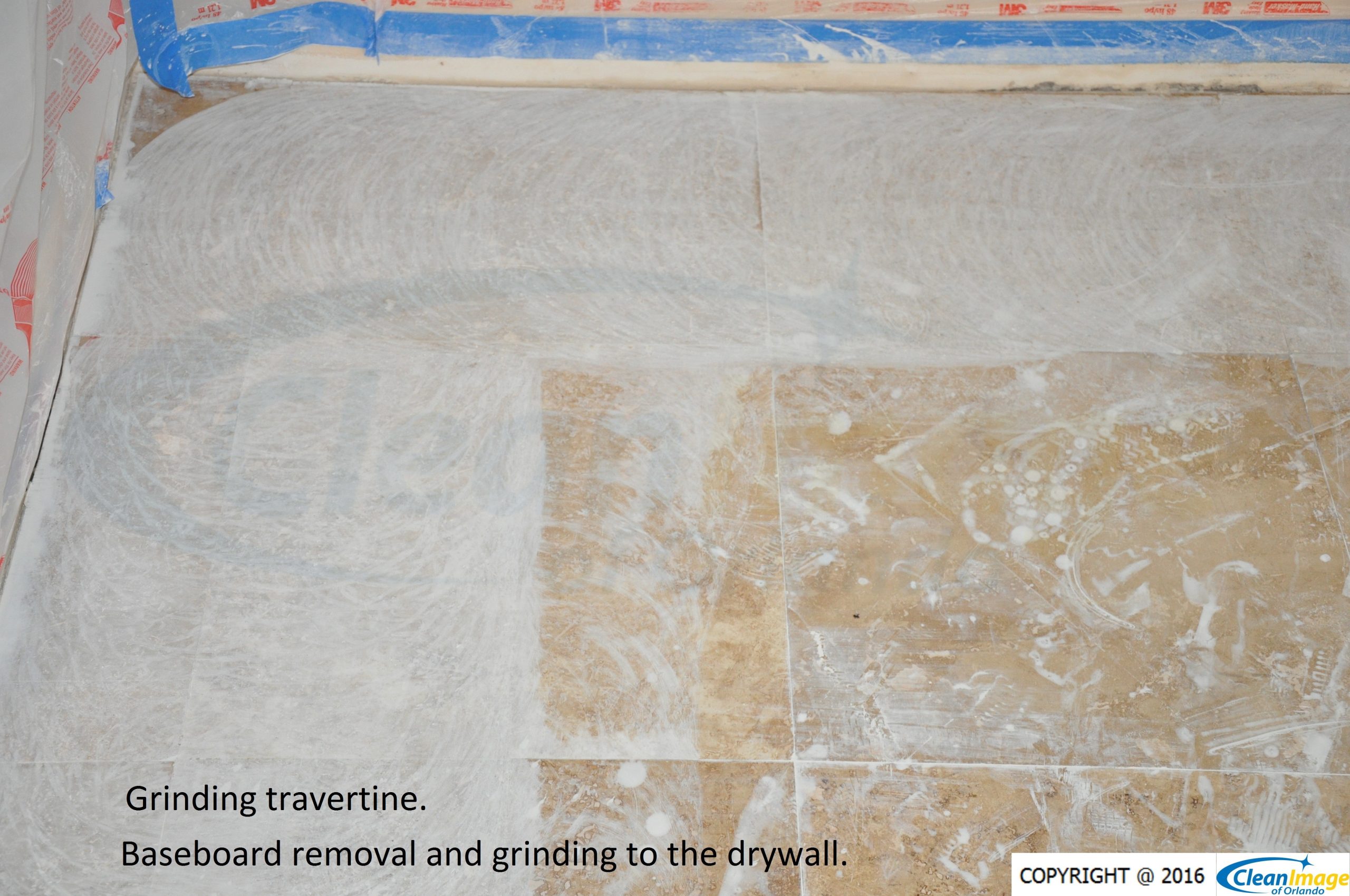
At Clean Image of Orlando we do full grinding restoration to remove lippage and restore your floor to desired finish. Take a look at the Travertine Grinding picture gallery to see jobs we have completed.
What Is Grinding? And Do I Need It?
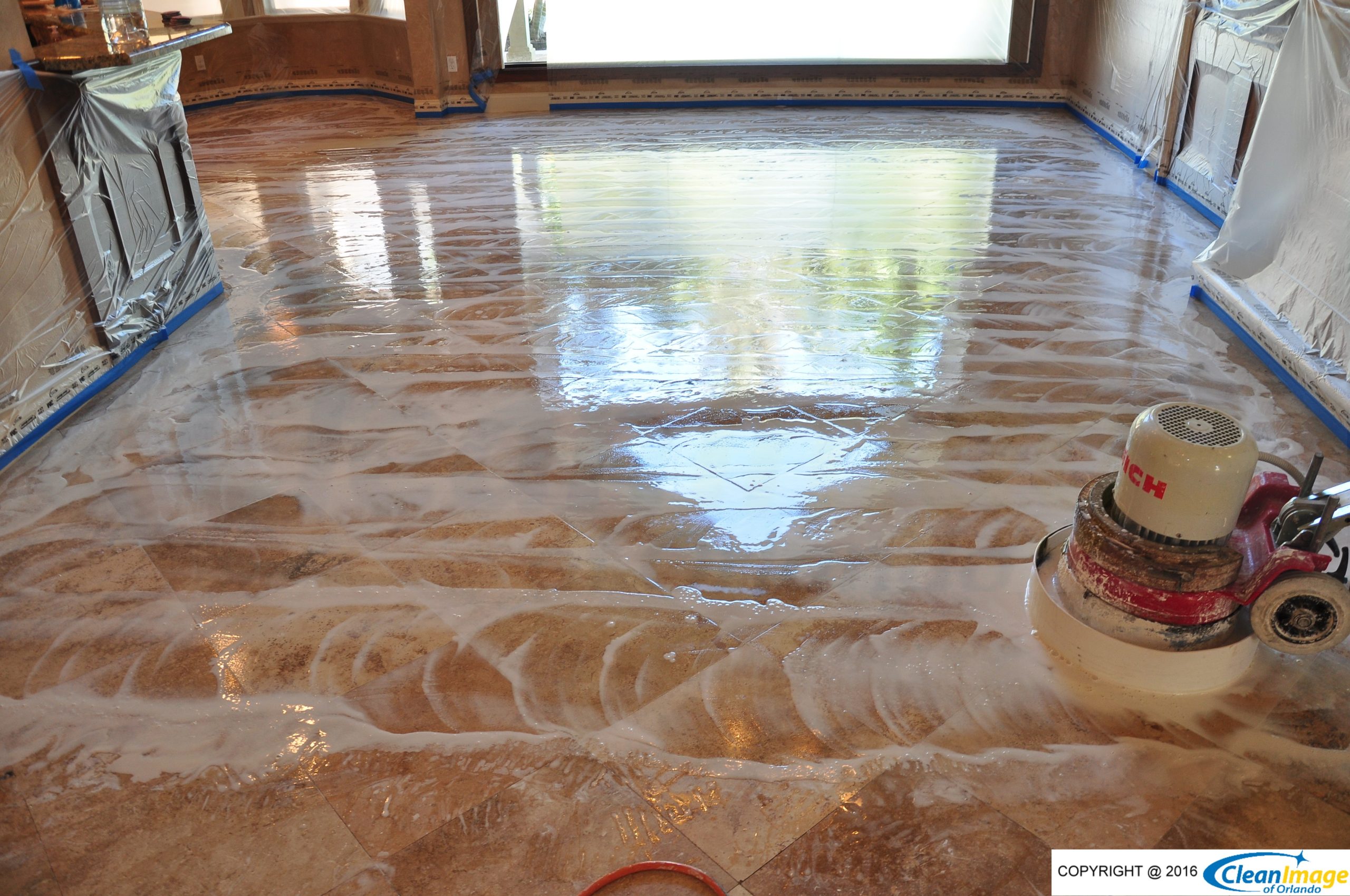
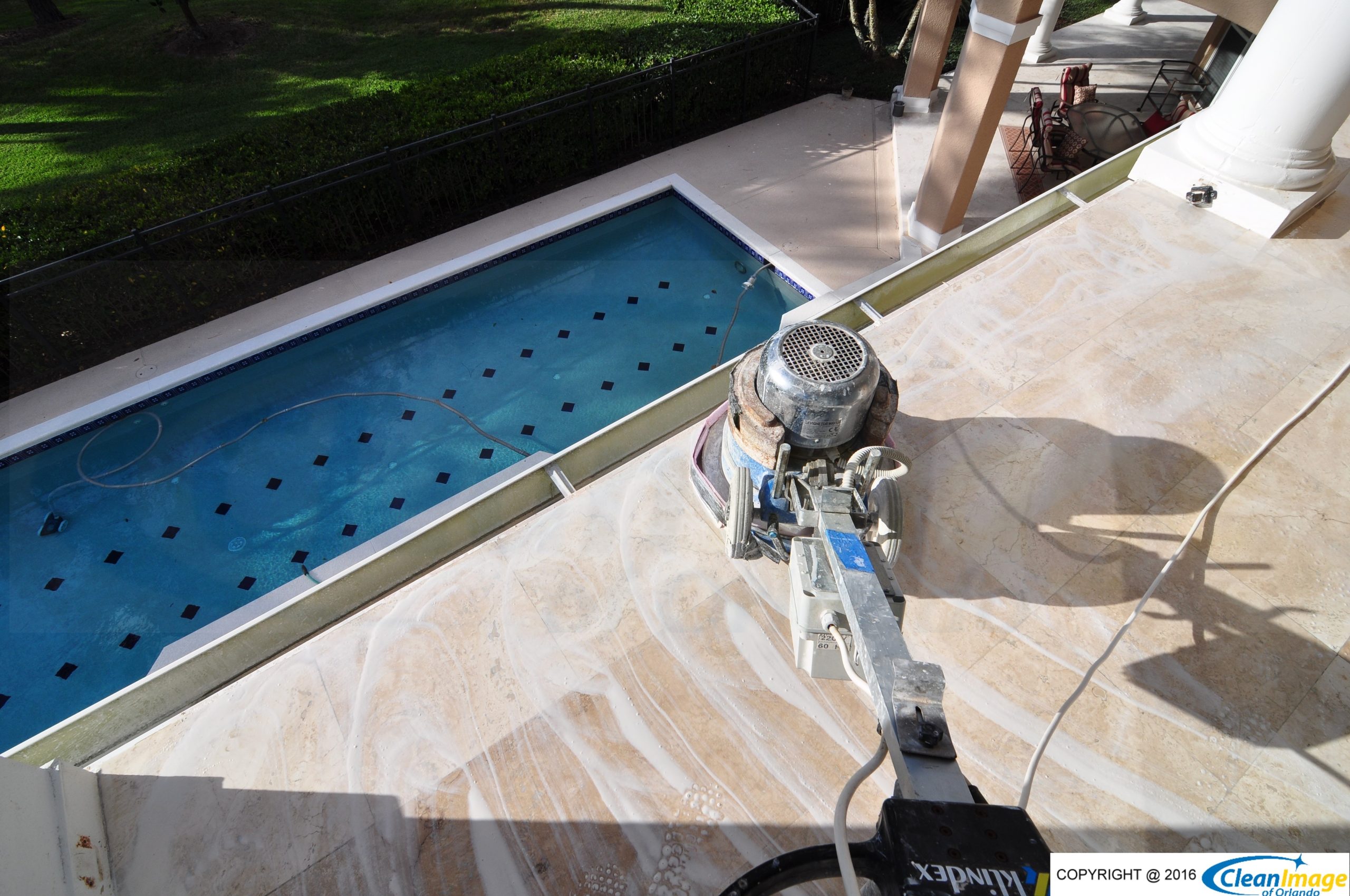
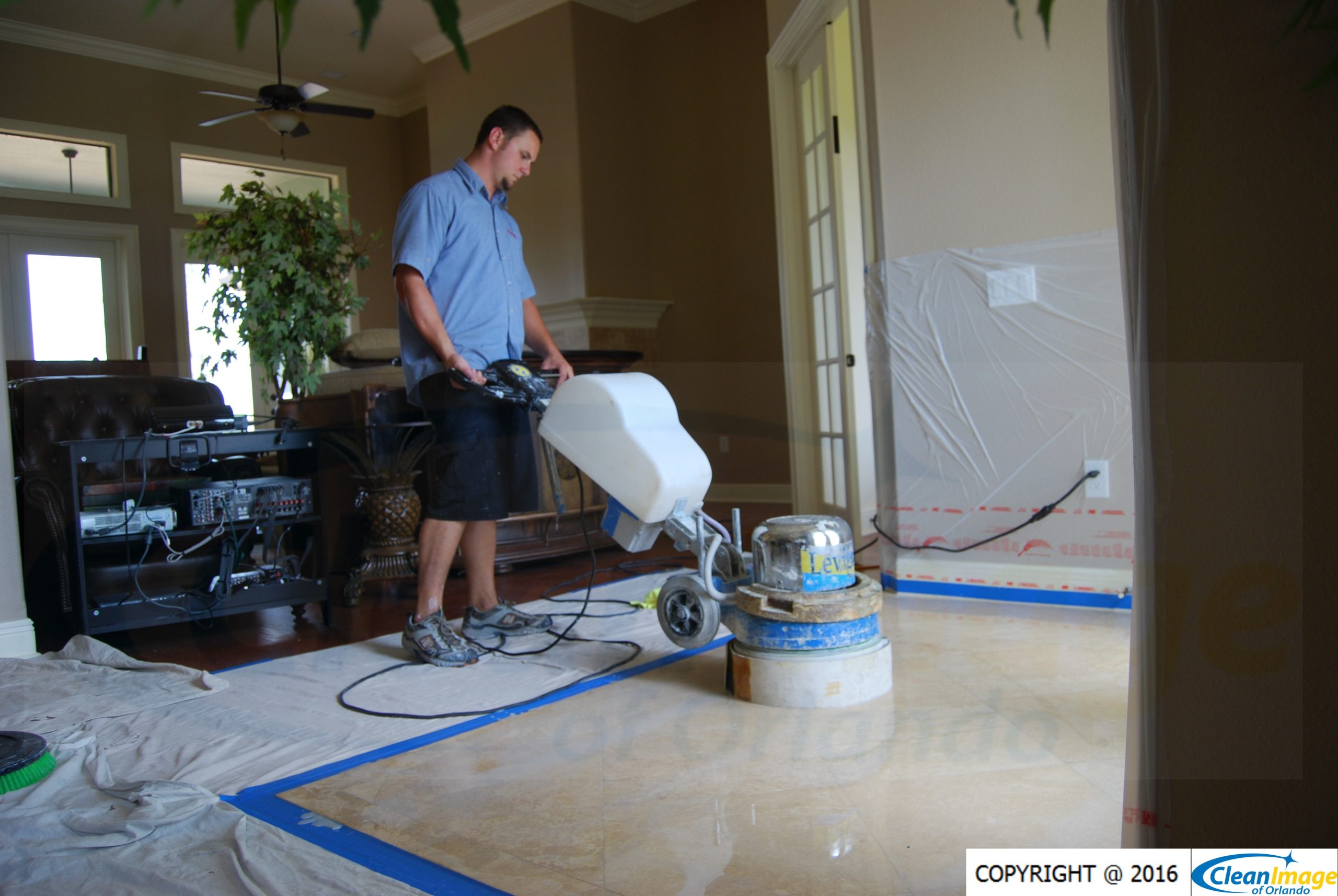
What Is Diamond Honing?
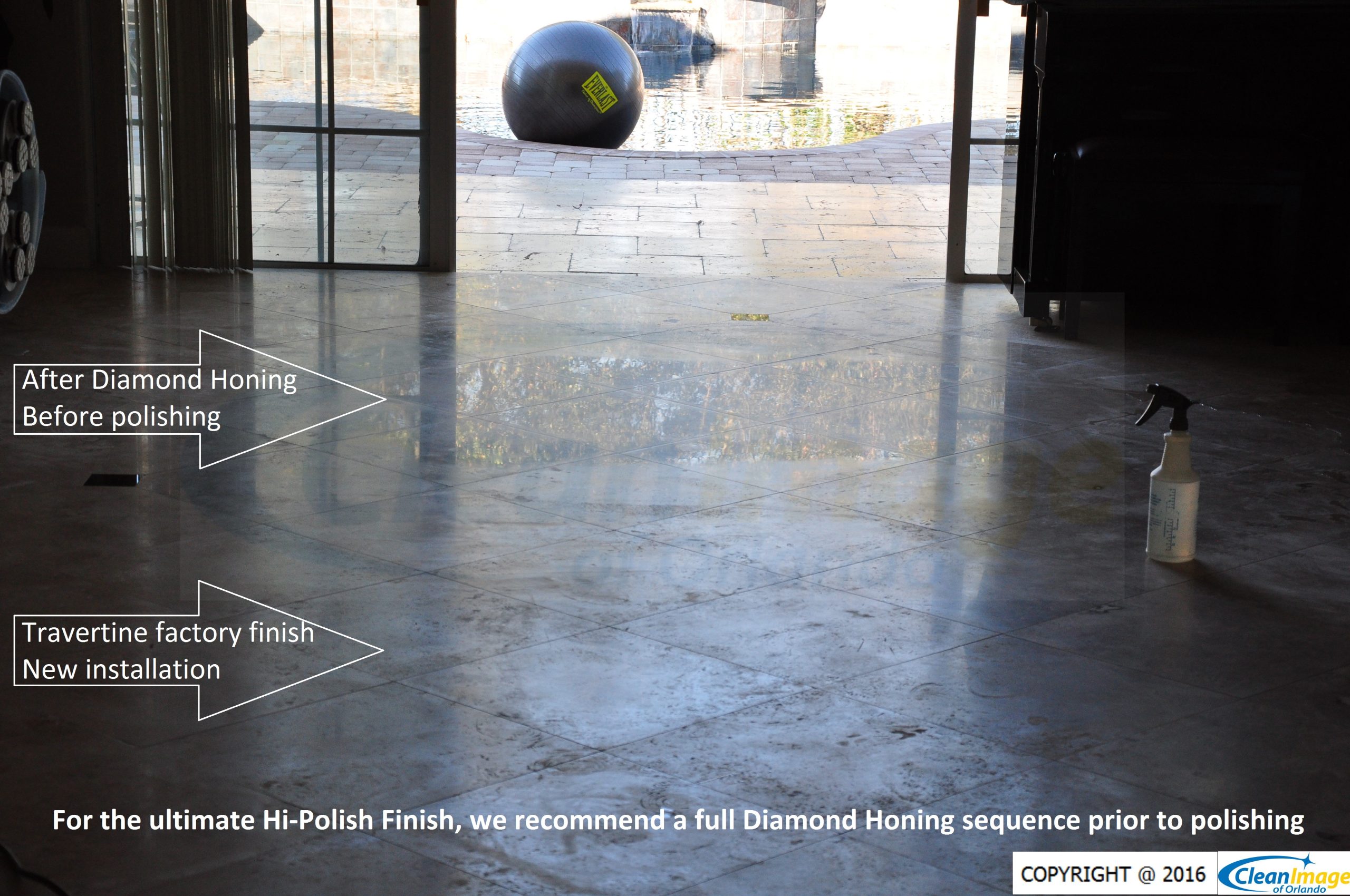
What Is Clarity?
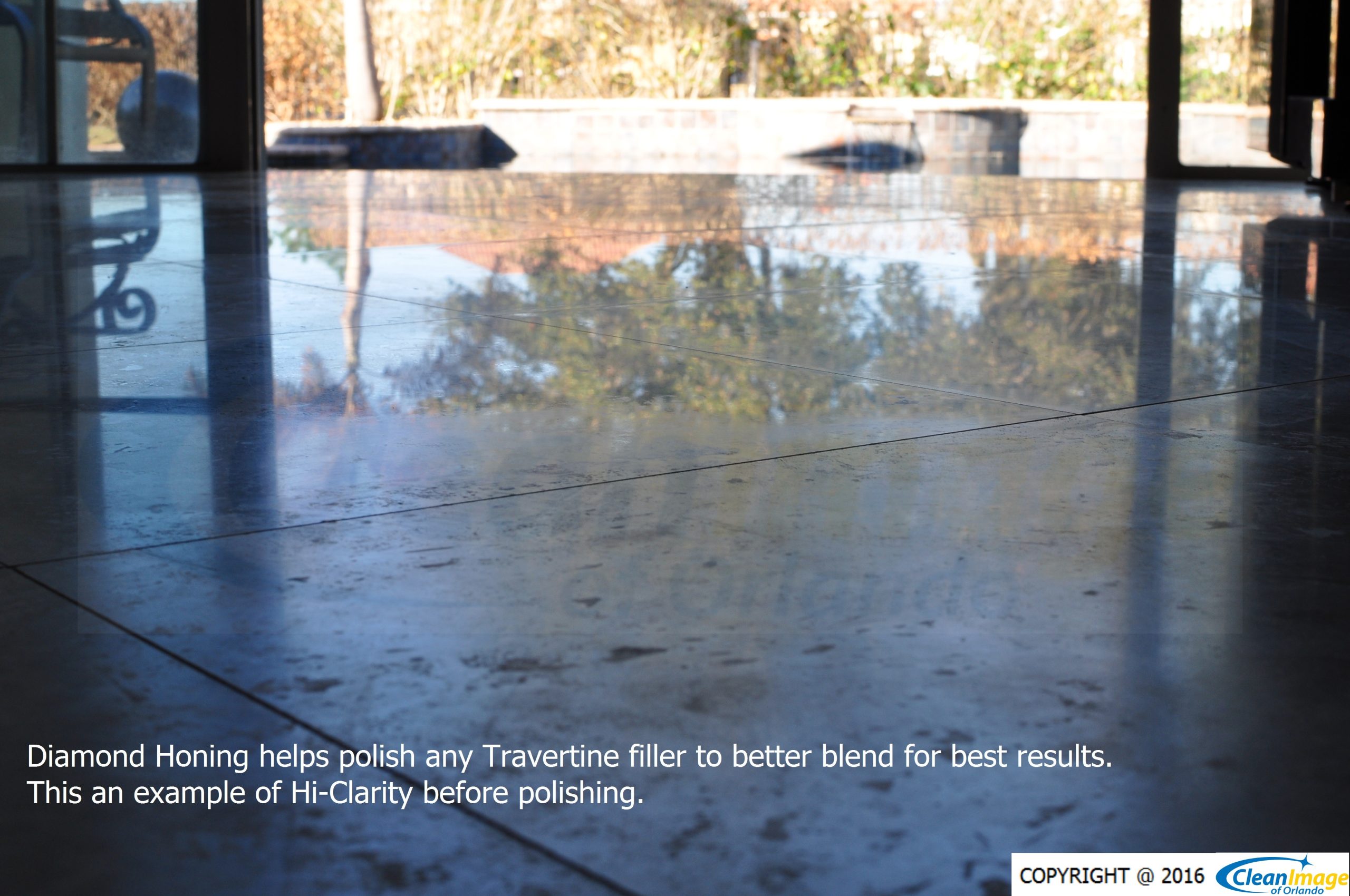
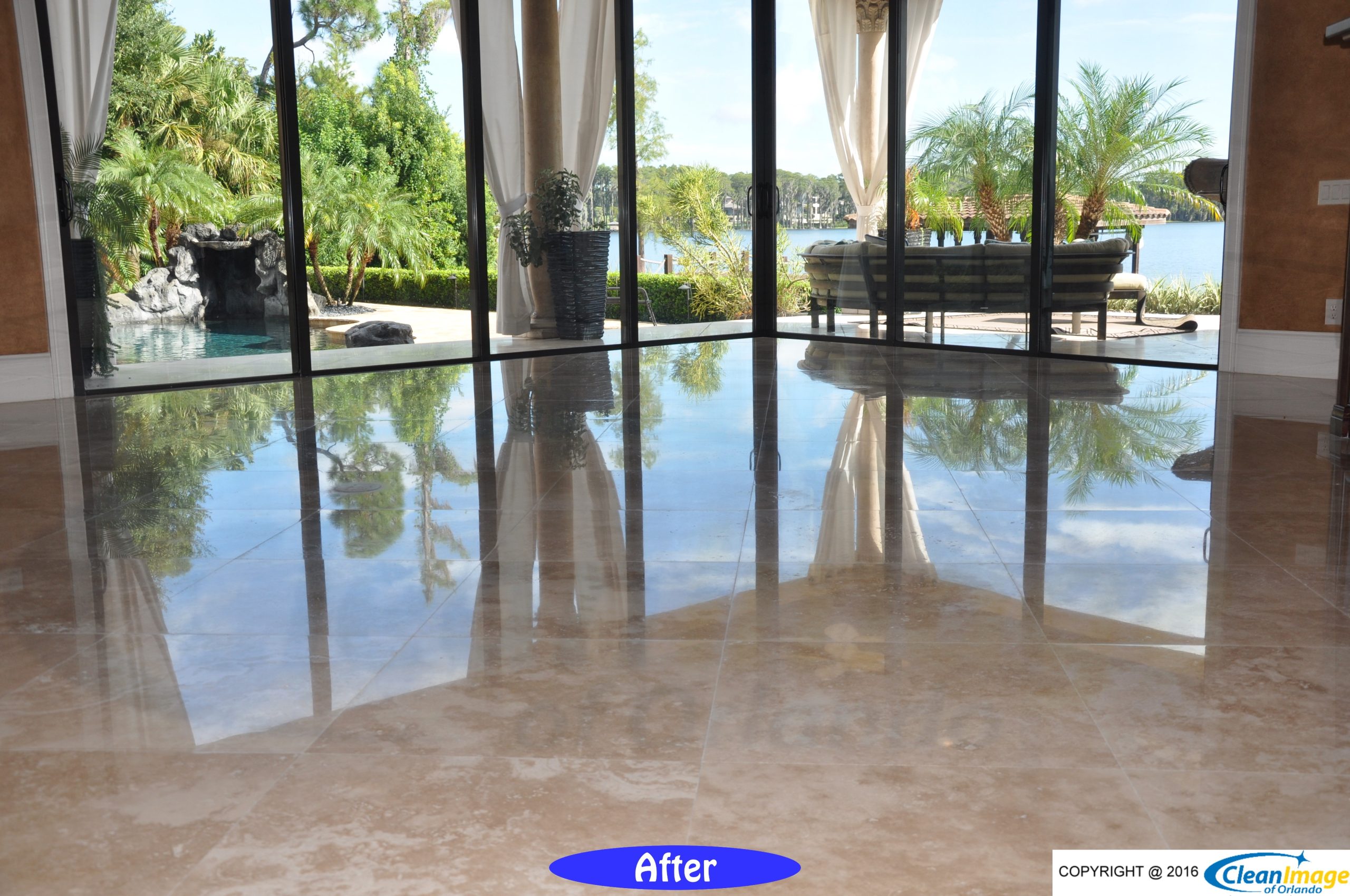
Excellent clarity is an indication of no wear or scratches, as this would cause a cloudy or distorted reflection. Excellent clarity provides the longest lasting finish.
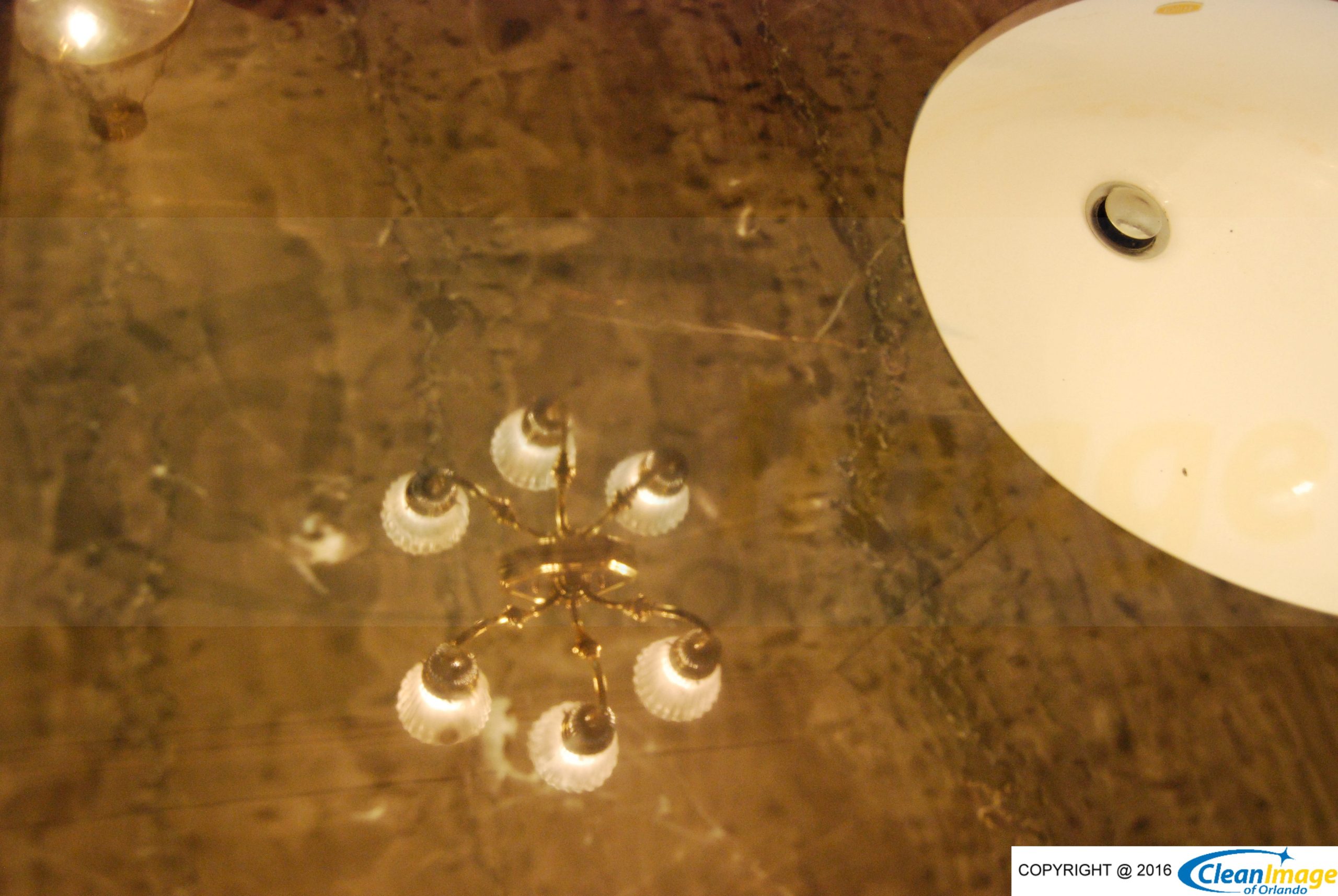
What Is Crystal Stun Damage?
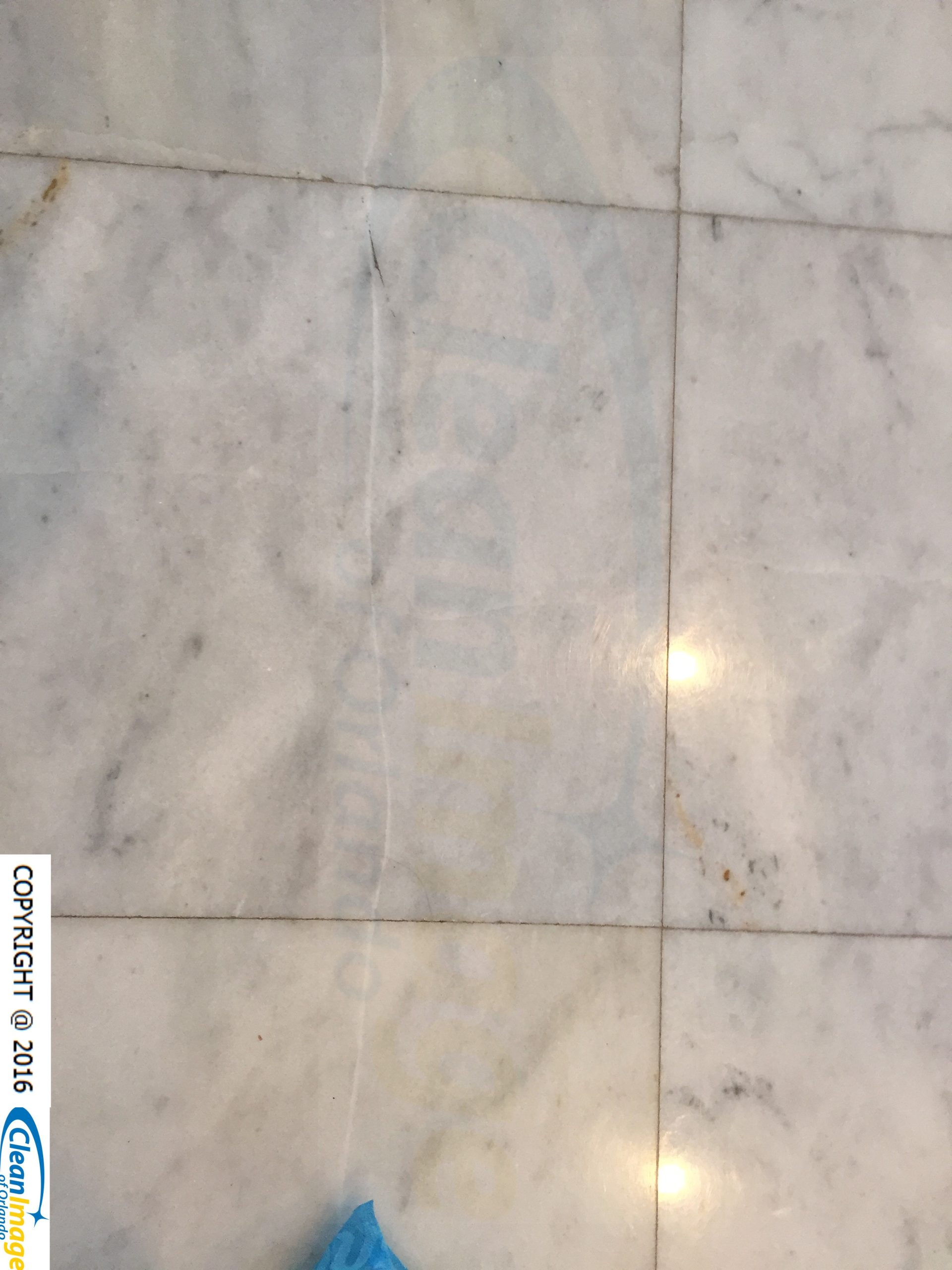
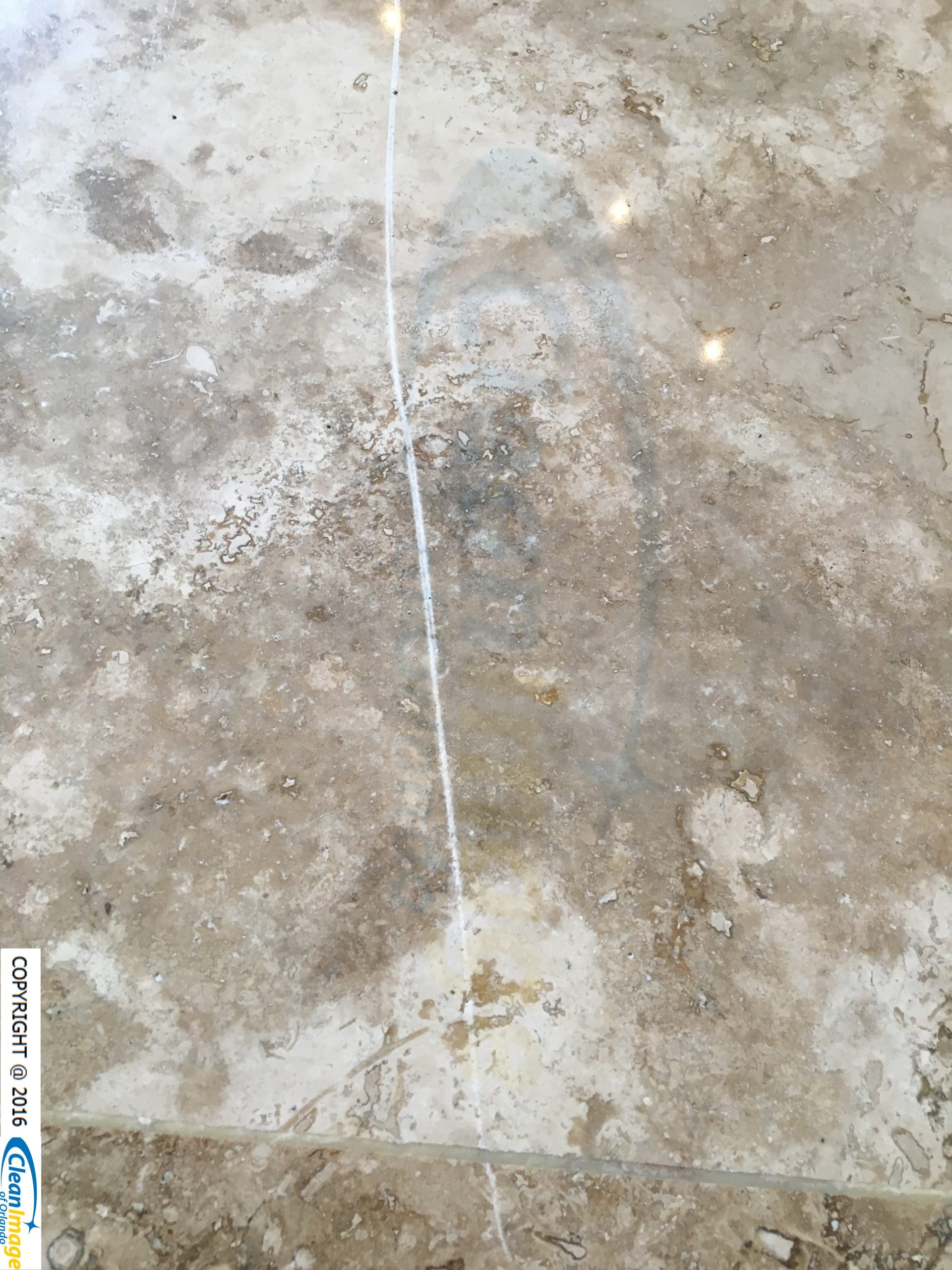
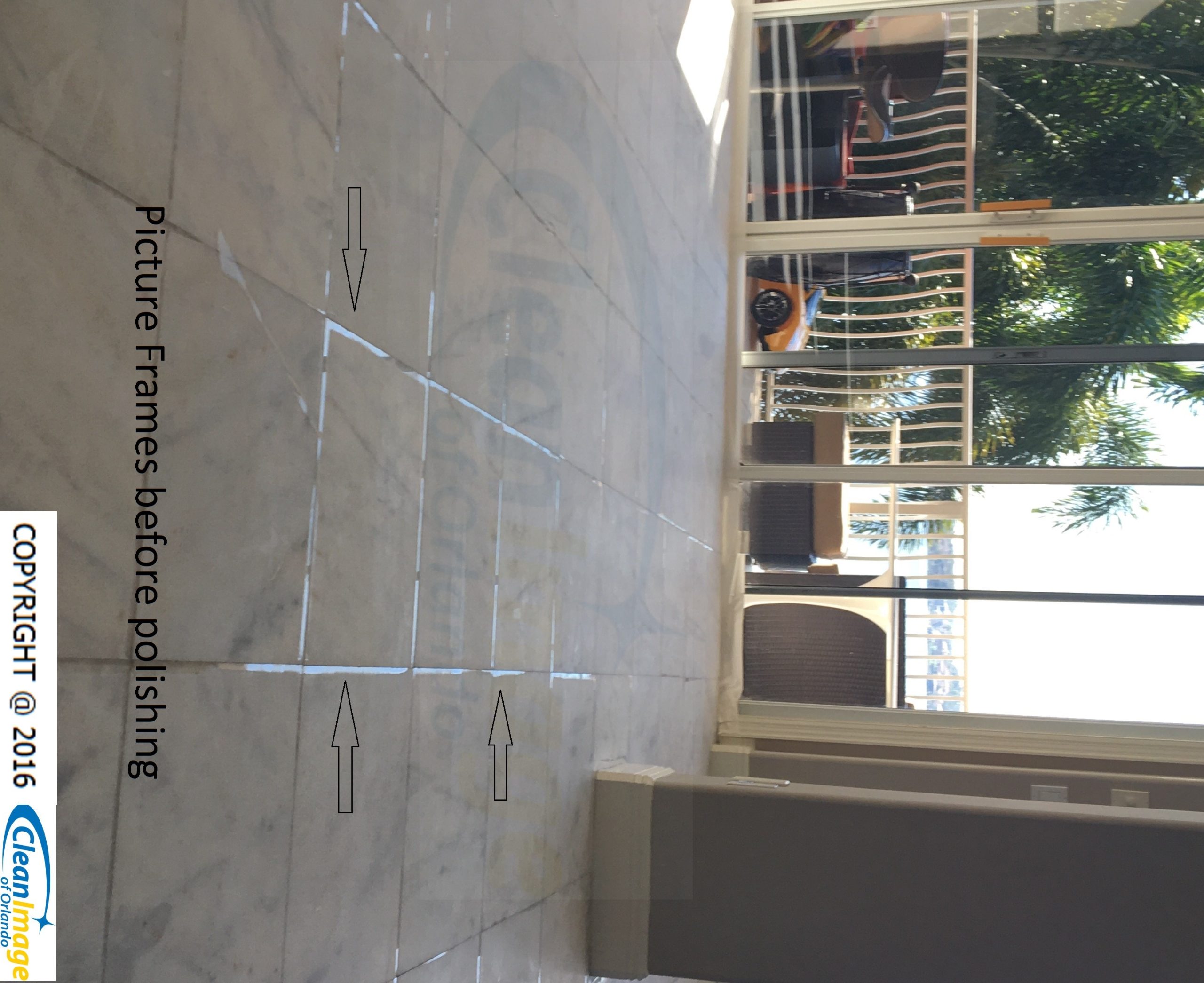
What Is Picture Framing?
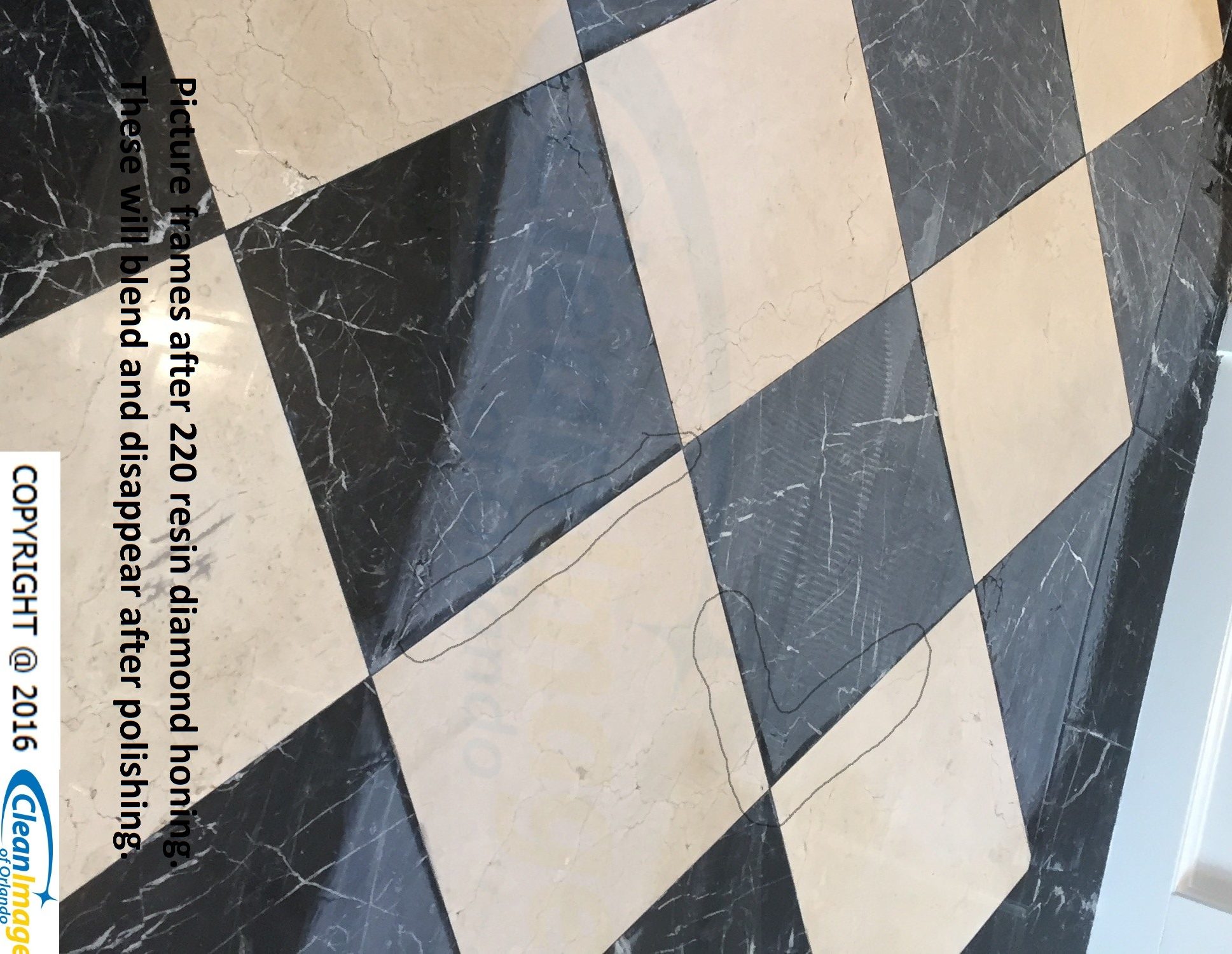
How Should I Clean My Stone Floor?
What Is A False Shine?
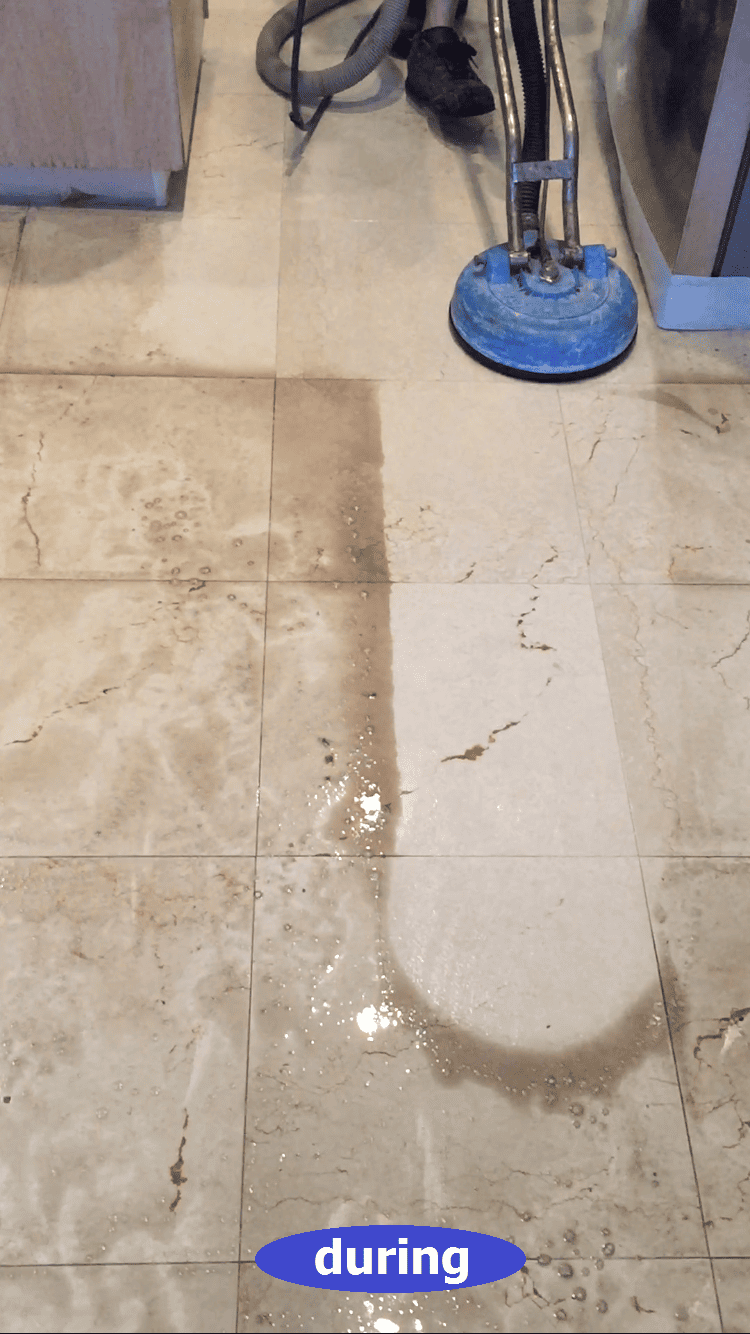
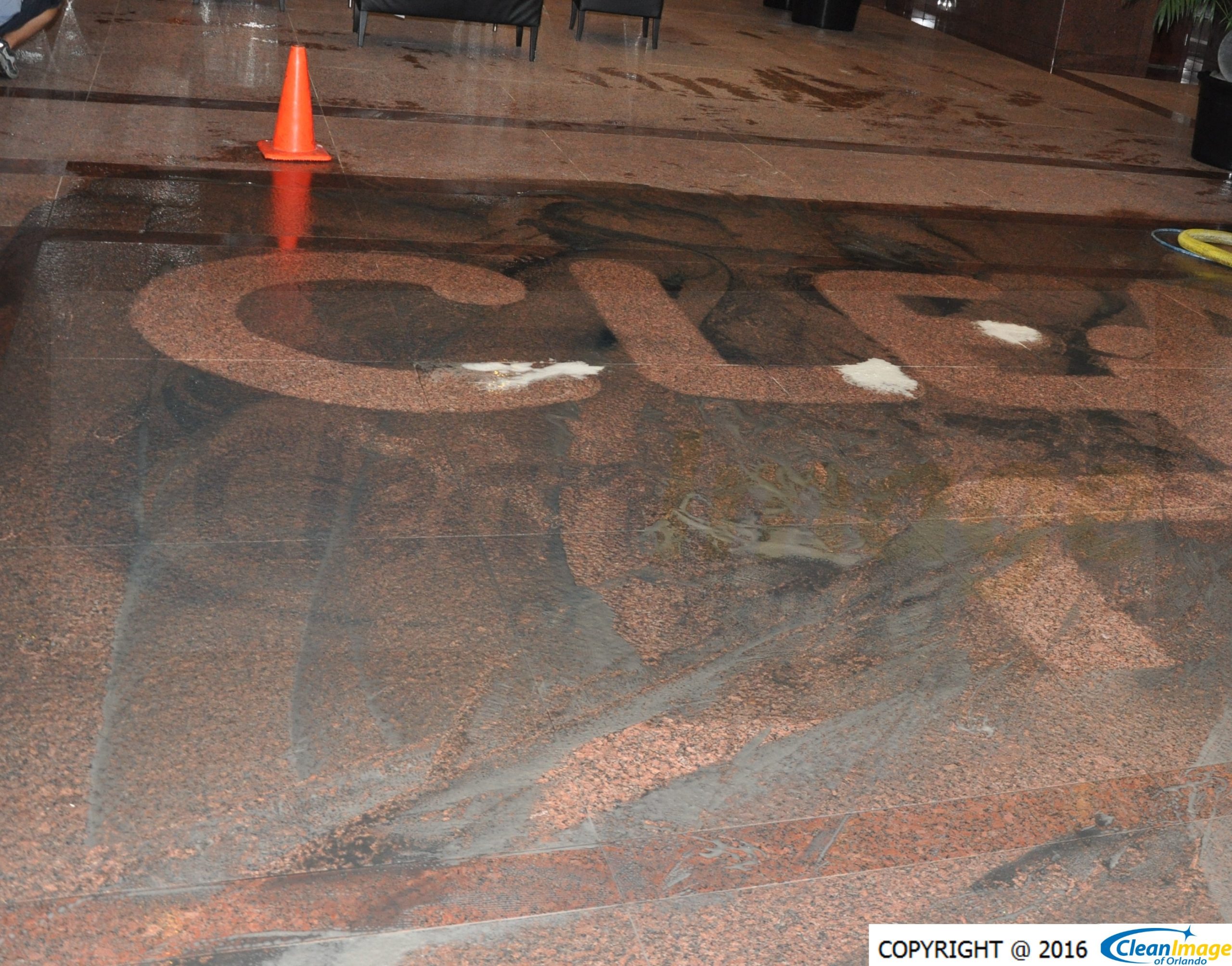
During cleaning, when you see a drastic difference, this is often due to residues on the stone attracting soil. If a higher gloss level is desired after cleaning, Clean Image of Orlando would recommend diamond refinishing.
What Is Pillowing?
What Will Happen If I Use Vinegar To Clean?
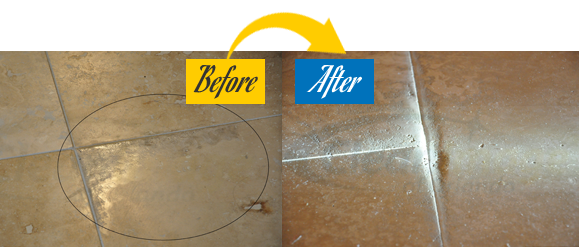
Vinegar is acetic acid and will react with the calcium in the travertine or marble causing etching,or surface damage. You can see in the pictures vinegar was used to try to clean the grout lines on this travertine floor with dire consequences. Clean Image of Orlando diamond refinished to remove surface damage and restore natural finish.
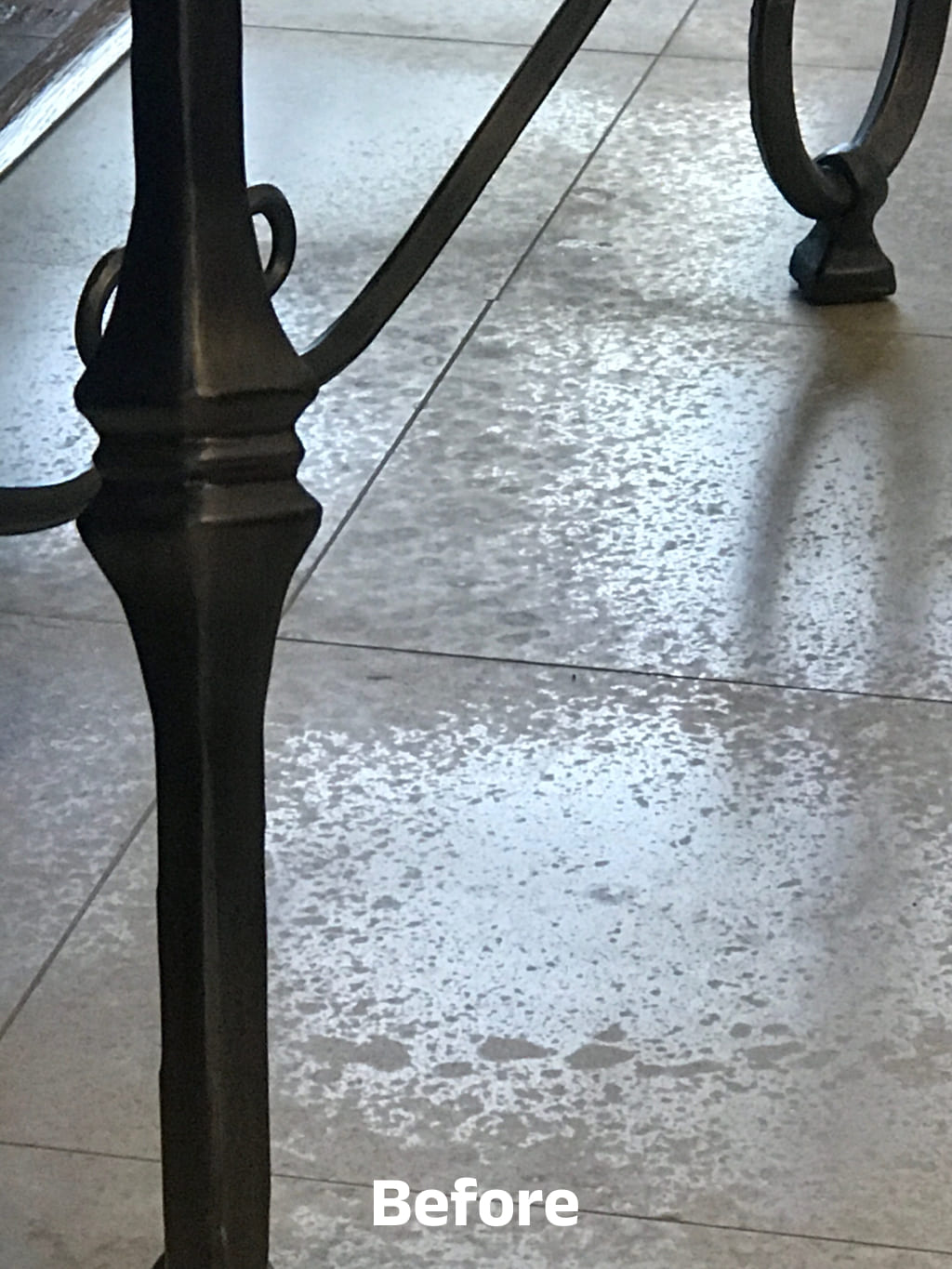
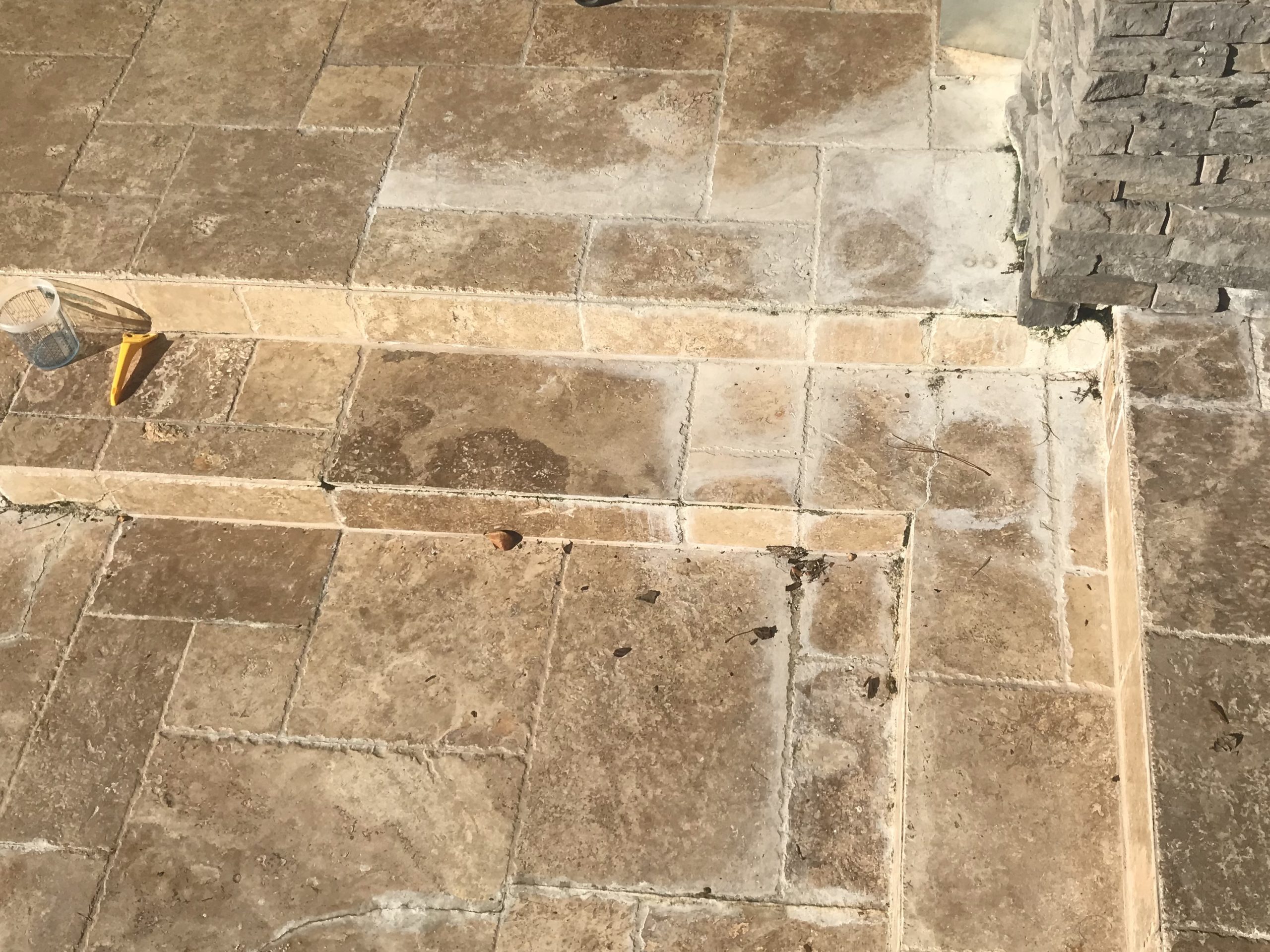
What Is Efflorescence?
What is means to us, is water is getting underneath and drying through cracks, or water is not properly draining and allowing standing water to evaporate.