
Get a Free Restoration Estimate
Our Travertine Paver Restoration Services
Slip Resistance
Treatment
At Clean Image of Orlando, safety is just as important as appearance. We specialize in restoring and protecting natural stone surfaces like travertine, marble,and limestone, and part of that process is making sure they’re beautiful and safe to walk on. Our professional non-slip treatments are designed to help eliminate slippery conditions around pools, patios, and entryways — areas where your family and guests should feel confident with every step. Take a look at the video and you’ll see how our team tests the surface before and after treatment to verify real results. When you hire Clean Image of Orlando, you’re getting more than a clean surface — you’re getting decades of experience, professional-grade sealers, and a company that truly cares about safety, longevity, and peace of mind.
This is what we call our “Frankenstein Slip Test” — our way to demonstrate just how slippery a surface can be when it’s wet. We perform this test barefoot to simulate real-world conditions around pool decks and patios. We don’t recommend trying this yourself — unless you’re ready to do the splits!
Watch our live slip test with technician Josh on a customer’s slippery travertine porch. Before the treatment, his foot slides instantly—after Clean Image of Orlando’s non-slip process, it locks in place.
Watch our live slip test with technician Josh on a customer’s slippery travertine porch. Before the treatment, his foot slides instantly—after Clean Image of Orlando’s non-slip process, it locks in place.
Travertine
Stain Removal
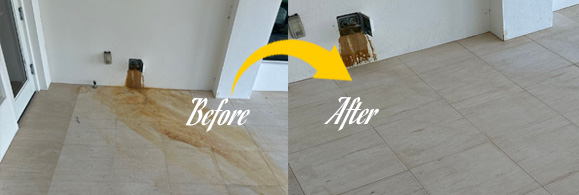
Clean Image of Orlando offers expert stain removal for travertine surfaces using both chemical and mechanical treatments, depending on the type and depth of the stain. Light discoloration can often be treated with specialized stone-safe cleaners and poultices, while deeper or etched areas may require precision diamond honing to fully restore the surface. Our process brings back the natural color, clarity, and smooth finish of your travertine — without damaging the stone.
Specialized
Travertine Cleaning
Uneven & Sinking
Paver Repairs
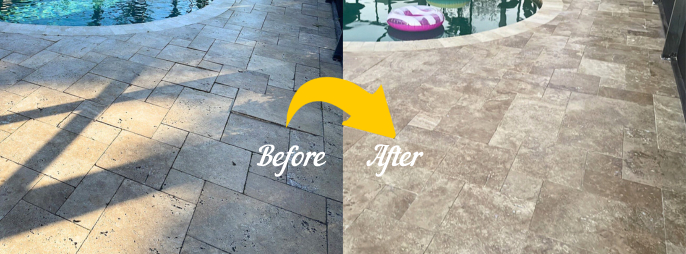
If you have pavers that are uneven, creating a tip and fall hazard, or pavers that are sinking, Clean Image of Orlando removes, compacts and resets as needed for a safe surface.
Weather
Damage Repair
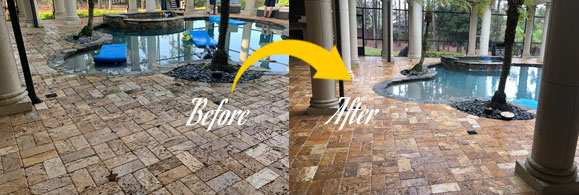
We address damage caused by weather elements, including erosion, and sun exposure, restoring the structural integrity and appearance of the pavers.
Joint
Stabilization & Sanding
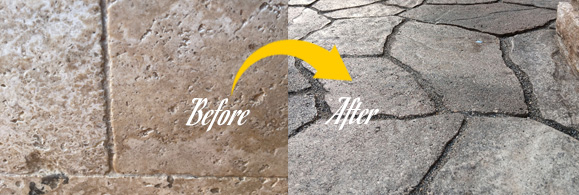
Travertine
Sealing
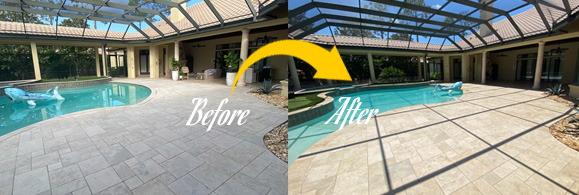
Color Enhancement
Sealing
Enhancing
Impregnating Sealer
Hard Water & Efflorescence
Treatments
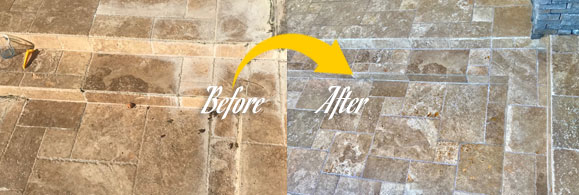
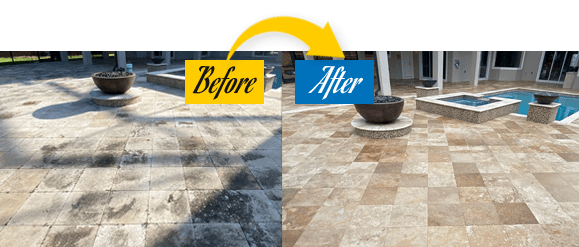
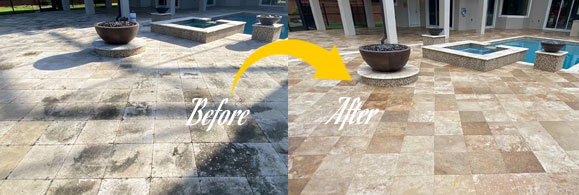
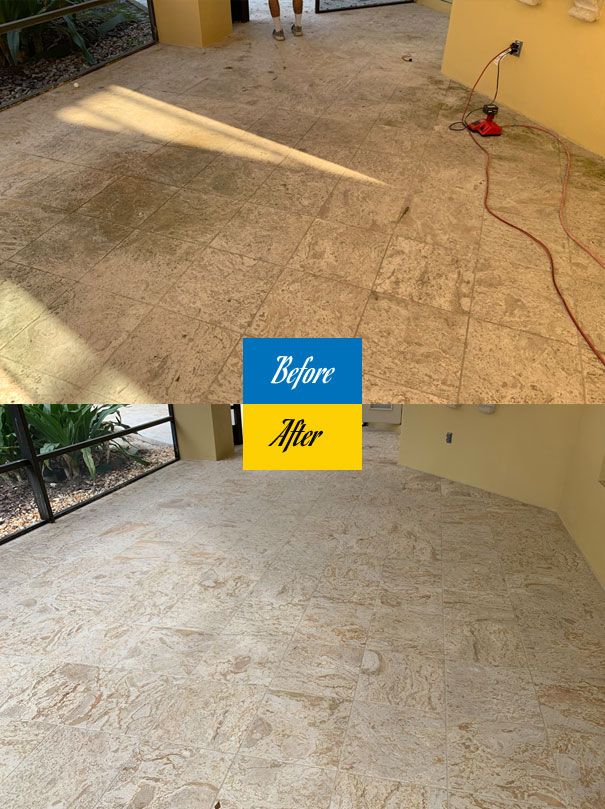
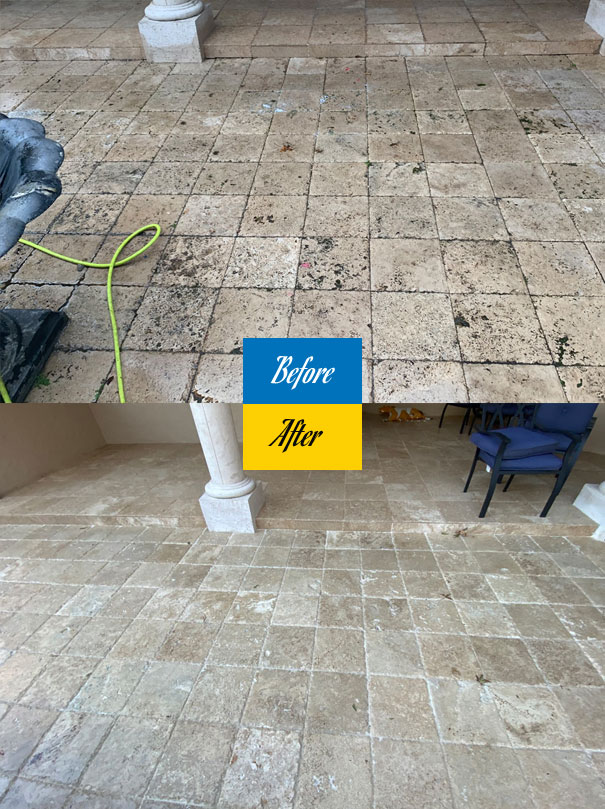
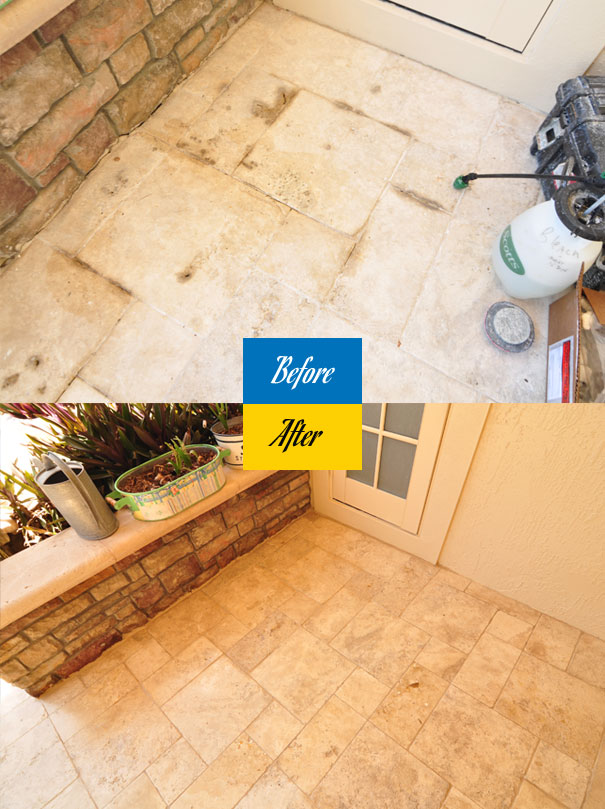
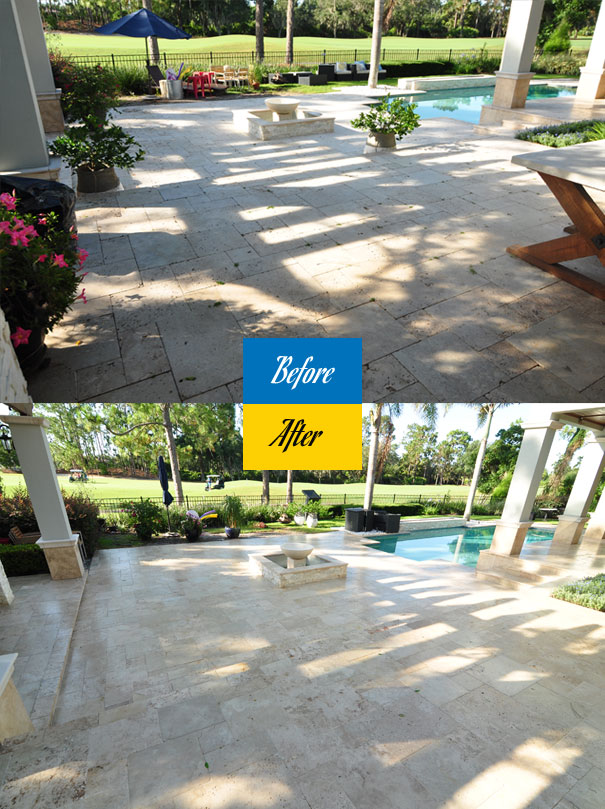
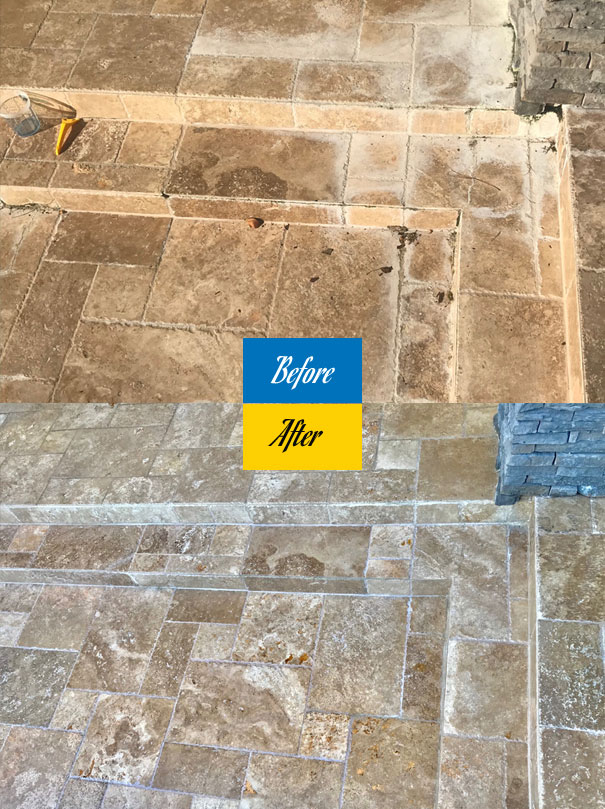
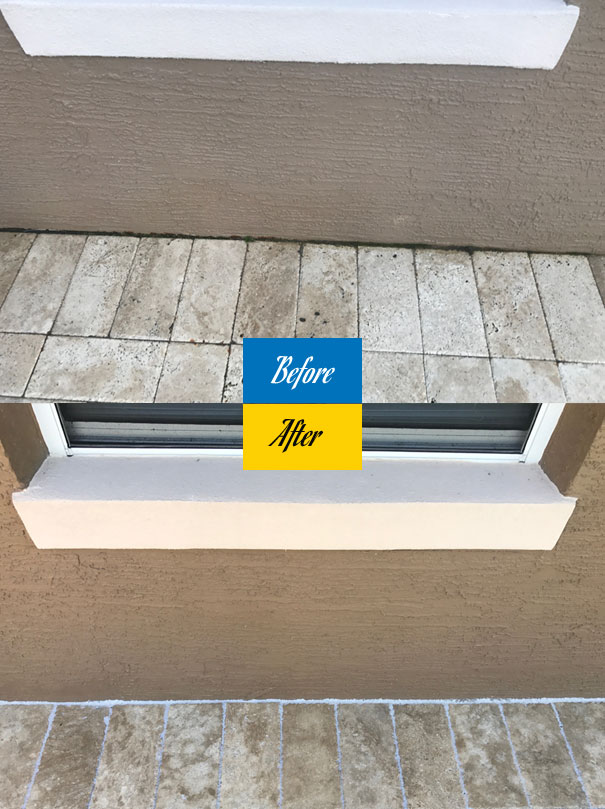
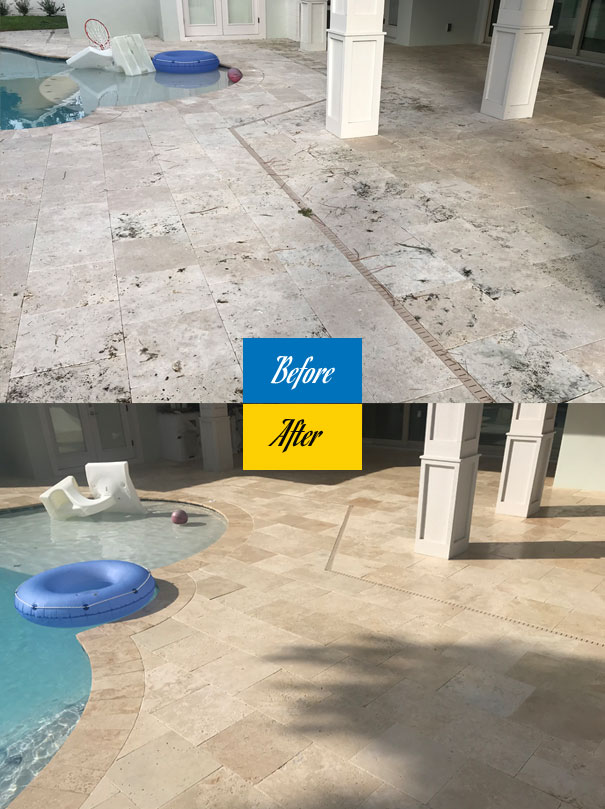
These travertine pavers were brought back to life by removing heavy hard water deposits and efflorescence that had built up on the surface. Over time, mineral buildup can leave stone looking dull, chalky, and stained. Through our professional restoration process, we safely cleaned and treated the pavers, revealing their natural color and beauty once again. The result is a refreshed, vibrant surface that looks like new and is ready to be enjoyed.
Weed Removal
Between Pavers
Our Travertine Paver Restoration Process
Detailed
Assessment
We begin with a thorough inspection of your travertine pavers to understand their condition and restoration needs.
Customized Restoration Plan
Based on the assessment, we develop a tailored restoration strategy that addresses the specific challenges faced by your pavers.
Skilled
Restoration
Our experienced team employs advanced techniques and high-quality materials to carry out the restoration work.
Final Inspection & Review
We conclude with a detailed review to ensure the restoration meets our high standards and your complete satisfaction.
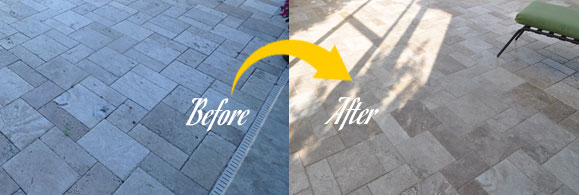
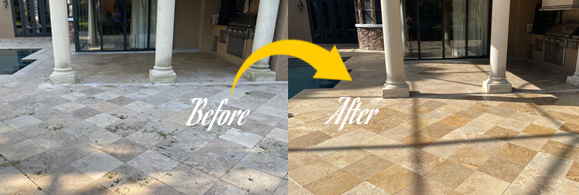
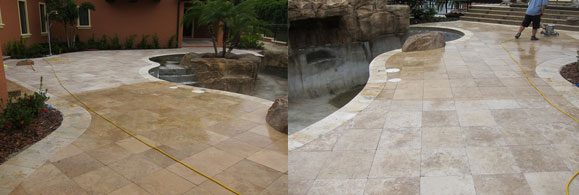
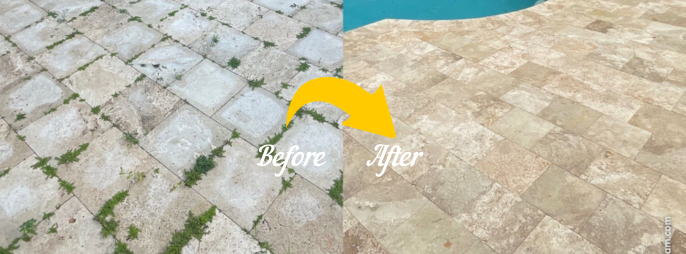
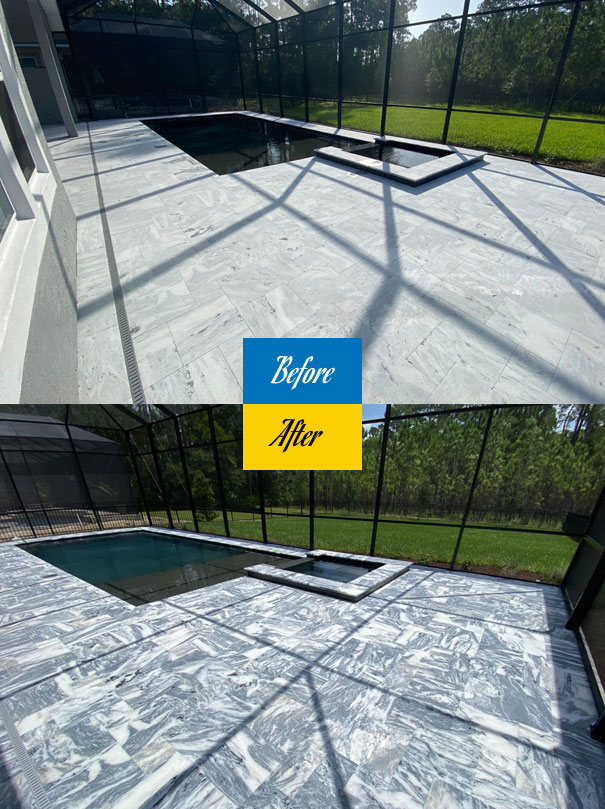
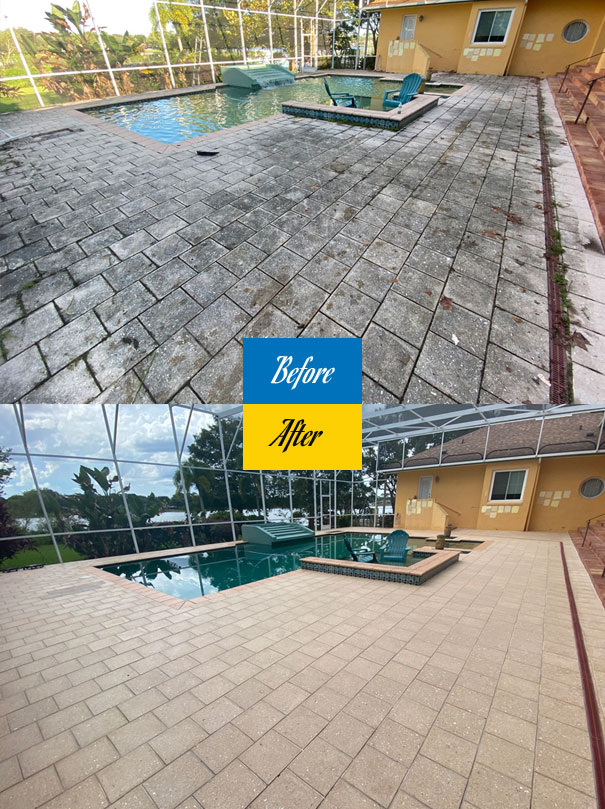
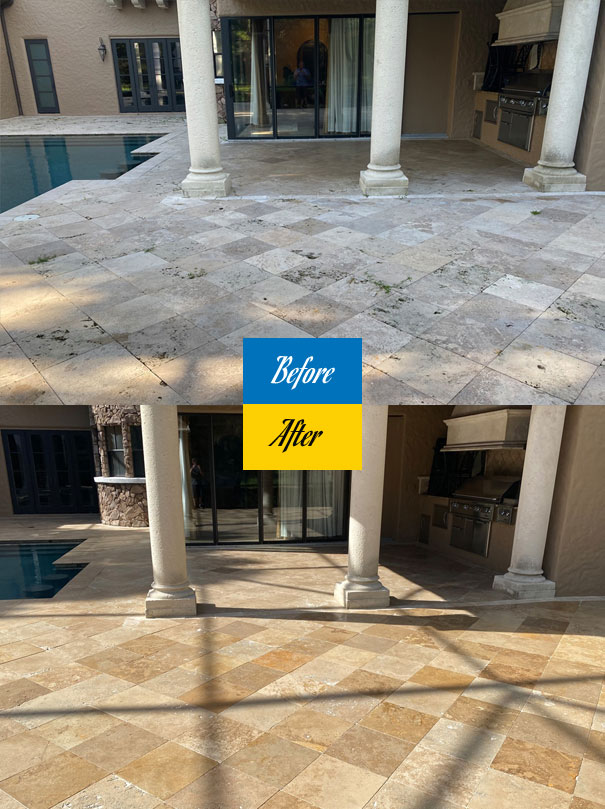
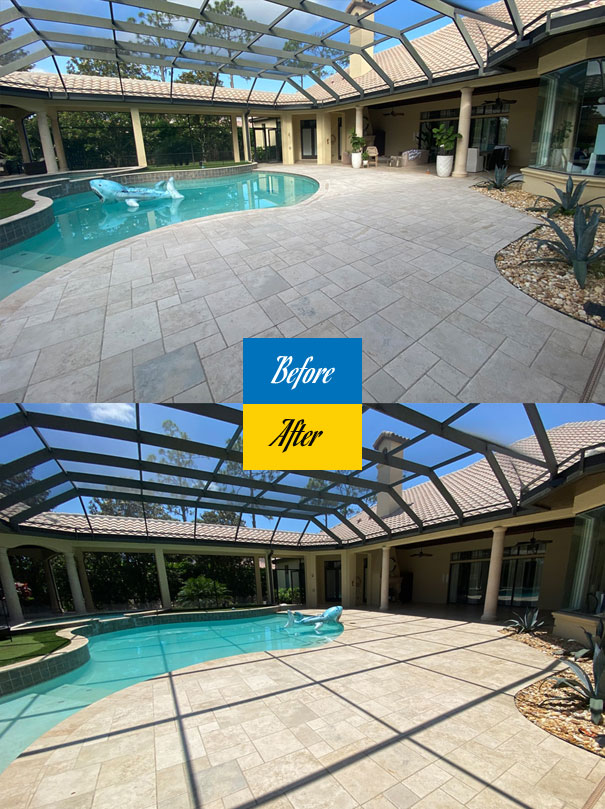
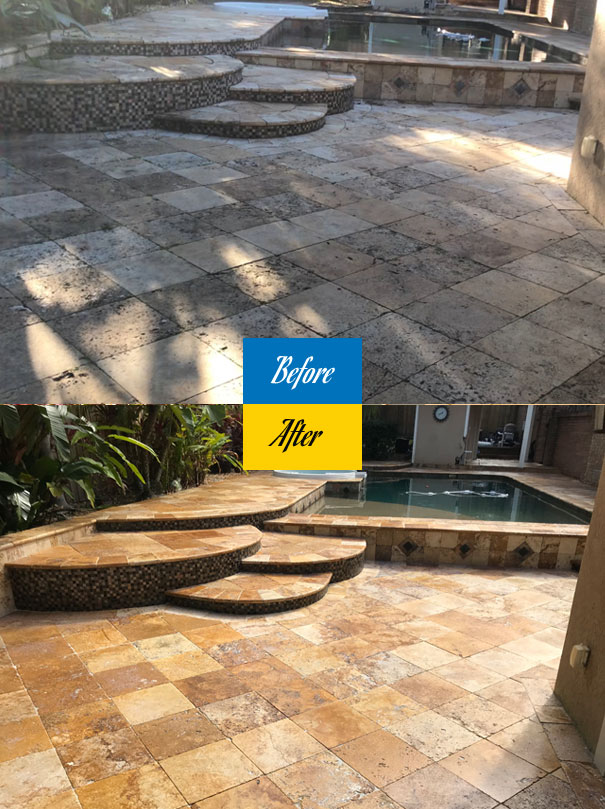
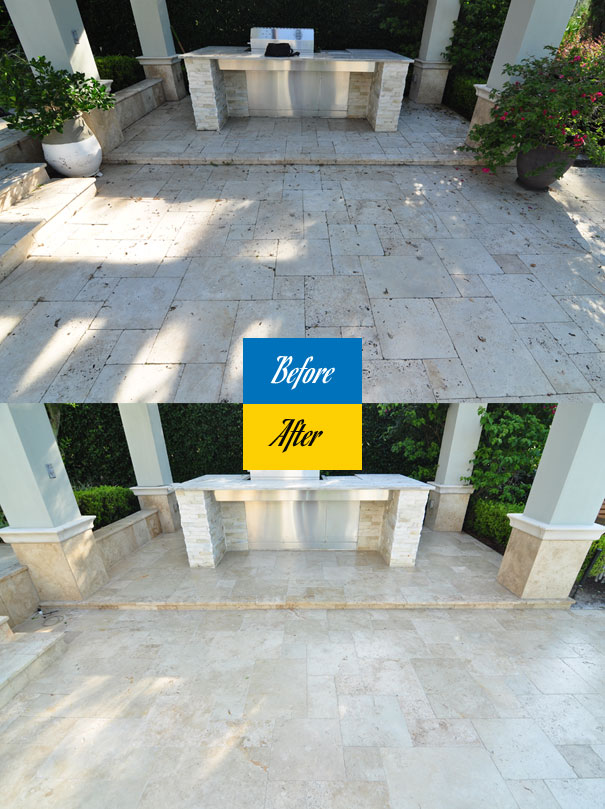
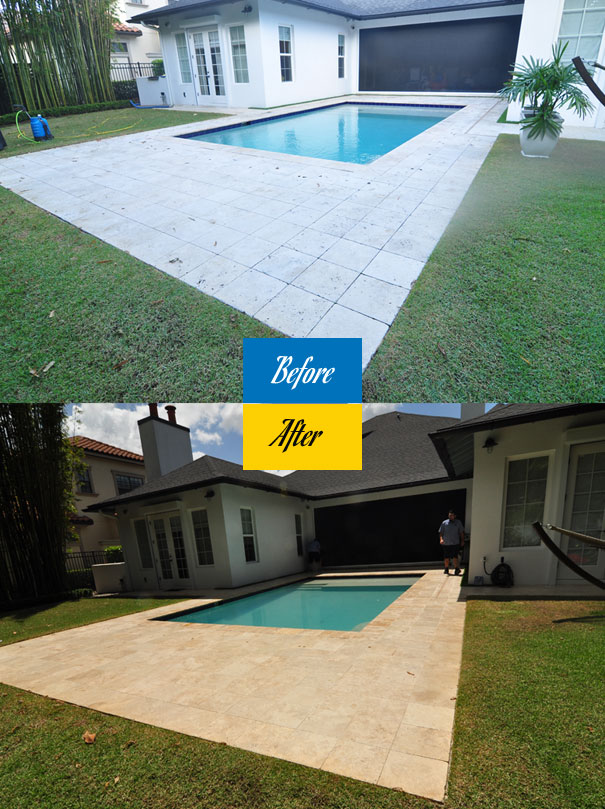
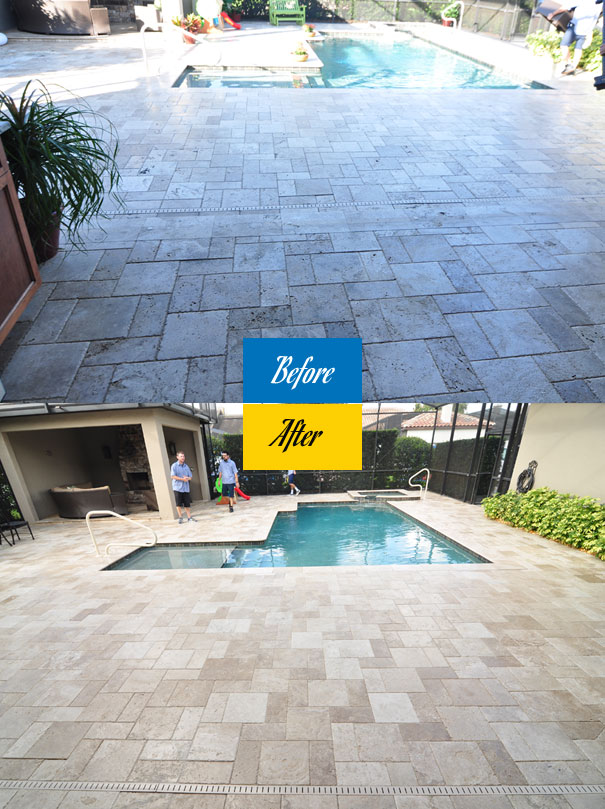
We love restoring Travertine pavers around pool decks as much as we do diamond honing and polishing Travertine inside your home. We treat Travertine differently in an exterior installation as opposed to an interior as demands from each are much different. As you can see from the pictures, Travertine often provides the biggest difference once cleaned, sanded and sealed with Trident Cat 5. Travertine is often used on pool decks because it comes in different colors, installation styles, and compliments pools beautifully.
After a year, however, you may start noticing some fading due to sunlight compared to covered areas. Also most travertine pavers are installed unfilled with a sand-set procedure, so any natural holes and pits will start to collect soils. Also the joints between the tiles may start to darken from mold/mildews and algae.
There are 4 basic types of sealer to consider in your exterior travertine restoration project. The 2 main considerations are Color enhancement/ NO Color enhancement and Consolidation type/ NO consolidation for joint sand.
The first is an impregnating, or penetrating sealer that soaks into the paver and provides repellency to water based soils and stains(hydrophobic). It will not change the color of the pavers (non enhancing type). It also will not do anything to lock, or harden the sand in the joints.
The second is an enhancing impregnating sealer. Products like Dupont Pro Enhancer sealer work great at darkening the travertine while providing a natural look. This product will not change the sheen level. The downside is that if your Travertine is exposed to direct sunlight, the enhancement will only last 1 year on average. (It says 15 years on the bottle, but in the real world, in our Florida sun, we have found that getting 1 year of full enhancement is more accurate.) If you decide to go with this type of sealer, you will need yearly cleaning and resealing to keep the color enhancement of the travertine.
The third is a penetrating/ film-forming sealer. We use Trident Cat 5, and it is a 2-part, water-based urethane. The first advantage of this sealer is that it will enhance the colors of the pavers, meaning it will darken the paver like it has been wet with water. The second advantage is that it will harden and lock the sand in between the pavers, and if you have some deeper holes, it will also fill and harden the sand in the deeper holes. This helps keep all the soils/ molds/mildews/algae and other contamination closer to the surface. This will help keep the Travertine pavers looking cleaner longer. It will increase the structural integrity of the installation. The third advantage is the sealing capability of Trident Cat 5 . It forms a barrier between the Travertine and soiling and staining, so your Travertine looks cleaner longer. Porous Stone such as Travertine can absorb liquids, chemicals and spilled drinks. Sealing will prevent the absorption into the stone. This is especially true in areas of your deck that may not receive a lot of sun, or stay wet, as mold and mildew will gain hold and bloom under those conditions. Maintenance cleanings are much easier. The fourth advantage is increased shine. Most jobs we will apply 2 heavy applications that will achieve a low gloss appearance. We apply an aggregate in the last coat to mitigate the chance of slip and fall. Ask to see one of our sample pieces. The aggregate will leave a slight texture like fine sandpaper. It will not be rough on the feet like some that will use actual sand. Depending on your individual level of shine goals, paver age, absorbency rate, texture, and how many coats are applied will dictate the final sheen level. We typically recommend 2 coats that would provide a satin to low gloss depending on lighting angles and surface of the Travertine. Seal N lock allows vapor transmission, which is important in Florida so you do not trap moisture, possibly causing the classic white, or clouding of the pavers.
The fourth is a penetrating/ film-forming sealer that does NOT enhance the colors of Travertine. We use Trident Cyclone Sealer. The Process is very similar to Trident Cat 5 application.
The process of restoring travertine pavers usingTrident Cat 5 is as follows:
Stain treatments. As you can see in above pictures, hard water deposits, rust and iron stains from sprinklers will require a special process to remove.
Why Choose
Clean Image of Orlando
Expertise in Outdoor Travertine
Our team specializes in the unique requirements of outdoor travertine pavers.
Tailored Restoration Approach
We recognize that each project is unique and provide personalized solutions for your specific needs.

Quality Assurance
Using top-tier materials and restoration methods, we ensure your travertine pavers are restored to their best condition.
Customer Satisfaction Focus
We are committed to exceeding your expectations and delivering a service that enhances the value and beauty of your outdoor space.
What Our Customers Say
 Clean Image of Orlando, Inc.
755 W State Rd 434 Suite H, Longwood
-
Excellent work. Quintin and Shawn knew exactly what to do and were very polite, respectful and very professional. It is not my first time dealing … More with Clean Image of Orlando and it will not be my last. I highly recommend them.
Bill -
This the second time I have used Clean Image of Orlando and once again they did a fantastic job. These floors hadn’t been cleaned or properly … More cared for in a long time and they look new. The dogs love them too.
-
George was phenomenal! Professional kind and communicative. My saltillo tile floors look better than a cleaning I did a few years ago with another … More company. Will be back again and highly recommend!


Travertine Paver Restoration FAQs
How often should travertine pavers be restored?
We suggest professional cleaning every 12-18 months, though it may vary based on usage.
Can restoration help prevent weed growth between pavers?
Yes, our joint stabilization and sealing services help minimize weed growth between the pavers.
Is sealing outdoor travertine pavers necessary?
Absolutely, sealing is crucial to protect the pavers from weather elements and staining.
How long does the restoration process take?
The time frame varies, typically taking a few days, depending on the area’s size and the extent of restoration required.
Will the restoration process change the color of my travertine pavers?
Our restoration process aims to enhance the natural color of the pavers. If selected, color changes are designed to bring the pavers back to their original hue. Natural look sealers are also available.
Will sealing make travertine slippery?
This is an important concern for customers with exterior Travertine. At Clean Image, we have developed a method of applying an aggregate to the sealer to mitigate the potential of slip and fall. We have 2 options of aggregate that include a glass nano bead and a polymer bead. Creating a beautiful Travertine hardscape should include slip mitigation, and we have taken that into account with our travertine sealing services.
How often should travertine pavers be sealed?
Ideally, you should seal your beautiful travertine tile immediately upon installation. This prevents them from sustaining any damage in the first place.
Depending on how often your pavers are used, sun and weather exposure, cleaning chemicals, lor how much foot traffic they receive, you’ll want to have a professional carry out travertine sealing every two to five years. Clean Image also offers yearly Maintenance cleanings to keep them at there best.
If you’re unsure of how often to seal your pavers, give us a call and we’ll be glad to advise you.